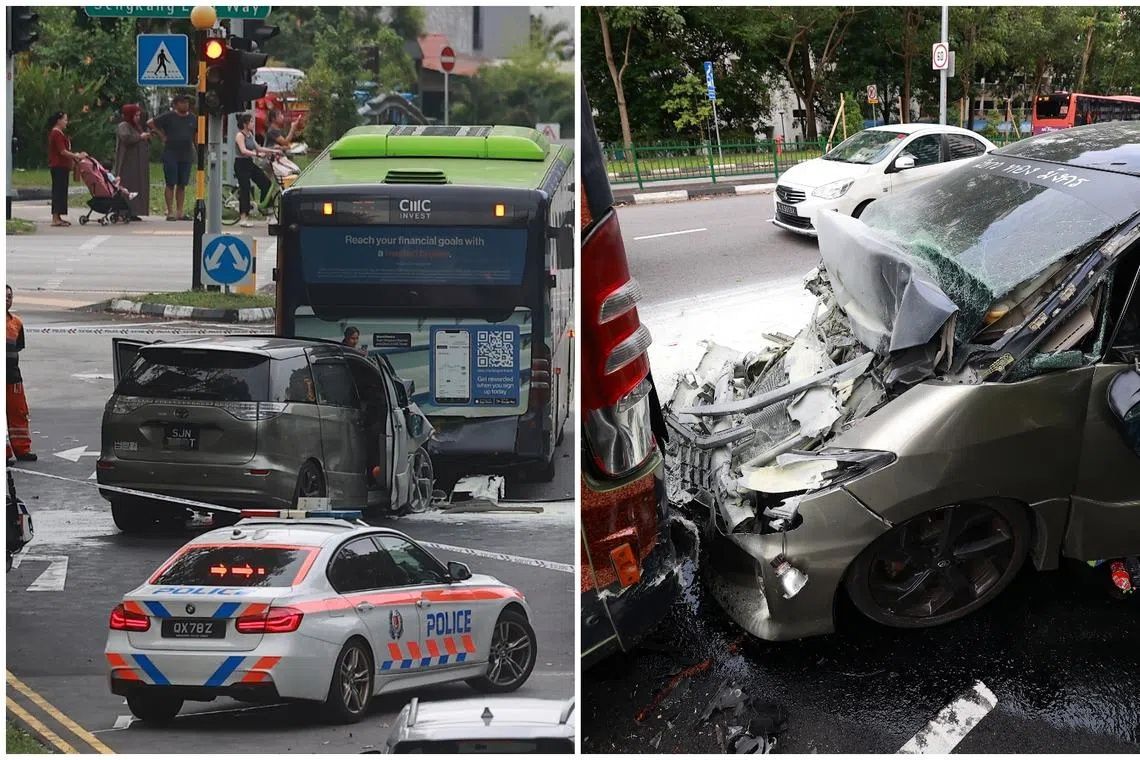
Singapore's roads are facing a mounting crisis as a new and largely invisible threat emerges from behind the wheel: drivers impaired by drugs and specially formulated vaping products. In a troubling pattern that came to light this month, authorities charged three men within a 12-day period in June for operating vehicles while under the influence of controlled substances, each case detected only after collisions had already occurred. The incidents underscore how difficult it remains for enforcement to identify impaired motorists before tragedy strikes.
Clinical toxicologist Jonathan Tang, who works in the Emergency Medicine Department at the National University Hospital, has begun encountering trauma patients injured in collisions involving a particularly concerning substance: etomidate, an anaesthetic compound now being used in commercial vaping products known as Kpods. Tang's clinical observations paint a picture of impairment comparable to alcohol intoxication, where the drug's effects severely compromise the neuromuscular control and cognitive functions essential for safe vehicle operation. The substance appears to create a perfect storm of danger, combining the invisibility of a vaping habit with the incapacitating effects of a powerful medical anaesthetic.
The scale of the problem extends far beyond the three recent cases now working through Singapore's courts. Government data revealed in Parliament this year shows that between 2023 and 2025, authorities documented 38 traffic accidents involving drugs or etomidate use, with a devastating 19 of those incidents proving fatal. This represents a sharp concentration of incidents in 2025 alone, when 29 of the 38 accidents occurred—suggesting either an emerging trend or improved detection. Among the fatal cases, ten involved conventional drugs while nine involved etomidate specifically, indicating that this newer substance already accounts for nearly half the death toll in drug-related road incidents.
One case epitomises the severity of the danger. On May 13, 2025, a vehicle collided with a bus in Punggol, killing a 28-year-old female passenger. When police investigated the wreckage, they discovered 42 vaping devices and more than 1,200 pods inside the car, some containing etomidate. Testing confirmed the drug was present in both the driver's and the deceased woman's blood. The tragedy highlighted how the driver and passenger may have been engaged in a casual activity—vaping—minutes before a moment of impaired judgment or reaction time cascaded into fatal consequences.
Tang explained the specific mechanisms through which etomidate compromises driving safety. The substance delays reaction time, distorts hazard perception, and reduces vehicle control. These effects do not merely endanger the driver; they exponentially increase danger for passengers, pedestrians, and all other road users sharing the same space. Compounding the physical impairment, etomidate use can trigger psychiatric symptoms including depressed mood, heightened aggression, impulsivity, and in severe cases, suicidal ideation. A driver experiencing such psychological disturbance is doubly dangerous—simultaneously impaired by a depressant drug and potentially acting on impulses that might ordinarily be constrained by self-preservation instinct.
The broader road safety context makes the drug-impaired driving problem particularly urgent. Singapore recorded 149 traffic deaths in 2025, marking the highest annual toll in a decade and exceeding the 141 deaths recorded in 2016. The number of injured persons climbed from 9,342 in 2024 to 9,955 in 2025, indicating that collisions are becoming more frequent and more severe. Against this deteriorating backdrop, the emergence of etomidate-laced vapes as a driving hazard compounds an already dire situation on the roads.
The three men now facing court illustrate different facets of the problem. Mohamed Firdouz Mohamed Akram, 36, is accused of driving dangerously while under the influence of methamphetamine, colliding with a taxi and injuring both the taxi driver and a passenger in Kallang before abandoning his vehicle and fleeing. Police recovered drugs, vaporisers, and weapons from his car. Puah Zhe Cong, 34, allegedly consumed etomidate before his vehicle caused one death and two injuries, and he is accused of failing to remain at the accident scene. Sivakandesh, 32, allegedly drove while intoxicated on methamphetamine, causing his Mercedes-Benz to collide with concrete bollards, a parked vehicle, and a rubbish chute in Yishun, with the registration plates subsequently removed—suggesting consciousness of guilt.
In Parliament, Member of Parliament Valerie Lee raised concerns about whether Traffic Police apply standard protocols to assess impairment in accident victims. Coordinating Minister for National Security K. Shanmugam confirmed that Traffic Police do assess motorists involved in collisions for signs of impaired driving, and will order blood tests if drug or etomidate use is suspected. Such drivers face prosecution under the driving-whilst-impaired provisions of the Road Traffic Act. However, the practical challenge remains: detection occurs after accidents, not before them. The very nature of substances like etomidate—consumed via devices that resemble legitimate vaping products—means impaired drivers may not display the obvious visual markers that alert officers to impairment.
The legal penalties for driving under the influence carry substantial weight. A first-time offender faces up to one year's imprisonment, a fine of up to S$10,000, or both. Repeat offenders can be sentenced to up to two years' imprisonment and fined up to S$20,000. Yet deterrence requires awareness, and the quiet threat posed by etomidate Kpods means many potential offenders may not fully appreciate the impairment they experience or the danger they pose. The substance produces no obvious smell, creates no visible intoxication in the conventional sense, and has become embedded within a normalised vaping culture.
For Malaysian road users and authorities, Singapore's experience offers a cautionary tale about emerging drug vectors that exploit regulatory blind spots. The substance pipeline for novel psychoactive drugs and repurposed pharmaceuticals continuously adapts to evade control, and substances identified as problems in Singapore's densely populated urban environment may soon appear in other regional jurisdictions. The invisibility of etomidate impairment—particularly when consumed through a device that appears entirely innocuous—represents a new frontier in road safety risk. Medical professionals like Tang are sounding alarms based on clinical evidence of harm, yet public awareness remains limited, and enforcement mechanisms remain reactive rather than preventative.
The escalation in Singapore's road fatality rates and the emergence of etomidate as a driving hazard suggest that traditional drink-driving enforcement paradigms require modernisation. Developing reliable roadside screening tests for novel drugs, improving officer training in recognising non-alcohol impairment, and mounting public education campaigns about the specific risks posed by substances like etomidate all form part of a necessary response. Until such measures reach full effect, Singapore's roads will continue to carry an invisible threat—drivers whose impairment cannot be seen but whose consequences are devastatingly visible.
%22%2F%3E%3C%2Fpattern%3E%3C%2Fdefs%3E%3Crect%20width%3D%22100%25%22%20height%3D%22100%25%22%20fill%3D%22url(%23ph4tykpg)%22%2F%3E%3Crect%20width%3D%22100%25%22%20height%3D%22100%25%22%20fill%3D%22url(%23ph4tykpp)%22%2F%3E%3Ctext%20x%3D%2250%25%22%20y%3D%2250%25%22%20text-anchor%3D%22middle%22%20dominant-baseline%3D%22central%22%20fill%3D%22rgba(255%2C255%2C255%2C0.95)%22%20font-family%3D%22Georgia%2C%20'Times%20New%20Roman'%2C%20serif%22%20font-weight%3D%22700%22%20font-size%3D%22272%22%20letter-spacing%3D%22-0.02em%22%3EJohor%3C%2Ftext%3E%3C%2Fsvg%3E)
%22%2F%3E%3C%2Fpattern%3E%3C%2Fdefs%3E%3Crect%20width%3D%22100%25%22%20height%3D%22100%25%22%20fill%3D%22url(%23ph1ni6dg)%22%2F%3E%3Crect%20width%3D%22100%25%22%20height%3D%22100%25%22%20fill%3D%22url(%23ph1ni6dp)%22%2F%3E%3Ctext%20x%3D%2250%25%22%20y%3D%2250%25%22%20text-anchor%3D%22middle%22%20dominant-baseline%3D%22central%22%20fill%3D%22rgba(255%2C255%2C255%2C0.95)%22%20font-family%3D%22Georgia%2C%20'Times%20New%20Roman'%2C%20serif%22%20font-weight%3D%22700%22%20font-size%3D%22272%22%20letter-spacing%3D%22-0.02em%22%3EMedia%3C%2Ftext%3E%3C%2Fsvg%3E)
%22%2F%3E%3C%2Fpattern%3E%3C%2Fdefs%3E%3Crect%20width%3D%22100%25%22%20height%3D%22100%25%22%20fill%3D%22url(%23ph4o0rkg)%22%2F%3E%3Crect%20width%3D%22100%25%22%20height%3D%22100%25%22%20fill%3D%22url(%23ph4o0rkp)%22%2F%3E%3Ctext%20x%3D%2250%25%22%20y%3D%2250%25%22%20text-anchor%3D%22middle%22%20dominant-baseline%3D%22central%22%20fill%3D%22rgba(255%2C255%2C255%2C0.95)%22%20font-family%3D%22Georgia%2C%20'Times%20New%20Roman'%2C%20serif%22%20font-weight%3D%22700%22%20font-size%3D%22320%22%20letter-spacing%3D%22-0.02em%22%3E95%3C%2Ftext%3E%3C%2Fsvg%3E)