%22%2F%3E%3C%2Fpattern%3E%3C%2Fdefs%3E%3Crect%20width%3D%22100%25%22%20height%3D%22100%25%22%20fill%3D%22url(%23ph4tykpg)%22%2F%3E%3Crect%20width%3D%22100%25%22%20height%3D%22100%25%22%20fill%3D%22url(%23ph4tykpp)%22%2F%3E%3Ctext%20x%3D%2250%25%22%20y%3D%2250%25%22%20text-anchor%3D%22middle%22%20dominant-baseline%3D%22central%22%20fill%3D%22rgba(255%2C255%2C255%2C0.95)%22%20font-family%3D%22Georgia%2C%20'Times%20New%20Roman'%2C%20serif%22%20font-weight%3D%22700%22%20font-size%3D%22272%22%20letter-spacing%3D%22-0.02em%22%3EJohor%3C%2Ftext%3E%3C%2Fsvg%3E)
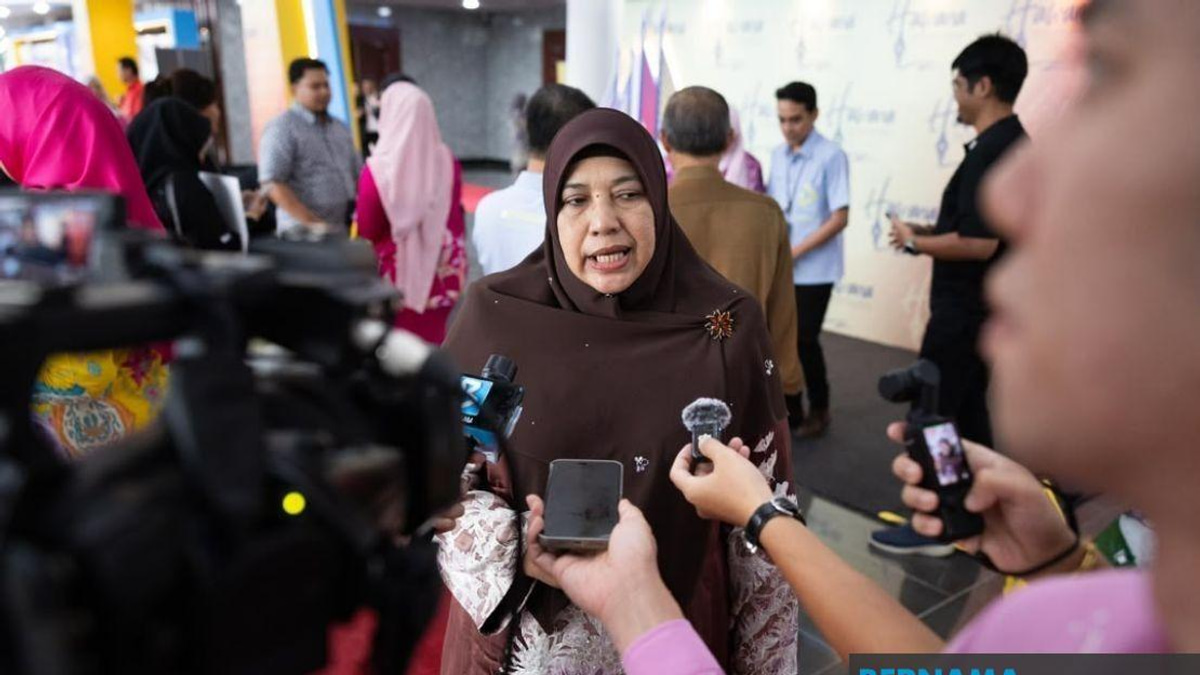
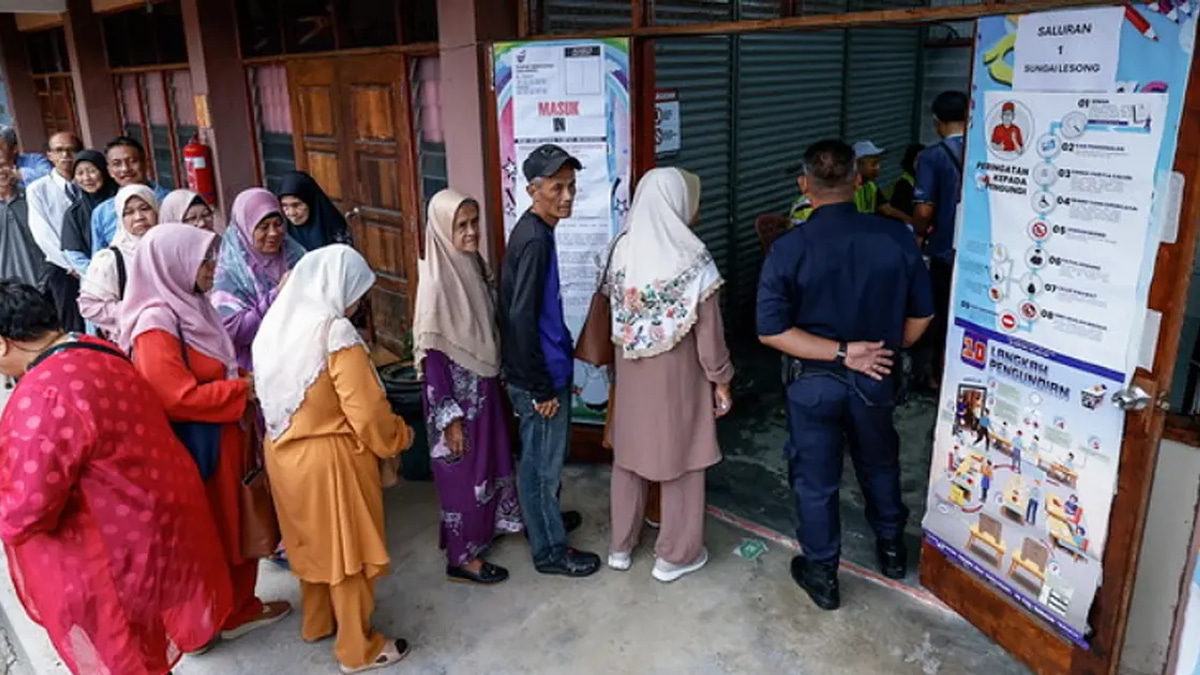
Malaysia's media industry is preparing to deploy a coordinated defence against election-period misinformation, with the Malaysian Media Council unveiling an ambitious new framework designed to identify and neutralise fabricated content before it spreads widely among voters. The mechanism will be tested in real-world conditions during the Johor state election on July 11, followed by the Negeri Sembilan poll on August 1, providing the MMC with consecutive opportunities to refine its approach to tackling false claims attributed to news organisations.
The timing of these two elections offers what MMC chairperson Tan Sri Nallini Pathmanathan describes as a strategic advantage, allowing officials to identify weaknesses and improve processes between the two contests. Insights gained during the Johor campaign can be immediately applied to strengthen operations in Negeri Sembilan, creating a learning curve that benefits both exercises and potentially shapes how election-related misinformation is handled in future campaigns across the country. This sequential arrangement transforms what might otherwise be administrative burden into an opportunity for evidence-based refinement of a novel initiative that has not yet been tested at scale.
The core challenge the MMC seeks to address reflects a problem that has grown increasingly acute across Southeast Asia: the weaponisation of media branding. Rather than evaluating whether politicians' claims are truthful—a function properly belonging to voters and independent fact-checkers—the initiative targets a narrower but critically important category of false content: material fraudulently presented as originating from legitimate news organisations. This includes fabricated news graphics bearing authentic logos, digitally altered screenshots, and forged news reports designed to appear as if they came from established publications. By restricting its scope to this verifiable category, the MMC avoids the minefield of political judgment while addressing genuine harm to public trust.
The operational architecture distributes responsibilities across multiple institutions in a way that attempts to balance transparency with authority. The MMC functions as a coordination hub rather than an arbiter, while media organisations themselves retain responsibility for determining whether disputed content genuinely originated from their platforms. This approach respects editorial independence whilst pooling resources, and it acknowledges that only publishers can definitively answer whether a piece of content belongs to them. The Election Commission provides expertise on electoral procedures and rules, while Bernama assists in amplifying verified corrections to ensure that denials reach audiences as widely as the original misinformation may have spread.
A network of supporting agencies extends the initiative's reach into community settings where misinformation often takes root. Content Forum Malaysia handles digital platform engagement and media literacy campaigns, whilst the Department of Community Communications and National Information Dissemination Centres connect verified information directly to citizens in ways that move beyond traditional news channels. The Malaysian Communications and Multimedia Commission stands ready to intervene when matters require regulatory action or when social media platforms themselves need to take down false content, creating multiple escalation pathways depending on the nature and severity of the misinformation.
The practical operation is designed for speed, recognising that the currency of misinformation is rapid viral spread. To illustrate the mechanism's intent, consider a scenario where a doctored graphic bearing a major news outlet's logo circulates online claiming that a particular candidate has withdrawn from the race. Under this system, the relevant media organisation can verify the claim within minutes, confirm that the content is fraudulent, and issue a public correction before significant portions of the electorate have encountered the false narrative. This is fundamentally different from addressing accuracy of political claims, which remain the proper subject of political debate and voter judgment.
The initiative also reflects growing anxieties about synthetic and artificially generated content, which poses an escalating threat during high-stakes political moments. Deepfake videos, AI-manipulated audio recordings, and algorithmically generated text can be produced at volume and seeded across platforms with remarkable efficiency. As these technologies become more sophisticated, the window for detection and correction narrows, and traditional fact-checking mechanisms struggle to keep pace. By creating rapid verification systems that leverage existing media infrastructure and expertise, the MMC seeks to stay ahead of the technical curve.
Parallel to these operational mechanisms, the council will launch a public awareness campaign centred on the bilingual slogan "Who Said It? What's The Source?" and its Malay equivalent, "Siapa kata? Sos mana?" This campaign encourages voters to develop habits of media criticism and source verification before they encounter elections themselves, conditioning the public to be more sceptical of unverified claims and more willing to check origins before sharing information. The campaign notably avoids framing information verification as censorship or discouragement from political participation; instead, it presents fact-checking as an integral part of healthy democratic engagement, compatible with the right to read, debate, and share information freely.
The framing is significant in a Malaysian context where political divisions run deep and where concerns about government control of information remain sensitive among significant portions of the public. By positioning the initiative as a tool for protecting trust in media rather than controlling speech, and by distributing responsibility across independent media organisations themselves, the MMC attempts to build credibility across the political spectrum. Whether this framing will satisfy sceptics remains to be seen, but the emphasis on speed, transparency, and multi-stakeholder involvement suggests an attempt to create a model that goes beyond top-down directive.
For Southeast Asia more broadly, the Malaysian experiment arrives at a moment when the region confronts accelerating challenges to information integrity during elections. Indonesia, the Philippines, Thailand, and other nations have experienced election cycles severely disrupted by coordinated misinformation campaigns. Singapore and Vietnam have implemented various regulatory approaches, whilst civil society organisations across the region have invested heavily in fact-checking infrastructure. Malaysia's initiative, by focusing specifically on the verification of media attribution and by involving media organisations as primary validators, charts a path that emphasises industry self-regulation within a supporting ecosystem of government and civil society actors.
The real-world test beginning in Johor will quickly reveal whether this architecture can function as intended under pressure. Election campaigns generate enormous volumes of content across social media platforms, messaging apps, and traditional channels, and the speed at which false claims spread during politically charged moments creates intense time pressure on verification systems. The sequential testing in two states, rather than a single pilot, acknowledges that one state's experience may not generalise to another, and that multiple datasets will be needed to draw meaningful conclusions about effectiveness and scalability.
Success for the initiative should not be measured solely by whether it eliminates misinformation, an unrealistic standard for any system operating in open societies with robust free expression protections. Instead, it should be evaluated by whether it increases the share of false claims that are identified and corrected before achieving viral scale, whether the corrections are perceived as credible by voters regardless of their political leanings, and whether the experience of participation strengthens institutional cooperation between media organisations, government agencies, and civil society actors. The lessons learned during Johor and Negeri Sembilan may prove valuable not only for future Malaysian elections but also for other democracies in the region grappling with identical challenges.