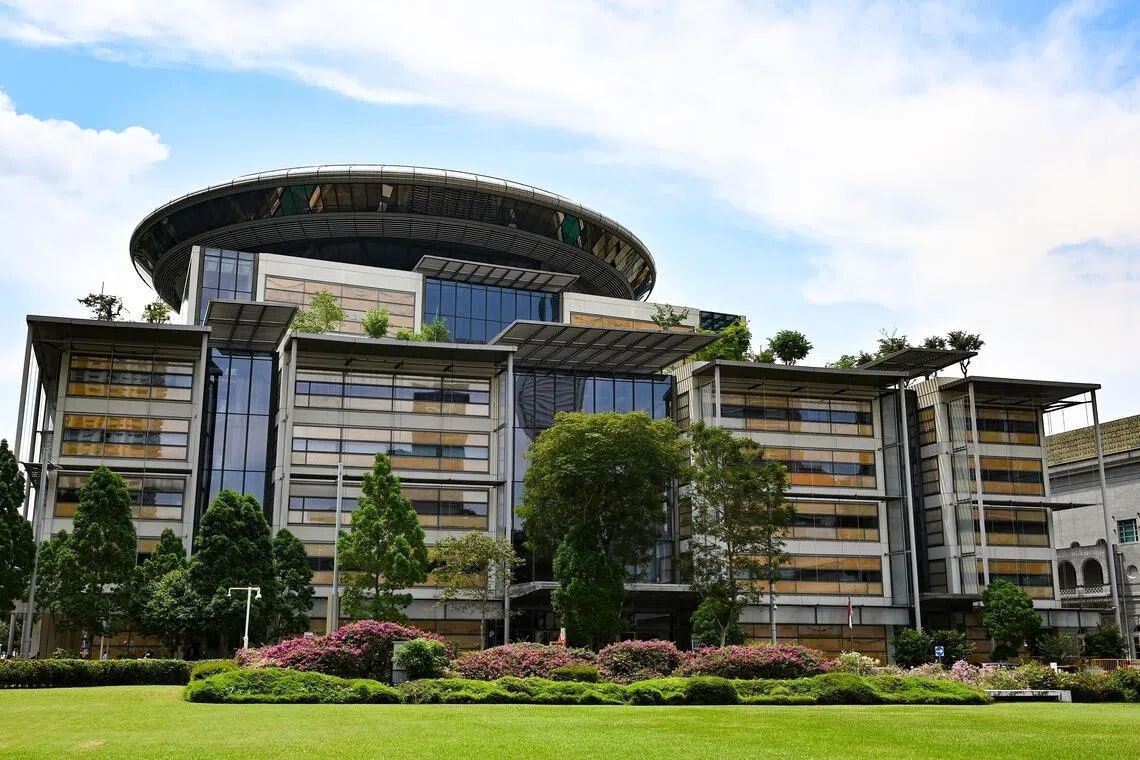
Three specialist doctors operating private practices in Singapore have failed in their attempt to overturn a tax authority decision that declared their income structuring arrangement unlawful, with the High Court finding their corporate setup was designed primarily to avoid tax obligations. The judgment by Justice Alex Wong on 18 June marked another defeat for medical professionals who have increasingly clashed with Singapore's Inland Revenue Authority of Singapore (IRAS) over how they conduct their business affairs, signalling tighter scrutiny of such arrangements in the healthcare sector.
Doctors Adrian Tan Chek Jin, Caroline Khi Yu May and Jocelyn Wong Sook Miin, all obstetricians and gynaecologists who previously worked together at KK Women's and Children's Hospital, had structured their private medical practice through a complex system of multiple companies and two rounds of corporate restructuring. The arrangement involved paying themselves minimal monthly salaries—initially S$5,000 despite earning significantly more in their prior employment—while extracting substantial income through dividends and interest-free shareholder loans that attracted preferential tax treatment.
The fundamental mechanism at issue involved the doctors' initial establishment of ACJ Women's Clinic (ACJW) in 2004, a jointly-owned entity through which they shared profits. However, they subsequently created individual companies: Tan and his wife formed AT OG Services in 2005, while Khi and Wong each established their own holding companies in 2007. These restructured entities enabled them to access government tax incentives including the Start-Up Tax Exemption and Partial Tax Exemption schemes, benefits designed to encourage entrepreneurship rather than to facilitate tax planning by established medical professionals.
A further reorganisation in 2014 established separate surgical companies for each doctor, creating an elaborate structure where inpatient surgical fees flowed through individually-owned entities while outpatient services remained under the joint practice. This separation allowed the three to claim that different entities earned income, potentially qualifying for additional exemptions. Throughout the arrangement, each doctor's monthly salary remained static at modest levels despite the practices' growing profitability, with substantial earnings instead channelled as dividends and loans that carried preferential tax treatment.
During the six-year assessment period from 2013 to 2018, the scale of income extraction through these mechanisms was significant. Tan alone received S$5.14 million in dividends from one entity and S$2.35 million from another, while obtaining approximately S$830,000 and S$2.1 million in shareholder loans from the respective companies. These figures stood in stark contrast to his declared monthly salary of S$5,000, an arrangement the court found difficult to reconcile with genuine business practice, particularly given his senior status and experience level within the partnership.
When IRAS commenced a tax audit after the doctors sought to strike off some companies in 2016, the revenue authority identified the arrangement as falling squarely within anti-avoidance provisions of Singapore's Income Tax Act. The tax authority reassessed income for years 2013 through 2018, reclassifying business profits as individual income rather than corporate dividends, and clawed back previous tax exemptions and rebates the companies had received. The doctors subsequently challenged this decision before the Income Tax Board of Review, which upheld the authority's position, leading to their unsuccessful court application.
Justice Wong's written judgment placed particular emphasis on Tan's inability to provide credible explanations for the salary structure. While acknowledging that Tan's status as a newcomer to private practice might initially justify modest remuneration, the judge observed that Tan could not satisfactorily explain why his salary remained frozen at that level as the practice expanded and became substantially more profitable. The absence of any corresponding salary increases, coupled with the systematic extraction of profits through tax-advantaged mechanisms, pointed inevitably toward tax avoidance as a principal motivating factor in the arrangement's design.
The court's reasoning centred on the distinction between legitimate business planning and impermissible tax avoidance. While businesses retain the right to structure their affairs tax-efficiently within legal bounds, the judgment emphasised that arrangements primarily designed to circumvent tax obligations fall outside this protection. The judge rejected Tan's assertion that tax considerations played no role when the practice was established, finding the documentary evidence and payment patterns inconsistent with such a claim. Notably, the other two doctors declined to give evidence before the review board, potentially weakening their position in the court's assessment.
For Malaysia and the broader Southeast Asian region, this decision carries important implications regarding tax authority enforcement. Medical professionals operating across the region often employ similar structuring strategies, using corporate entities and dividend payments to manage tax liabilities. The Singapore judgment demonstrates that tax authorities increasingly possess the legislative tools and judicial support to unwind such arrangements, particularly when income patterns suggest deliberate tax minimisation rather than organic business development.
The case reflects a wider pattern of tax authority challenges to professional service providers, with Justice Wong noting in his judgment that this represented merely the latest in a series of cases involving medical professionals who had run into difficulties with tax authorities. This pattern suggests that healthcare professionals should anticipate heightened scrutiny of their corporate structures and income distribution methods across jurisdictions with strong anti-avoidance frameworks. The implications extend beyond Singapore; healthcare providers in Malaysia operating through corporate structures may face similar challenges from Inland Revenue Board assessors, particularly if their salary-to-dividend ratios appear inconsistent with industry norms.
The practical consequence of the judgment means the three doctors face significant back-tax assessments covering multiple years, with interest and potentially penalties imposed by IRAS. More broadly, the decision establishes clear precedent that the judiciary will support tax authority determinations when arrangements demonstrably prioritise tax reduction over commercial substance. For professionals across Southeast Asia considering complex corporate structuring to optimise tax outcomes, the message is unambiguous: arrangements that cannot withstand scrutiny regarding their commercial rationale will be vulnerable to challenge regardless of formal legal compliance.
Governments throughout the region are increasingly adopting anti-avoidance provisions similar to those applied in Singapore, reflecting a global shift toward preventing sophisticated tax planning. Malaysia's own general anti-avoidance rules (GAAR) provide comparable enforcement mechanisms, suggesting that similar challenges could emerge domestically. The Singapore judgment therefore serves as a useful cautionary study for Malaysian medical professionals and other high-income individuals contemplating complex corporate arrangements, demonstrating that revenue authorities will analyse substance over form when evaluating whether arrangements genuinely serve business purposes or primarily facilitate tax evasion.