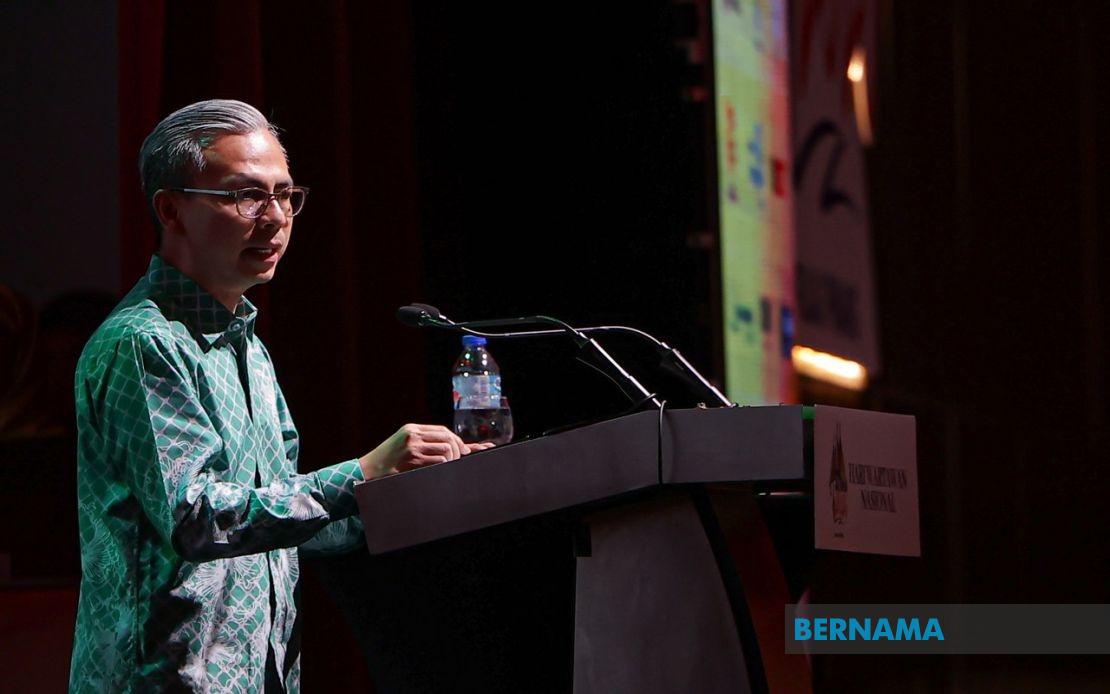
Telekom Malaysia has formally become the strategic partner of Tabung Kasih@HAWANA, pledging RM500,000 to sustain financial assistance programmes for media practitioners across the country. Communications Minister Datuk Fahmi Fadzil announced the development at the National Journalists' Day grand finale in Butterworth, describing the contribution as a significant corporate social responsibility gesture that would expand welfare reach to struggling media professionals. The announcement underscores TM's recognition of the financial pressures affecting the journalism industry in Malaysia and reflects growing corporate awareness of media sector challenges.
Tabung Kasih@HAWANA, established in April 2023, has already proven its importance within the journalism community. Since its inception, the fund has distributed RM2.26 million in financial assistance to 773 media practitioners nationwide, providing crucial lifelines to individuals facing hardship. The steady disbursement rate demonstrates strong demand for such support structures, highlighting the precarious economic circumstances many journalists and former media workers experience. TM's involvement signals confidence in the fund's operational model and its ability to meaningfully support beneficiaries.
The contribution arrives at a critical juncture for Malaysia's media landscape. Fahmi pointed to a dramatic contraction in advertising spending, which has fallen from RM4.5 billion annually to approximately RM2 billion in recent years. This revenue decline has squeezed media companies' budgets, directly impacting employment stability and staff welfare across newsrooms, production facilities, and editorial departments. The shift reflects broader global trends in media disruption, compounded by Malaysia-specific economic and digital advertising dynamics that have favoured international tech platforms over local publishers.
Fahmi leveraged the occasion to appeal directly to Malaysian businesses and government-linked companies, urging them to redirect advertising expenditure toward local media outlets. His call framed media support as both a corporate responsibility and an economic decision with wider implications for information ecosystem health. By encouraging companies to place media buys locally rather than pursuing international platforms exclusively, he sought to generate a virtuous cycle: increased advertising revenue would strengthen media operations, enabling companies to maintain quality journalism while providing better employment security for their workforces.
The strategic partnership also represents institutional recognition of media sector fragility. While private companies have traditionally approached media support through advertising relationships, the explicit partnership framework signals a shift toward viewing media welfare as a collective responsibility requiring sustained commitment. TM's involvement may catalyse similar initiatives from other corporations, particularly if media companies can articulate the mutual benefits of stable, credible news environments to potential partners.
Beyond financial support, the Communications Ministry is backing technological capability development for journalists. Fahmi announced ministry support for Project Sigma 2.0, a Google Malaysia initiative created in collaboration with the Malaysian Media Council and Malaysian Press Institute. This programme aims to equip media personnel with enhanced skills in technology and artificial intelligence—domains increasingly central to modern journalism practice. By investing in professional development, the initiative addresses not merely immediate financial stress but the longer-term competitiveness and relevance of Malaysian media professionals in a rapidly evolving information landscape.
The event also showcased strengthening regional media cooperation. Bernama, Malaysia's national news agency, signed a Memorandum of Understanding with TATOLI, Timor-Leste's national news agency. This collaboration reflects broader ASEAN solidarity, particularly following Timor-Leste's accession as ASEAN's 11th member during the 47th ASEAN Summit in Kuala Lumpur last year. Fahmi characterised the agreement as embodying shared commitment to credible journalism and enhanced information exchange across Southeast Asia, positioning media cooperation as integral to regional integration efforts.
For Malaysian and Southeast Asian media stakeholders, the Telekom Malaysia partnership offers multiple implications. It demonstrates that corporate sector support can be mobilised for media welfare through carefully structured CSR initiatives, potentially serving as a template for other companies. It acknowledges that advertising revenue alone no longer sustains healthy media operations, making supplementary funding mechanisms increasingly necessary. The Timor-Leste partnership, meanwhile, signals Malaysia's commitment to incorporating newer ASEAN members into regional information networks, potentially creating opportunities for Malaysian media outlets to expand coverage and partnerships within Southeast Asia.
The timing of these initiatives reflects mounting recognition among Malaysian policymakers that media industry health requires multi-stakeholder intervention. Neither government funding nor corporate advertising suffices independently to maintain vibrant newsrooms capable of serving public interest journalism. TM's RM500,000 contribution, while substantial, represents one piece of a larger puzzle requiring coordinated effort from government, corporations, and media institutions themselves. The emphasis on technological capability development through Project Sigma 2.0 acknowledges that contemporary media challenges extend beyond immediate financial pressure to encompass the skills gap created by rapid technological change.
As Malaysia's media landscape continues navigating digital disruption and revenue compression, partnerships like TM's demonstrate that corporate Malaysia recognises both ethical and practical reasons to sustain local journalism. Whether this partnership catalyses a broader movement of corporate support—as Fahmi clearly hopes—will significantly influence media sector stability over coming years. The fund's demonstrated capacity to assist 773 practitioners suggests significant unmet need exists, implying that sustained, scaled-up support mechanisms will be essential for supporting media professionals facing prolonged industry headwinds and ensuring Malaysia's information ecosystem remains robust and credible.