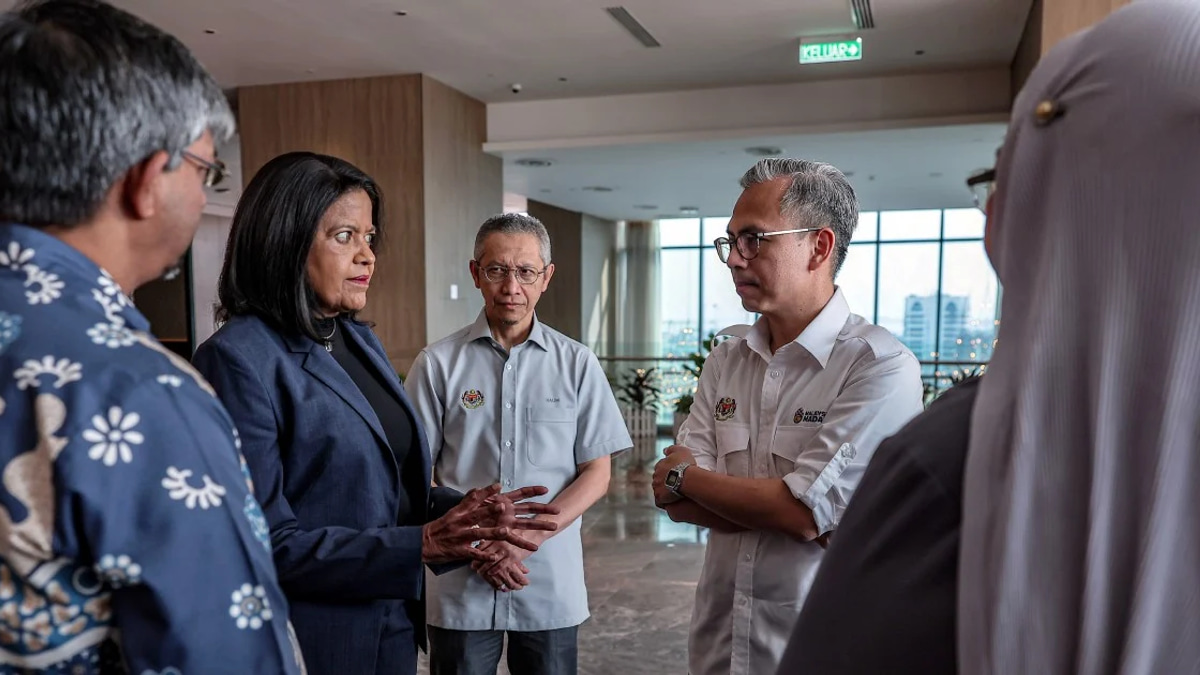
Prime Minister Datuk Seri Anwar Ibrahim has signalled Malaysia's commitment to transforming its economic foundation, moving away from traditional sectors toward a technology-intensive model built on semiconductor manufacturing, artificial intelligence and digital innovation. This strategic repositioning marks a critical inflection point for Southeast Asia's third-largest economy, as policymakers acknowledge that sustained prosperity demands competitive advantage in domains that will define the global economic landscape for decades.
The pivot represents a deliberate policy recalibration recognising that commodity-dependent growth models—historically centred on palm oil, rubber and basic manufacturing—cannot sustain the living standards and employment quality that rising middle-class expectations require. By anchoring Malaysia's future to high-value semiconductors and AI infrastructure, the government aims to attract multinational investment, develop indigenous technological capabilities, and create knowledge-intensive jobs that command premium wages across the talent spectrum.
Semiconductor manufacturing carries particular significance for Malaysia's economic trajectory. The country already hosts substantial production capacity through major players like Intel, Penang-based semiconductor plants, and advanced testing and packaging facilities. Deepening this advantage through government support, skilled workforce development and infrastructure investment could position Malaysia as an indispensable node in global semiconductor supply chains increasingly diversifying away from Taiwan and China. The sector's resilience, demonstrated through pandemic disruptions and geopolitical volatility, underscores its strategic value.
Artificial intelligence represents the frontier opportunity. Unlike semiconductor manufacturing, where Malaysia competes with established players, AI development and deployment offer greenfield prospects for entrepreneurship and innovation. Government backing for AI research institutions, venture capital initiatives and regulatory sandboxes could catalyse a startup ecosystem rivalling more established tech hubs. Southeast Asia's data generation opportunities—driven by rapid digitalisation, e-commerce growth and mobile penetration—provide raw material for training advanced AI systems, potentially establishing Malaysia as a regional centre for AI development and application.
The economic implications extend beyond sectoral shifts. High-tech and semiconductor industries generate significant export revenues with substantial local value-addition, supporting downstream manufacturing, logistics and professional services. Unlike extractive sectors vulnerable to commodity price cycles, technology sectors exhibit stronger resilience and generally command premium margins. For a nation confronting structural fiscal pressures and rising public debt, this transition promises improved tax revenue productivity and reduced budget volatility inherent in commodity-dependent economies.
Human capital development emerges as the critical enabling factor. Semiconductors and AI require sophisticated skills across engineering, design, software development and systems integration. Malaysia's education system must align curriculum with industry requirements, while attracting international talent and fostering retention of Malaysian expertise currently migrating to Silicon Valley and other tech centres. Government initiatives supporting STEM education, technical vocational training and post-graduate scholarships become fundamental infrastructure for this transition rather than peripheral investments.
Regional context shapes the urgency of Malaysia's repositioning. Vietnam, Thailand and Indonesia increasingly compete for technology investment and manufacturing bases. Singapore and South Korea have established formidable technology ecosystems. Malaysia's geographic advantages—proximity to global shipping lanes, established manufacturing infrastructure and relative political stability—must be leveraged through competitive policy frameworks, streamlined regulatory processes and strategic incentives targeting high-value sectors. Without decisive positioning, Malaysia risks becoming peripheralised in Southeast Asia's technology transformation.
Geopolitical considerations add weight to this strategy. The intensifying US-China technology competition and supply-chain decoupling trends create opportunities for countries positioned as reliable, neutral manufacturing alternatives. Malaysia's non-aligned status and existing relationships with both American and Chinese technology firms position it favourably to capture investment redirected through supply-chain diversification. However, maintaining this advantage requires regulatory clarity, intellectual property protections and demonstrable commitment to quality and reliability standards.
The transition timeline remains undefined in Anwar's articulation, though semiconductor sector specialists suggest meaningful scaling requires five to ten year horizons. Immediate priorities likely include identifying infrastructure gaps, clarifying government support mechanisms and establishing coordination between industry stakeholders, research institutions and policymakers. The success of similar initiatives in countries like South Korea and Taiwan, despite vastly different starting points, demonstrates feasibility when governmental commitment, educational investment and private sector initiative align.
Malaysia's manufacturing heritage and established supply-chain relationships provide foundation advantages, yet complacency poses genuine risks. Economic transitions of this magnitude require sustained political will transcending electoral cycles, substantial public and private investment, and willingness to tolerate transition disruptions affecting incumbent sectors and workers. The articulation of this vision by Anwar signals strategic intent, though translating ambition into tangible technological leadership demands implementation rigour that will determine whether Malaysia emerges as a meaningful technology hub or remains a supporting player in others' semiconductor ecosystems.