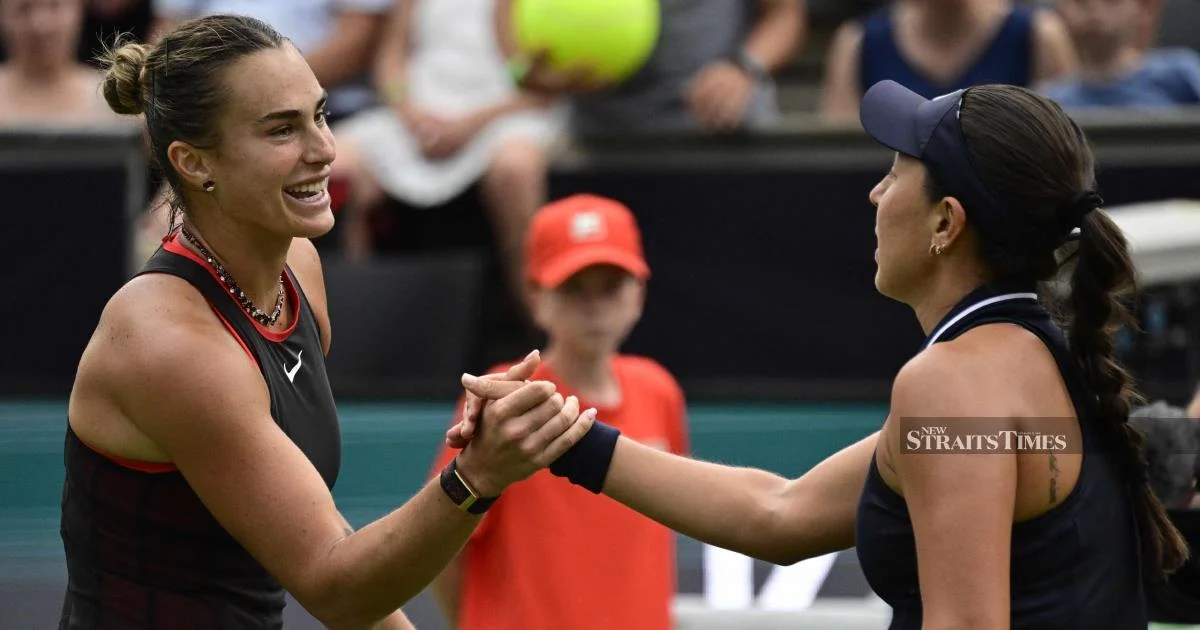
Jessica Pegula has secured her place in the Berlin WTA grass-court championship final, delivering a commanding performance against world number one Aryna Sabalenka in Wednesday's semi-final. The American captured victory with a scoreline of 6-2, 6-7 (4-7), 6-0, notching her second appearance in the title match at this prestigious venue.
Pegula's triumph represents a significant statement on grass, a surface where consistency and precision serve as critical assets. The American's aggressive baseline play in the opening set overwhelmed Sabalenka, who struggled to find her rhythm on the fast courts of Berlin. The opening frame provided little resistance to Pegula's onslaught, with the world number one appearing uncomfortable and unable to mount a sustained challenge.
Sabalenka mounted a more competitive effort in the second set, forcing the contest to a tiebreak where the margins between victory and defeat narrowed considerably. The Ukrainian competitor showcased the resilience that has defined her season, pushing the match to a deciding moment. However, Pegula's composure under pressure proved decisive at the crucial juncture, edging the tiebreak 7-4 to claim what many anticipated would be a closely contested frame.
The third set essentially became a formality as Pegula elevated her game to near-flawless levels. Sabalenka appeared mentally and physically drained following the intensity of the second set, offering minimal resistance as the American delivered a clinical 6-0 shutout. The dominating final set underscored the gap that emerged between the two competitors as the match progressed, with Pegula's confidence visibly growing with each passing game.
This performance carries particular significance for Pegula's grass-court credentials heading into the latter half of the season. Success on grass requires a different tactical approach than the slower hard courts where many of the season's major tournaments occur. Pegula's ability to adapt her game successfully demonstrates the technical versatility increasingly demanded of elite-level competitors. The surface rewards aggressive shot-making and forces players to think more offensively, an approach that clearly suited the American's playing style against Sabalenka.
For Sabalenka, the loss represents a rare setback despite her number one ranking and season-long dominance. The world number one entered the tournament as the overwhelming favorite, yet encountered difficulty against opponents comfortable on faster surfaces. Grass-court tennis presents unique challenges to players accustomed to the baseline grinding required on slower courts, and Sabalenka's power-based game, while formidable on hard courts, sometimes struggles against opponents with improved mobility and tactical flexibility.
Pegula's return to the Berlin final also reflects her career trajectory over recent seasons. Once considered a promising talent operating in her father's shadow—as an owner of the Buffalo Bills NFL franchise—she has increasingly established herself as a legitimate top-tier competitor. Her progress demonstrates that with sustained effort and strategic tournament selection, even players outside the typical big-three conversation can compete successfully at the highest levels of women's tennis.
The Berlin tournament, formally known as the Billie Jean King Open, represents one of the WTA calendar's most prestigious grass-court events outside the grand slams. The surface accounts for only a handful of tournaments annually, making each appearance valuable for players seeking to prepare for Wimbledon. Pegula's second final appearance here underscores the venue's importance in her broader competitive strategy.
Looking ahead to the championship match, Pegula will face either a familiar competitor or an unexpected challenger, depending on the outcome of the remaining semi-final. Regardless of her opponent, the American enters the final with considerable momentum and the confidence of having dismantled the world number one. Her aggressive serving, which produced numerous winners throughout the semi-final, and her willingness to take calculated risks from the baseline will likely form the foundation of her tactical approach.
For Malaysian and Southeast Asian tennis enthusiasts, this tournament provides valuable context for understanding how elite competitors navigate the diverse demands of professional tennis. The contrast between successful hard-court players and grass-court specialists illustrates why the sport's true champions often require exceptional technical range. Pegula's progression represents the type of gradual, sustained improvement that builds championship pedigree across multiple surfaces.