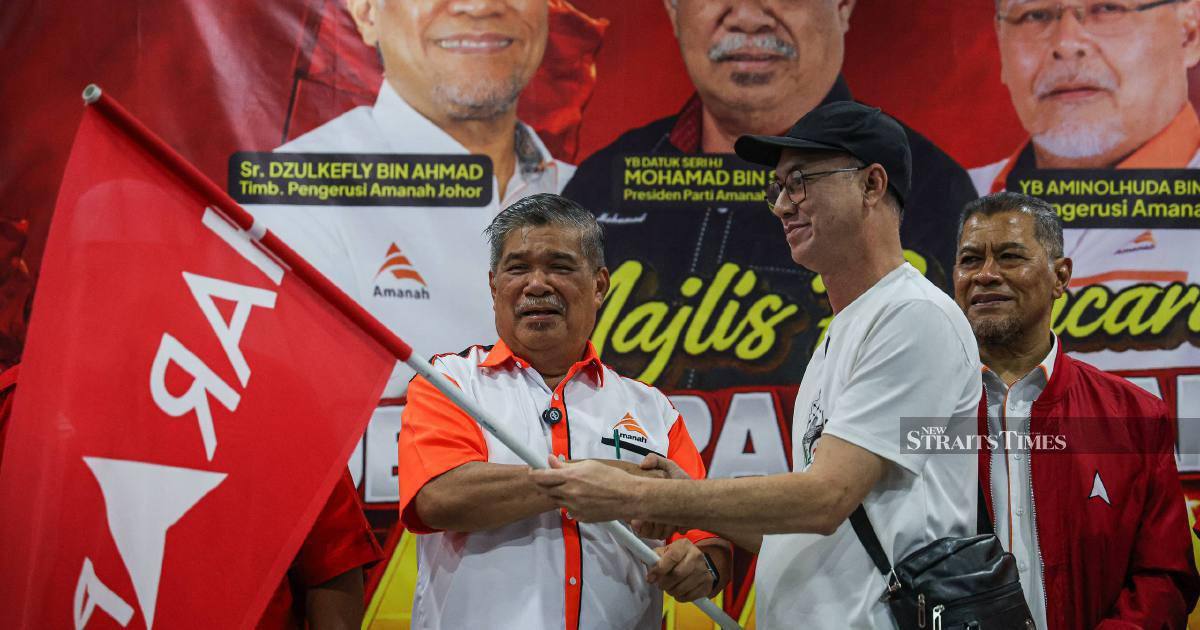
Islamic party Amanah is preparing to field 13 new candidates as part of its expanded electoral slate for the upcoming Johor state election scheduled for July 11, according to party leadership. The newcomers will represent a substantial portion of Amanah's 19-seat contest strategy, with the remaining six positions allocated to sitting representatives seeking re-election. This composition reflects a deliberate party strategy to inject fresh perspectives into electoral competition while maintaining continuity through experienced incumbents.
The decision to introduce such a significant cohort of new candidates signals Amanah's determination to broaden its appeal across Johor's diverse electoral landscape. Malaysia's political terrain has undergone considerable transformation in recent years, with voters increasingly receptive to new political voices willing to address persistent governance and socioeconomic concerns. Amanah's approach of blending new talent with established representatives attempts to strike a balance between innovation and credibility, a calculation that resonates with broader trends in Malaysian politics where voters seek both change and stability.
Amanah's candidate selection comes amid heightened political competition in Johor, one of Malaysia's most significant electoral battlegrounds. The state has historically demonstrated voting patterns that diverge from national trends, making it a crucial testing ground for opposition political strategies. By elevating new candidates, Amanah aims to present voters with alternatives beyond the political establishment, potentially capturing segments disillusioned with both the ruling coalition and longstanding opposition parties. This electoral refresh could reshape Johor's political dynamics considerably.
The 13 new faces represent diverse backgrounds and expertise that party leadership believes can address contemporary issues facing Johor residents. New candidates typically bring constituency-level visibility and grassroots connections often lacking in career politicians. However, they also present inherent risks, as untested candidates may struggle with established political machinery and media navigation. Amanah appears to have calculated that these advantages outweigh potential vulnerabilities, particularly if these newcomers succeed in mobilising younger voters and professionals previously marginal to political participation.
Amanah's electoral positioning within Malaysia's broader political configuration has evolved substantially since 2018. The party originally emerged as a splinter from the Malaysian Islamic Party, carving out a distinct identity emphasising democratic Islam and inclusive governance. However, shifting coalition alliances and the party's participation in various federal and state governments have complicated its political messaging. The infusion of new candidates potentially allows Amanah to reframe its narrative and reconnect with constituencies that may perceive the party as entrenched within establishment politics.
Johor's electoral significance extends beyond state-level implications. As Malaysia's second-largest state by population and economic output, Johor election results frequently signal broader political currents affecting national politics. An Amanah performance surge could reinvigorate the broader opposition coalition, whilst a disappointment might force reassessment of electoral alliances and candidate selection methodologies. National political observers will scrutinise how these new candidates perform as an indicator of whether fresh faces genuinely resonate with voters or whether established political brands remain decisive.
The selection of 13 newcomers also reflects Amanah's efforts to nurture political talent for long-term party development. Malaysian political parties frequently concentrate power within established circles, potentially stifling innovation and generational renewal. By deliberately promoting new candidates at significant elections, Amanah signals commitment to institutional evolution. Successful performance by these newcomers could establish a precedent encouraging other parties to embrace similar succession planning and talent development strategies, potentially improving overall quality of parliamentary and state assembly representation across Malaysia.
Implementing such an extensive candidate refresh presents practical challenges. New candidates require substantial campaign resources, media training, and voter engagement infrastructure to compete effectively against entrenched opposition candidates and ruling coalition incumbents. Amanah's grassroots organisational capacity will face considerable testing across 19 constituencies simultaneously. Party resources allocated to supporting new candidates might stretch existing infrastructure, potentially compromising performance in seats where experienced incumbents could otherwise consolidate gains.
The July 11 election itself occurs within Malaysia's evolving political context. Federal politics remain fluid following recent shifts in coalition configurations and leadership transitions. Johor election results could either reinforce or disrupt these equilibria, with implications for future federal alignment negotiations. Amanah's performance could influence calculations regarding potential coalition partnerships, particularly if new candidates exceed expectations and demonstrate considerable vote-gathering capacity among previously dormant voter segments.
Voter reception to Amanah's new candidates will ultimately depend on campaign execution, local issue responsiveness, and broader political sentiments towards the party. Malaysian voters demonstrate sophisticated discernment regarding candidate quality and genuine community commitment versus opportunistic political ambitions. New faces lacking established track records face steeper evidentiary burdens in demonstrating serious commitment to constituency representation. Amanah's success in articulating compelling reasons for supporting these newcomers, beyond simple novelty, will substantially determine electoral outcomes.
The broader implications of this candidate strategy extend beyond immediate electoral mathematics. Political renewal through deliberate new candidate elevation represents important institutional practice for healthy democratic politics. Malaysian political development would benefit from systematic approaches to identifying and promoting emerging political talent across multiple parties. Amanah's July 11 electoral exercise effectively constitutes a test case for whether Malaysian voters reward such generational renewal efforts or continue prioritising established political personalities and institutional prestige.
%22%2F%3E%3C%2Fpattern%3E%3C%2Fdefs%3E%3Crect%20width%3D%22100%25%22%20height%3D%22100%25%22%20fill%3D%22url(%23ph58ve7g)%22%2F%3E%3Crect%20width%3D%22100%25%22%20height%3D%22100%25%22%20fill%3D%22url(%23ph58ve7p)%22%2F%3E%3Ctext%20x%3D%2250%25%22%20y%3D%2250%25%22%20text-anchor%3D%22middle%22%20dominant-baseline%3D%22central%22%20fill%3D%22rgba(255%2C255%2C255%2C0.95)%22%20font-family%3D%22Georgia%2C%20'Times%20New%20Roman'%2C%20serif%22%20font-weight%3D%22700%22%20font-size%3D%22170%22%20letter-spacing%3D%22-0.02em%22%3EMinistry%3C%2Ftext%3E%3C%2Fsvg%3E)