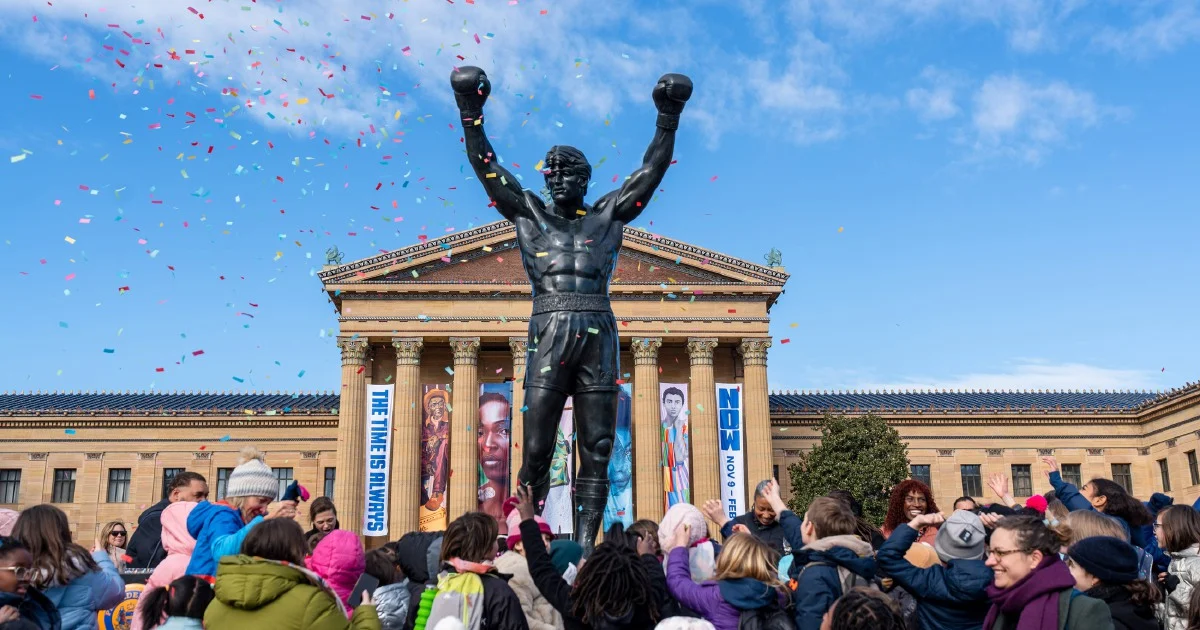
Philadelphia authorities and local historians issued a stern caution to France's World Cup supporters on Saturday regarding one of America's most recognisable monuments: the Rocky Balboa statue overlooking the Philadelphia Museum of Art. The warning comes amid mounting evidence that touching or adorning the bronze figure with team colours has coincided with unexpected sporting defeats for numerous nations whose fans visited the statue in preparation for major tournaments.
The superstition surrounding the 2.7-metre statue, cast by sculptor A. Thomas Schomberg and unveiled in 1982 for the film's premiere, has grown into a peculiar sporting folklore. Teams that have allowed their supporters to drape national flags, scarves, or jerseys on the statue—or even rub its arm for luck—have reportedly experienced surprisingly poor performances in subsequent competitions. This pattern has become sufficiently noticeable that sports journalists and statisticians have begun documenting the correlation between visits to the statue and tournament outcomes.
France's football federation and tournament organisers took the unprecedented step of circulating the warning through official channels, emphasising the stakes for the national team. Whether officials genuinely believe in the curse or simply wish to discourage fans from vandalising public property remains ambiguous, though the message was delivered with unmistakable seriousness. The concern reflects how superstition can permeate even modern professional sports, where scientific preparation and statistical analysis dominate tactical discussion.
Philadelphia's relationship with the Rocky statue exemplifies how popular culture can transform a work of art into a pilgrimage site for sports fans worldwide. Originally appearing in the 1982 film as a symbol of determination and unlikely victory, the statue has evolved into something far more significant—a touchstone for athletic aspiration. Visitors from around the globe journey to the museum's steps to photograph themselves alongside Sylvester Stallone's fictional boxer, treating the moment as a blessing for their own competitive pursuits.
The curse's mechanisms, according to local lore, operate through a mysterious inversion of intent. Supporters who visit the statue hoping to channel Rocky's triumphant spirit seemingly accomplish the opposite. This mirrors similar sports superstitions across cultures—voodoo dolls, curses affecting opponents' equipment, or the supposed hex associated with certain venues. What distinguishes the Rocky statue phenomenon is its specificity and the international scope of believers affected by it.
Historians and cultural observers note that the statue's curse mythology has strengthened rather than diminished with each documented instance. When a highly favoured team underperforms shortly after supporters visit the site, the connection gains credibility within sporting circles. This creates a self-reinforcing cycle where awareness of the curse increases the likelihood of teams avoiding it, which then prevents additional testing of the superstition's validity.
For France's team management, the warning presents a delicate challenge. Banning supporters from visiting a public monument would prove impossible and potentially counterproductive, generating resentment and defiance. Instead, the strategy appears focused on persuasion and gentle discouragement, framing the statue as a potential liability rather than an asset. This approach respects supporters' autonomy whilst clearly articulating the risks associated with tradition-breaking behaviour.
The Rocky statue incident reveals deeper truths about how international football fans construct meaning around their tournament experiences. Travel to major competitions has become a pilgrimage, with supporters seeking connections to victory through cultural icons and symbolic locations. Philadelphia's monument represents not merely a fictional character but a repository of hopes and anxieties about national sporting pride projected onto bronze and stone.
France's historical World Cup success, built on tactical discipline and technical excellence, contrasts sharply with the magical thinking embodied by statue-touching rituals. Yet even the most rational athletes and managers acknowledge the psychological dimensions of competition. If supporters genuinely believe the curse exists, their anxiety about the statue becomes a real psychological factor that could subtly undermine team confidence and morale through conversation and media coverage.
Malaysian and Southeast Asian sports fans, accustomed to their own regional superstitions and lucky charms during tournament season, may find the Rocky statue narrative particularly resonant. Similar folk beliefs circulate throughout the region, where temple visits before competitions and ritual preparations remain common practises. The Philadelphia warning illustrates how superstition transcends geographic boundaries and connects international communities through shared, irrational hopes.
Local authorities will likely monitor whether French supporters heed the warning during their Philadelphia stay. The outcome—whether France's team subsequently performs brilliantly or disappoints—will either validate or demolish the curse narrative. Regardless, the Rocky statue will endure as a symbol contested between its artistic and historical significance on one hand and its role as a supposed sporting liability on the other, a monument to both artistic achievement and human beings' enduring need to believe in forces beyond rational explanation.