Navigating George Town, Penang's layered historical landscape becomes manageable once visitors understand the city's geography through its arterial roads and thematic zones. The UNESCO-designated heritage zone—anchored by major thoroughfares such as Beach Street, Armenian Street, Lebuh Carnavon, Lebuh Chulia and Pengkalan Weld—draws the bulk of tourists seeking restored colonial architecture, curio shops and vintage finds. Yet beyond this familiar circuit lies a deeper Penang experience, one that increasingly revolves around the island's outsized culinary reputation and the stories embedded in its older neighbourhoods.
Jalan Burma, stretching nearly five kilometres from the heritage zone's border to the upscale Pulau Tikus neighbourhood, exemplifies this convergence. The road functions as both a practical connector and a cultural artery, hosting everything from heritage accommodation to food stalls earning recognition from Michelin's prestigious guides. Understanding this thoroughfare requires grasping both its physical layout—a generally safe and walkable stretch with only isolated gaps in pedestrian infrastructure—and its historical layers, which reveal how Penang's diverse communities have successively left their imprint on the urban fabric.
The road's nomenclature itself traces Penang's multicultural past. Originally called Burmah Road, as faded signboards still attest, it bore several names in Malay, Hokkien and Cantonese, each encoding a particular function or community perspective. Jalan Tarek Ayer and Water Cart Road both reference the bullock carts that once transported water through the area, a mundane yet essential service that shaped the colonial settlement's daily rhythms. When a Burmese community established itself in nearby Pulau Tikus during the nineteenth century, the main road acquired the name by which locals know it today. This linguistic archaeology—readable on an information board beneath the Komtar Octopus Pedestrian Bridge—reminds visitors that Penang's streets are palimpsests of migration, trade and adaptation.
That Burmese heritage persists visibly along Jalan Burma's quieter lanes. The Dhammikarama Burmese Temple, erected two centuries ago, remains an active place of worship and cultural anchor, while surrounding roads bear Burmese nomenclature: Rangoon Road, Mandalay Road and Moulmein Close preserve connections to the homeland of settlers who once arrived by sea. These place names constitute an informal heritage map, one that guidebooks seldom highlight but which offers curious walkers a tangible sense of how immigrant communities shaped their new home.
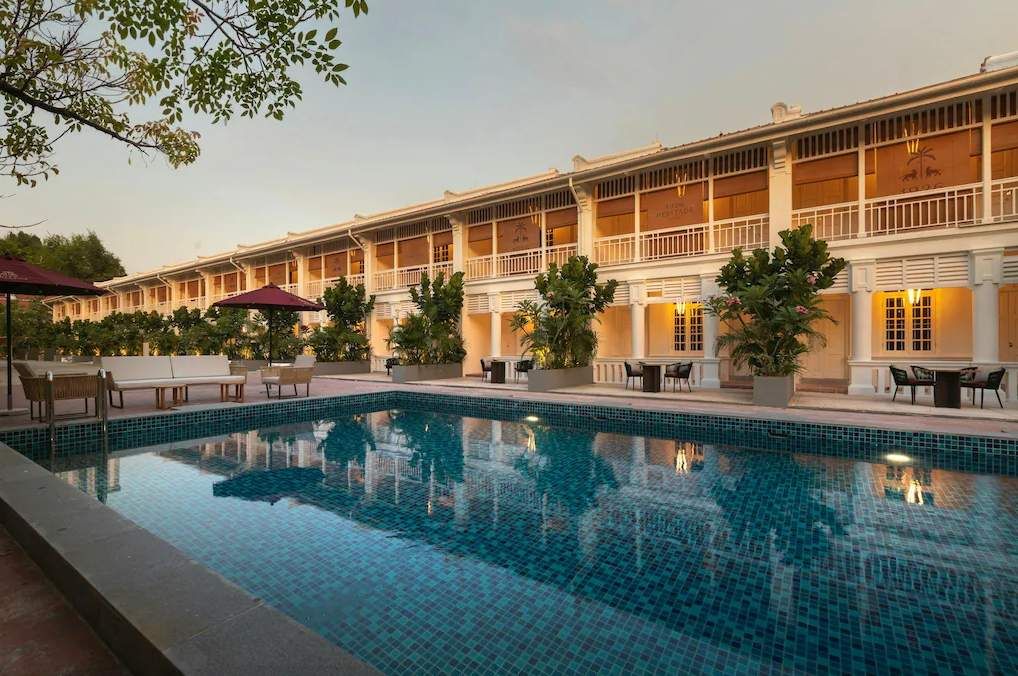
The contemporary appeal of Jalan Burma, however, increasingly stems from hospitality and dining rather than historical tourism alone. A landmark establishment anchoring the street is a heritage hotel completed in 1926, marking its centennial year. Built originally as interconnected residential quarters for British and local government personnel, the structure exemplifies the Anglo-Malay architectural aesthetic common to George Town's colonial period. When the Penang Development Corporation converted it to a hotel in 1999, the original twenty-four link houses were reconfigured into 78 rooms and suites spanning six categories. The Heritage Room caters to solo travellers seeking intimate quarters, while the Straits Suite represents the property's largest offering, allowing visitors to inhabit colonial-era spaces without sacrificing modern comfort—a poignant arrangement that lets guests literally inhabit the past.
Surrounding this hotel, Jalan Burma hosts a concentration of Michelin-recognised eateries that constitute a significant draw for food-focused travellers. Penang boasts 74 such establishments, with two carrying one-star awards, 33 appearing on the Bib Gourmand list—typically indicating quality street food or informal dining at exceptional value—and 39 classified as Michelin Selected venues. Many cluster in George Town itself, making the heritage zone and its neighbouring streets the epicentre of this culinary recognition. For visitors seeking to experience Penang's famous food culture through Michelin's lens, the concentration means that a single day's walk can encompass multiple acclaimed venues without requiring extensive travel.
Among the stalls earning Bib Gourmand recognition along Jalan Burma is Green House Prawn Mee & Loh Mee, now operating from Restoran Old Green House. The dish exemplifies Penang's particular noodle traditions: delicate prawn stock infused with wok heat and supplemented by prawns and pork, representing a synthesis of techniques and ingredients that local cooks have refined over generations. The stall's original location has spawned something of an identity debate, with a newer Green House Prawn Mee/Loh Mee Corner nearby generating discussion about authenticity and provenance—a common phenomenon in Penang's competitive food landscape where loyal customer bases form around specific venues and cook histories. Duck Blood Curry Mee, located nearby, offers an alternative expression of Penang's noodle vocabulary, employing darker, spicier broths and the polarizing ingredient of duck blood that defines the dish's character.
These informal eateries, whether operating as standalone stalls or within larger food courts and coffeeshops, hold particular appeal for visitors seeking an unmediated engagement with Penang's food culture. The sensory immersion—the layered aromas of competing broths and woks, the visual theatre of skilled cooks assembling noodles with practiced efficiency, the proximity to ingredients and preparation—creates an experience fundamentally different from fine dining establishments. The authenticity that Michelin recognition confers on these venues validates what local eaters have long known: that exceptional food emerges as readily from corner stalls as from formal restaurants. For travellers uninterested in tuxedoed service, such venues offer a more democratic form of culinary tourism.
Walking Jalan Burma as a visitor requires modest preparation, particularly given Penang's tropical heat. The nearly five-kilometre return journey to the heritage zone's main attractions—such as the historic shophouses lining Lebuh Campbell, Lebuh Kimberley and Beach Street—demands hydration and sun protection, resources the heritage hotel thoughtfully provides through borrowable umbrellas and high-tech water filtration systems in guest rooms. The walking pace itself becomes part of the experience, allowing sequential discovery of street-level commerce, informal dining venues and architectural details that motorised transit obscures.
Beyond the main commercial stretch, Jalan Burma connects to other weekend-activated cultural spaces. The Hin Bus Depot, accessible from the road's vicinity, functions as a marketplace for local vendors selling curios, artworks, handmade clothing and souvenirs, alongside homemade food and beverages consumed while watching live music performances. This venue represents the community-oriented, non-commercialised cultural production that increasingly defines Penang's appeal to discerning travellers seeking encounters with local creativity rather than standardised tourism products.
For Malaysian visitors and regional tourists, Jalan Burma encapsulates contemporary Penang in miniature: a street where colonial institutional architecture meets vernacular food culture, where immigrant heritage persists in place names and temples, where Michelin's international validation intersects with local eating traditions, and where a five-kilometre walk encompasses multiple dimensions of what makes the island a destination worth extended exploration. The road neither requires guidebook mediation nor destination-specific expertise to navigate successfully; it yields its pleasures to attentive walkers willing to move slowly through a layered urban landscape.