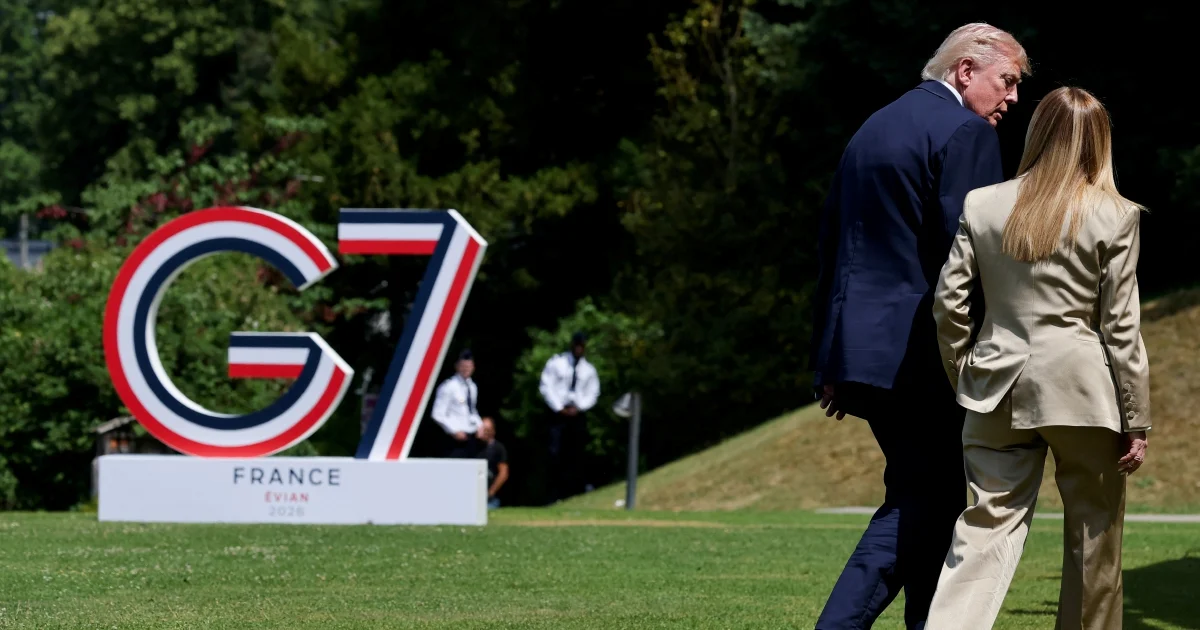
Italy escalated its rebuke of the United States this week after reported remarks attributed to American President Donald Trump characterizing Prime Minister Giorgia Meloni's behaviour as overeager and undignified. The diplomatic friction emerged when Trump's purported statements suggesting Meloni had sought out a photograph with him gained prominence in media coverage, triggering what officials in Rome characterised as an inappropriate reflection on the Italian leader's conduct and standing. The controversy underscored underlying tensions within the historically close alliance between Rome and Washington, particularly given Meloni's consistently pro-American foreign policy orientation and her previous efforts to cultivate strong bilateral relations.
Foreign Minister Antonio Tajani announced the cancellation of his planned journey to the United States, a dramatic step that conveyed the depth of Italian government displeasure with the alleged remarks. Tajani's decision to scrap the visit represented more than mere bureaucratic scheduling—it served as a symbolic gesture demonstrating Rome's unwillingness to proceed with normal diplomatic engagement without addressing what officials viewed as disrespectful characterisation of their sitting Prime Minister. The foreign ministry signalled that the postponement would remain in effect pending clarification or formal acknowledgment of the situation, though officials carefully framed the action as a measured response rather than an escalation.
The incident illuminated broader challenges within transatlantic relations as Trump returned to the American presidency. Despite Italy's NATO membership and its traditionally reliable alignment with Western security interests, Italian officials felt compelled to defend their national dignity against what they perceived as casual mockery from the White House. This dynamic proved particularly sensitive given Italy's centre-right political composition and Meloni's expressed admiration for conservative leadership models, factors that had previously positioned her as potentially sympathetic to Trump's political vision and governance approach.
Meloni herself weighed in on the controversy through public statements that balanced diplomatic prudence with necessary defence of her reputation. Rather than engaging in inflammatory rhetoric that might further damage relations, the Prime Minister characterised the alleged remarks as unbecoming of a leader of Trump's stature while stopping short of personal attacks. Her measured response reflected the genuine bind facing Italian leadership: maintaining alliance credibility with Washington while simultaneously protecting national honour and asserting that even close allies deserve respectful treatment from one another.
The timing of the dispute created additional complexity for European governments already grappling with Trump's unpredictability regarding NATO commitments, trade relationships, and security arrangements across the continent. Italy, as the European Union's third-largest economy and a significant military power within the alliance, carries particular weight in transatlantic discussions about burden-sharing, defence spending, and strategic coordination. When relations with Rome become strained over matters of personal respect and diplomatic protocol, the ramifications extend beyond bilateral irritants to affect the broader European-American partnership.
Observers across Europe watched Italy's response with attention, as the reaction established a template for how other allied nations might respond to similar perceived slights from the Trump administration. European leaders have learned from experience that the American President's public comments, whether spontaneous or calculated, carry consequences for diplomatic relationships and international stability. Italy's decision to cancel the foreign minister's visit signalled that even traditionally cooperative governments would not passively accept what they viewed as disrespectful treatment, establishing expectations for how future interactions should be conducted.
The controversy also reflected deeper questions about personality-driven foreign policy and the role of personal relationships between leaders in shaping international affairs. Trump's characterisation of high-level diplomatic encounters as opportunities for media-friendly photographs—whether accurate or not—revealed different conceptions of how state-to-state interactions should be conducted. Italian officials and other European leaders generally prefer to compartmentalise personal dynamics from strategic calculations, viewing such separation as essential to maintaining stable, professional relationships regardless of individual personalities.
For Malaysia and other Southeast Asian nations observing from afar, the Italian-American friction provided instructive lessons about navigating relationships with unpredictable superpower leadership. Like Italy, many countries across Asia maintain alliance commitments to the United States while simultaneously seeking to preserve their autonomy and dignified treatment within those relationships. The episode demonstrated that even long-standing, institutionally-embedded partnerships cannot be taken for granted when senior leaders prioritise public commentary over diplomatic discretion.
The dispute remained unresolved as both sides appeared content to allow tensions to settle without formal apologies or escalatory statements. Whether Tajani would ultimately proceed with his American visit or whether the cancellation would persist remained unclear, though the underlying message from Rome had been delivered: allied status does not grant immunity from accountability for disrespectful conduct toward fellow leaders. The incident served as a reminder that even in the hierarchical world of great power politics, questions of mutual respect and dignified treatment retain significance in shaping the climate for productive cooperation.