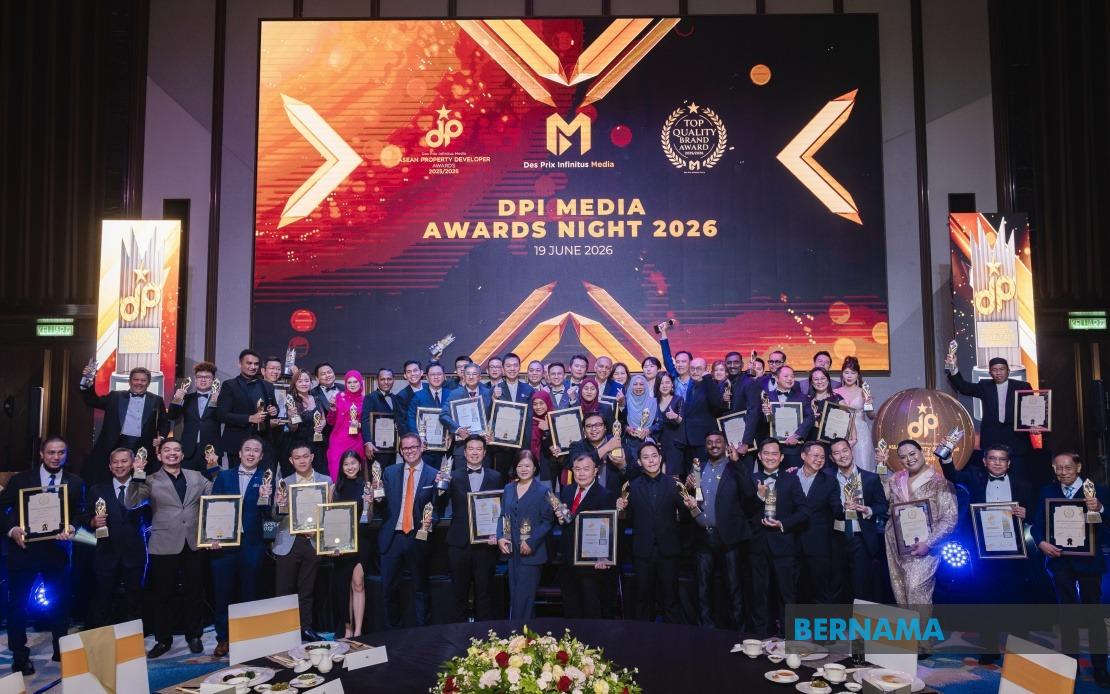
The ASEAN region's development and business sectors received significant recognition when more than 70 prestigious awards were conferred at a gala ceremony in Kuala Lumpur on June 19. The ASEAN Property Developers Awards 2025/2026 and Top Quality Brand Awards 2025/2026, organised by Des Prix Infinitus Media, brought together industry pioneers and corporate leaders to celebrate their contributions to regional prosperity and innovation. Deputy Minister in the Prime Minister's Department (Federal Territories) Datuk Lo Su Fui and Des Prix Infinitus Media Managing Director Hagenz Choo jointly presided over the occasion, underscoring the event's significance within Malaysia's broader development agenda.
The awards programme represents a deliberate effort to spotlight organisations whose strategic vision and operational excellence are reshaping the ASEAN business landscape. Property development in particular has emerged as a cornerstone of Southeast Asia's economic transformation, with developers playing a pivotal role in constructing not merely structures but entire urban ecosystems that support growing populations and evolving consumer needs. The recognition accorded at this ceremony reflects the industry's maturing recognition that success must be measured beyond financial returns, extending instead to the quality of life improvements delivered to communities and the environmental stewardship demonstrated throughout projects.
In his address, Lo underscored the strategic importance of acknowledging developers whose work extends beyond commercial imperatives to embrace sustainable urbanisation principles. The property sector's evolution toward creating inclusive, safe, and resilient urban spaces has become increasingly critical as ASEAN nations grapple with rapid urbanisation and the resulting infrastructure demands. Lo emphasised that these award recipients exemplify how development can simultaneously drive economic progress while advancing the region's commitment to sustainable cities and communities—a recognition that resonates particularly strongly in Malaysia, where urban planning decisions carry implications for national carbon neutrality targets and environmental preservation.
The deputy minister also highlighted Malaysia's trajectory as a progressive urban centre, drawing connections between responsible planning practices and Kuala Lumpur's continued emergence as a regional economic hub. This positioning reflects a broader Southeast Asian narrative wherein cities compete not merely on investment returns or property valuations but increasingly on their ability to deliver liveable, sustainable environments that attract both talent and capital. Malaysian property developers operating across the region have found themselves at the forefront of this shift, adapting business models to incorporate environmental and social governance considerations that stakeholders now demand.
The Top Quality Brand Awards component of the ceremony acknowledged organisations that have constructed lasting consumer relationships through consistent delivery of superior products and services. In an increasingly competitive regional market, brand loyalty has become a strategic asset that transcends traditional marketing, rooted instead in demonstrated commitment to quality and innovation. The ceremony recognised that successful brands are those willing to evolve their offerings and business practices in response to changing consumer preferences and heightened expectations regarding corporate responsibility. The emphasis on Environmental, Social, and Governance values indicates a maturing business ecosystem wherein long-term sustainability has become inseparable from competitive advantage.
Hagenz Choo characterised Des Prix Infinitus Media's role as extending beyond conventional publishing functions to encompass a broader mission of documenting and celebrating business achievement across the ASEAN region. This positioning aligns with a growing recognition that business media serves a curative function in establishing industry standards and inspiring competitive excellence among peers. By creating platforms wherein achievements are formally recognised and success stories are publicly chronicled, media organisations contribute to establishing benchmarks that elevate overall sectoral performance and encourage continuous improvement among participants.
Choo's articulation of property development's true purpose—creating tangible value for real people rather than merely accumulating land assets—reflects an important philosophical shift within the sector. This perspective acknowledges that property development's legitimacy and long-term viability depend upon delivering genuine improvements to residents' daily lives, whether through thoughtful urban design, reliable infrastructure, or community amenities. Developers embracing this orientation distinguish themselves from competitors pursuing purely extractive strategies, building resilient businesses that weather regulatory scrutiny and consumer activism more effectively because their projects command genuine community support.
The regional participation evident at the ceremony underscores ASEAN's emergence as a cohesive business zone wherein companies increasingly operate across multiple national boundaries and regulatory environments. The awards programme itself functions as a networking mechanism, bringing together leaders who otherwise operate within distinct national contexts but share common challenges regarding urbanisation, sustainability, and brand building in competitive markets. For Malaysian businesses, this regional positioning offers opportunities to benchmark performance against neighbouring enterprises and to identify best practices that can be adapted to local contexts.
The growth of such recognition platforms reflects broader maturation within ASEAN business communities, where formal acknowledgment of excellence has become integrated into corporate strategy and talent recruitment. Winning such awards carries measurable benefits for organisations, enhancing brand perception among consumers, employees, and investors while validating strategic decisions to boards and shareholders. For emerging companies, award recognition serves as a credibility signal that can accelerate market penetration and investor confidence, particularly important in competitive sectors like property development where consumer trust remains paramount.
The ceremony's emphasis on sustainable development and ESG-driven business strategies reflects international pressure and domestic policy commitments reshaping corporate behaviour throughout the region. Malaysian companies, operating within a national framework increasingly focused on environmental targets and social equity, find these award criteria aligned with regulatory expectations and stakeholder demands. The recognition accorded to businesses demonstrating genuine ESG commitment sends market signals that innovation and responsibility represent competitive requirements rather than optional corporate gestures, encouraging broader sectoral transformation.
Looking forward, such recognition platforms are likely to become increasingly important within ASEAN's development trajectory. As the region continues rapid urbanisation and economic expansion, the quality of leadership and strategic vision guiding major corporations will substantially determine whether growth translates into genuine prosperity and liveable communities or merely reproduces extractive patterns that concentrate benefits while externalising costs onto populations and environments. Awards programmes celebrating businesses and developers who navigate this complexity successfully contribute to establishing aspirational standards that elevate collective performance across the region.