%22%2F%3E%3C%2Fpattern%3E%3C%2Fdefs%3E%3Crect%20width%3D%22100%25%22%20height%3D%22100%25%22%20fill%3D%22url(%23ph1ni6dg)%22%2F%3E%3Crect%20width%3D%22100%25%22%20height%3D%22100%25%22%20fill%3D%22url(%23ph1ni6dp)%22%2F%3E%3Ctext%20x%3D%2250%25%22%20y%3D%2250%25%22%20text-anchor%3D%22middle%22%20dominant-baseline%3D%22central%22%20fill%3D%22rgba(255%2C255%2C255%2C0.95)%22%20font-family%3D%22Georgia%2C%20'Times%20New%20Roman'%2C%20serif%22%20font-weight%3D%22700%22%20font-size%3D%22272%22%20letter-spacing%3D%22-0.02em%22%3EMedia%3C%2Ftext%3E%3C%2Fsvg%3E)
Prime Minister Datuk Seri Anwar Ibrahim's recent commitment to allocate an extra RM1 million toward the Tabung Kasih@HAWANA fund, coupled with the extension of the Media Innovation Fund, has drawn broad approval from media organisations and journalists across the country. Industry leaders view the dual investment as a watershed moment for an sector navigating profound technological disruption and workforce pressures that threaten both professional standards and livelihoods.
Radio Televisyen Malaysia director-general Ashwad Ismail characterised the announcement as confirmation that government recognises media's evolving role in an increasingly complex information ecosystem. He emphasised that artificial intelligence and rapid technological change demand that newsrooms evolve their capabilities continuously, or risk irrelevance in serving the Malaysian public. Ashwad framed the funding as evidence that Prime Minister Anwar grasps the strategic importance of enabling media organisations to invest in systems, training, and tools that allow them to produce quality journalism at pace, rather than falling behind digital-native competitors or succumbing to cost-cutting that compromises editorial integrity.
The welfare dimension of the announcement addresses an acute but often-overlooked crisis within the profession. Muhammad Yatimin Abdullah, president of Kelantan Darul Naim Media Club and himself a journalist at Utusan Malaysia, highlighted that the Tabung Kasih@HAWANA fund fills a critical gap by providing support to media workers and retired journalists facing financial hardship. In an industry marked by declining advertising revenues, casualisation of newsroom staff, and the exit of experienced journalists to other sectors, such safety nets become increasingly vital for retaining talent and preventing the erosion of professional expertise that underpins quality reporting.
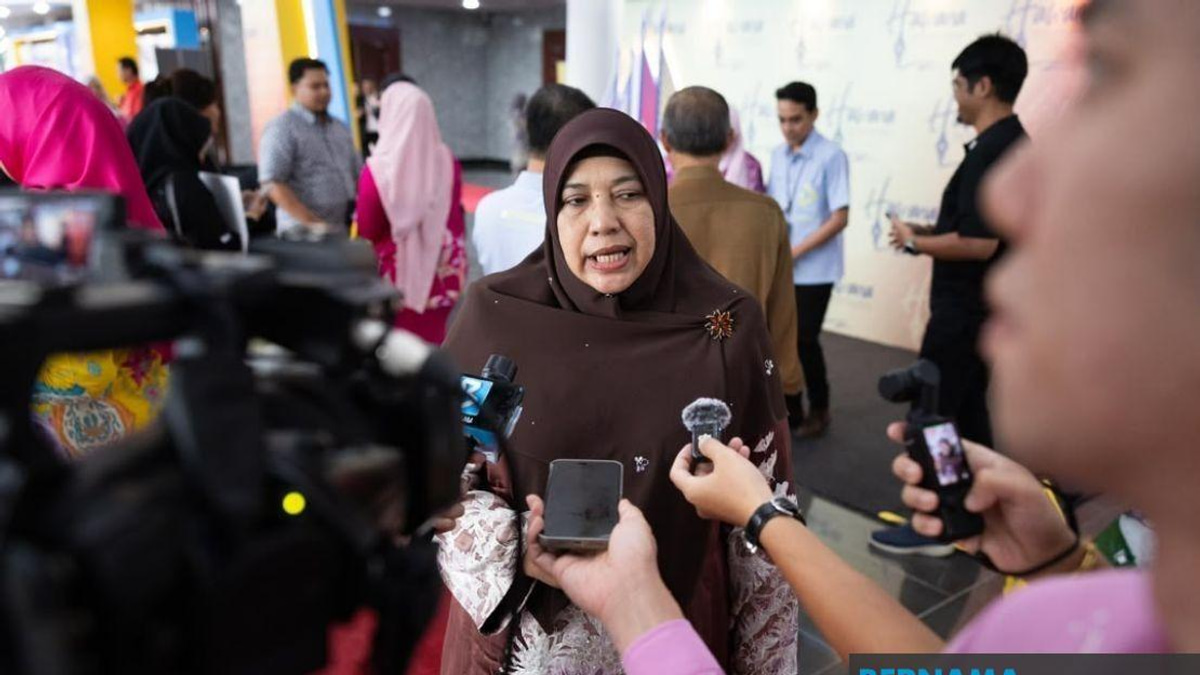
Wan Syamsul Amly Wan Seadey, president of the Kuala Lumpur and Selangor Journalists Club and an Astro Awani journalist, underscored that the welfare allocation signals government concern for practitioners at the industry's precarious edges—particularly freelancers navigating irregular income and inadequate benefits. However, Wan Syamsul seized the moment to propose an expansion of the support framework, suggesting that HAWANA establish an education fund in the coming year to enable journalists to pursue professional development, skills upgrading, and formal qualifications. This proposal reflects a recognition that investing in human capital, not merely crisis relief, is essential for elevating journalism standards across Malaysia.
The continuation of the Media Innovation Fund represents the government's acknowledgement that Malaysian media organisations cannot compete or serve the public adequately using production methods and business models inherited from the pre-digital era. The fund, which has previously received allocations totalling RM30 million, provides crucial resources for newsrooms to experiment with audience engagement tools, data journalism, multimedia storytelling, and automated workflows. These investments help local news organisations maintain relevance as audiences fragment across platforms and expect journalism that is both rapid and rigorously verified—a challenge that requires sophisticated infrastructure many regional outlets struggle to afford independently.
Siti Nooraeina Omar, a lecturer at Han Chiang University College of Communication, articulated a perspective increasingly shared among media scholars and practitioners: the operational environment facing journalists today is fundamentally different from that of the early 2000s. News production must now accommodate breaking news cycles measured in minutes, multiplatform distribution, audience analytics, and content monetisation strategies that the traditional business model never required. Media organisations that fail to modernise risk becoming obsolete not because they produce poor journalism, but because outdated systems make it impossible to distribute and monetise content effectively in a fragmented digital landscape.
Crucially, Siti Nooraeina highlighted a theme that Prime Minister Anwar himself emphasised: innovation in production tools does not diminish journalism's core mission, which remains the rigorous verification of information. Rather, automation and technological capability free journalists from repetitive administrative tasks, enabling them to focus on investigation, analysis, and contextualisation—the distinctly human functions that machines cannot replicate. This framing addresses a common anxiety among media professionals that innovation necessarily means job losses or the replacement of human judgment with algorithmic curation. Instead, the fund is positioned as an enabler of higher-value work.
The announcement arrives at a moment when Malaysia's media ecosystem faces multiple pressures simultaneously. Advertising dollars have migrated to technology platforms that capture audience attention but do not invest in original reporting. Misinformation and disinformation campaigns proliferate unchecked on social networks, eroding public trust in all news sources indiscriminately. Younger audiences consume news, if at all, in fragmented bursts from social feeds rather than through traditional media channels. Against this backdrop, government funding for welfare and innovation signals that Malaysia intends to preserve a professional media infrastructure capable of serving the public interest, rather than allowing journalism to collapse into purely commercial or propagandistic forms.
For Malaysian media organisations, particularly smaller regional outlets and state-owned broadcasters lacking the commercial scale of major newspaper groups, the innovation fund offers access to technology and expertise that would otherwise remain unaffordable. This levelling effect helps ensure that quality journalism is not a monopoly of wealthy, metropolitan-based publishers, but a distributed resource across the country. Such geographic and organisational diversity in journalism capacity strengthens democratic accountability and local reporting, areas where Malaysia has historically faced coverage gaps.
The welfare fund, meanwhile, serves a function beyond immediate financial relief: it validates journalism as a profession worthy of social support, positioning journalists as contributors to public good rather than mere commercial workers. This symbolic dimension matters, particularly as media careers have become less stable and prestigious than in previous generations, making recruitment and retention of talented people more difficult. By establishing and expanding welfare infrastructure, government sends the message that journalists merit support equivalent to other professionals—teachers, doctors, civil servants—whose work is understood to serve collective interests.
Looking forward, the impact of both initiatives will depend heavily on implementation. The innovation fund's effectiveness hinges on whether allocation processes prioritise genuine capability-building over patronage or pet projects, and whether media organisations have capacity to absorb funding strategically rather than treating it as temporary relief. The HAWANA welfare fund, meanwhile, requires transparent, equitable administration and sufficient resources to meet actual demand from the practitioner population it serves. Industry leaders' willingness to engage constructively with government, as evidenced by proposals like Wan Syamsul's education fund suggestion, indicates the potential for these mechanisms to evolve into sustainable, intelligent support systems rather than static bureaucratic programmes.