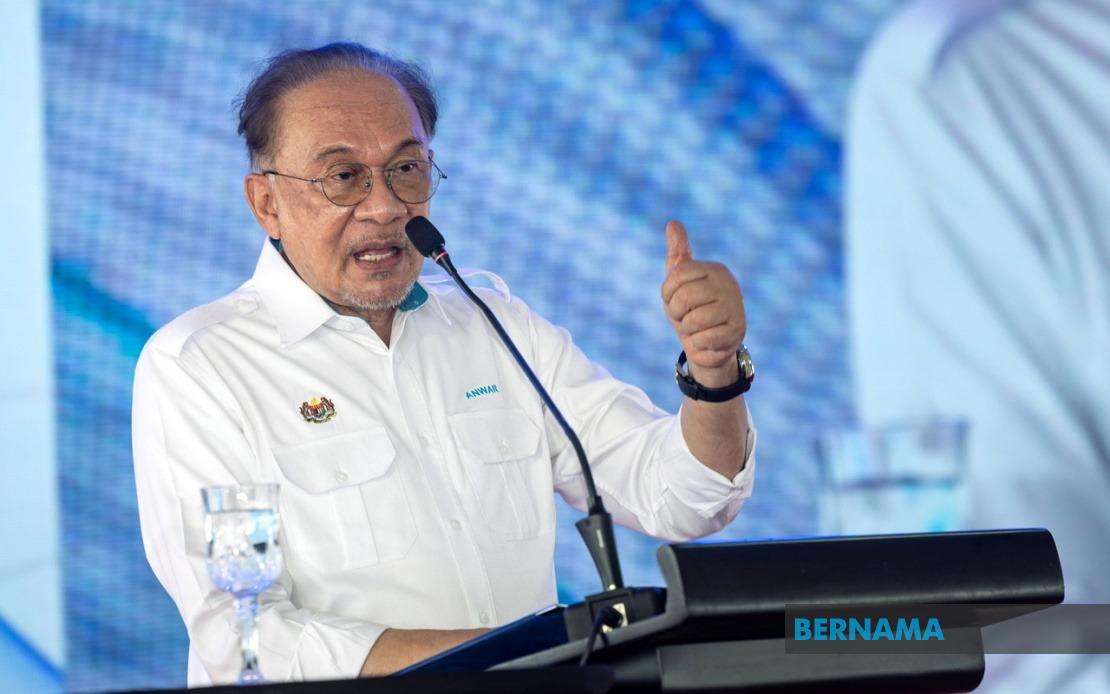
Prime Minister Datuk Seri Anwar Ibrahim has unveiled significant energy agreements with Russia and Turkmenistan that he says will underpin Malaysia's fuel security well into the coming decades. Speaking at the Setia Fontaines Industrial Park groundbreaking ceremony in Kepala Batas on June 20, Anwar outlined how these partnerships represent a major shift in securing the nation's long-term energy independence amid global supply chain uncertainties.
During his recent official visit to Russia, Anwar met with President Vladimir Putin and obtained assurances of a two-decade supply arrangement covering crude oil, natural gas, and diesel products. The Prime Minister emphasised that this commitment reflects the deepening diplomatic relations between Kuala Lumpur and Moscow, moving beyond traditional trade rhetoric into binding structural agreements that will serve Malaysia's industrial and consumer needs through 2044 and beyond.
The Turkmenistan engagement has yielded even more expansive opportunities. Following Turkmenistan President Serdar Berdimuhamedov's December 2024 visit to Malaysia, subsequent negotiations have granted Malaysian interests access to new hydrocarbon exploration and production ventures. This breakthrough is particularly significant given Turkmenistan's position as one of the world's largest natural gas repositories, a resource that remains underutilised in regional energy markets.
Anwar framed these agreements as crucial pillars of national economic resilience. Malaysia's historical reliance on Petronas-operated domestic reserves has shown signs of maturation, with production plateauing over recent years. By tapping into external sources—particularly Turkmenistan's vast reserves—the country can maintain stable domestic consumption while simultaneously expanding its role as an energy trader and processor for Asian markets with insatiable demand.
The strategic value extends beyond domestic consumption. Anwar explicitly mentioned that secured energy supplies will enable Malaysia to increase exports and re-exports to high-demand industrial economies including China, Japan, and South Korea. This positioning transforms Malaysia from a primary energy producer into an energy hub, capturing margins through liquefaction, refining, and distribution activities that generate higher-value employment and government revenues.
For Malaysia's manufacturing sector, cheap and reliable energy represents a competitive advantage that has eroded in recent years. Industrial parks, petrochemical complexes, and export-oriented factories have faced rising operational costs as regional energy prices tracked volatile global benchmarks. Long-term fixed agreements with Russia and Turkmenistan could stabilise input costs for decades, making Malaysian manufacturing more attractive to foreign investors contemplating relocation from higher-cost jurisdictions.
The timing of these announcements reflects broader geopolitical realignments reshaping Asia's energy architecture. Western sanctions against Russian energy exports have redirected Moscow's trade flows eastward, creating opportunities for nations willing to maintain commercial relations. Malaysia's pragmatic approach—securing advantageous terms while maintaining diplomatic neutrality—positions it favourably compared to countries bound by stricter international alignments.
Turkmenistan's involvement adds a different dimension. Central Asian gas reserves are increasingly becoming focal points in Asian energy competition, with multiple pipelines and liquefaction projects competing for market access. Malaysia's newfound partnership provides a direct channel to these resources without dependence on transit countries or middlemen, reducing costs and improving supply reliability compared to spot-market purchases on international exchanges.
The agreements also carry implications for Malaysia's economic diversification goals. Downstream industries built around hydrocarbon processing—from petrochemicals to fertilisers—require stable feedstock supplies to remain competitive. Secured energy agreements create the predictability necessary for long-term capital investment in these sectors, potentially attracting multinational corporations establishing regional manufacturing and refining hubs.
Anwar's emphasis on leveraging international relations for national interest signals a deliberate strategy of maximalising bilateral partnerships to strengthen economic fundamentals. This approach acknowledges that energy security underpins prosperity, employment creation, and the government's capacity to fund social programmes and infrastructure development. Without stable energy supplies at reasonable costs, Malaysia's broader economic objectives become difficult to achieve.
For Southeast Asia broadly, Malaysia's energy deals demonstrate how individual nations are pursuing diversified supply arrangements rather than relying on single sources or regional arrangements. This fragmentation reflects both the competitive nature of energy markets and the political considerations shaping trade patterns. As global energy transitions accelerate, securing baseload supplies through long-term contracts becomes increasingly valuable.
The practical implementation of these agreements will unfold over coming years through joint ventures, infrastructure development, and regulatory frameworks governing exploration and production activities. Malaysian entities, likely led by Petronas alongside potential private-sector partners, will need to operationalise these arrangements while managing technical, logistical, and commercial challenges inherent in transnational energy projects.
Ultimately, these partnerships represent a hedging strategy against future energy market volatility and geopolitical disruptions. By locking in supplies across two major producers with different geographic and geopolitical profiles, Malaysia reduces concentration risk while establishing relationships with nations seeking reliable Asian markets for their hydrocarbon exports. This mutual benefit creates incentives for sustained cooperation extending beyond the formal agreement periods.