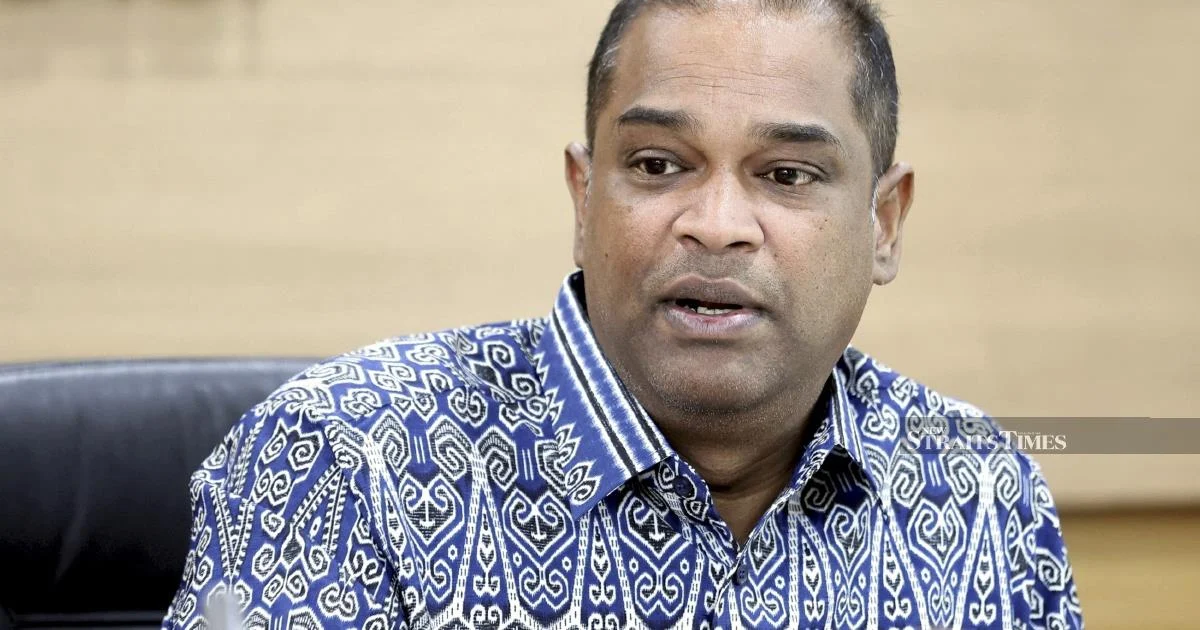
Datuk Seri R. Ramanan, vice-president of the People's Justice Party (PKR), has voiced concern over what he characterises as an inappropriate blending of constitutional monarchy with electoral competition. Speaking in Johor Baru ahead of the 16th Johor election, Ramanan highlighted a troubling pattern among political contenders who he says are attempting to leverage the monarchy's cultural standing for electoral gain. His intervention signals growing anxiety within opposition circles regarding the boundaries between deference to constitutional institutions and legitimate political discourse during campaign periods.
The comments underscore a broader tension in Malaysian politics concerning the proper role of the monarchy in democratic processes. As an institution that occupies a unique position in Malaysia's constitutional framework, the royal establishment is theoretically insulated from partisan politics. Yet in practice, political operatives frequently invoke royal patronage, proximity, and endorsement as strategic assets during electoral contests. This dynamic creates complications, as it risks subjecting the institution to accusations of partisanship whilst simultaneously constraining genuine public debate about the monarchy's institutional relevance and responsibilities.
Ramanan's criticism arrives at a particularly sensitive moment for Johor's political landscape. The state, which carries outsized significance within Malaysia's federal structure due to its economic importance and historical prominence, has experienced considerable realignment in recent electoral cycles. The forthcoming 16th state election represents another crucial inflection point where competing factions seek to consolidate support and reframe the political narrative. Against this backdrop, invoking royal authority becomes an especially potent—and potentially problematic—stratagem for aspiring candidates and party strategists.
The tension Ramanan identifies reflects a deeper challenge facing Malaysia's constitutional democracy. The Federal Constitution establishes the monarchy as a unifying national symbol deliberately positioned above the partisan divisions that characterise electoral competition. This separation, theoretically, ought to insulate the institution from the acrimony and divisiveness that typically accompany democratic contests. However, the practical application of this principle proves considerably more complex. When politicians—intentionally or carelessly—frame their electoral platforms through references to royal authority or claim special alignment with the monarchy, they risk blurring these crucial institutional boundaries.
Within Johor specifically, the monarchy carries particular weight given the sultanate's historical role in the state's governance and development. The Sultan of Johor occupies not merely a ceremonial position but maintains genuine institutional authority within state affairs, including constitutional prerogatives over legislation and executive matters. This distinctive configuration means that political actors have particularly strong incentives to cultivate perceptions of royal favour or alignment. The result is a political environment where careful management of royal references becomes essential to maintaining the institution's non-partisan character.
Ramanan's intervention also illuminates the opposition's strategic calculations as the election approaches. For PKR and allied parties, navigating the monarchy question requires particular delicacy. Simultaneously, they must maintain respectful deference to constitutional institutions whilst clearly distinguishing themselves from government factions that they contend have monopolised relationships with royal authority. This balancing act has become increasingly fraught as the lines between institutional tradition and partisan calculation blur in public discourse.
The broader implications extend beyond Johor's borders. As Malaysia's political system continues evolving and parties experiment with novel mobilisation strategies, the question of institutional autonomy grows increasingly urgent. Democratic consolidation fundamentally depends upon robust separation between electoral competition and the constitutional arrangements designed to stand above such contests. When royal institutions become perceived as instruments of political advantage, confidence in their neutrality deteriorates, potentially undermining the stable institutional framework upon which Malaysian democracy depends.
From a regional perspective, Malaysia's struggle to maintain this institutional separation resonates across Southeast Asia. Many nations in the region grapple with similar tensions between traditional monarchical or presidential institutions and the demands of competitive electoral politics. How effectively Malaysia manages this challenge could offer either a cautionary tale or a model for peer democracies navigating comparable institutional complications. The stakes therefore extend beyond domestic political calculation to encompass questions about how Westminster-derived democracies in Asia accommodate traditional authority structures within modern democratic frameworks.
Ramanan's comments also carry implicit significance regarding PKR's positioning as it seeks to expand influence in Johor. By emphasising the importance of maintaining royal institutional integrity, the party simultaneously signals its commitment to constitutional propriety and positions itself as a defender of institutional independence against what it implies are opportunistic rivals. This rhetorical move serves multiple purposes: it establishes moral high ground whilst subtly questioning opponents' regard for constitutional boundaries.
Looking ahead toward the 16th Johor election, Ramanan's intervention likely represents the opening salvo in what will probably become increasingly pointed exchanges regarding the appropriate place of royal institutions within campaign discourse. As polling approaches, maintaining this distinction between respectful deference and exploitative politicisation will become progressively challenging, requiring considerable discipline from all political actors. The ultimate test of Malaysian democracy's health may well lie in whether competing factions can successfully preserve institutional autonomy whilst pursuing vigorous electoral competition.