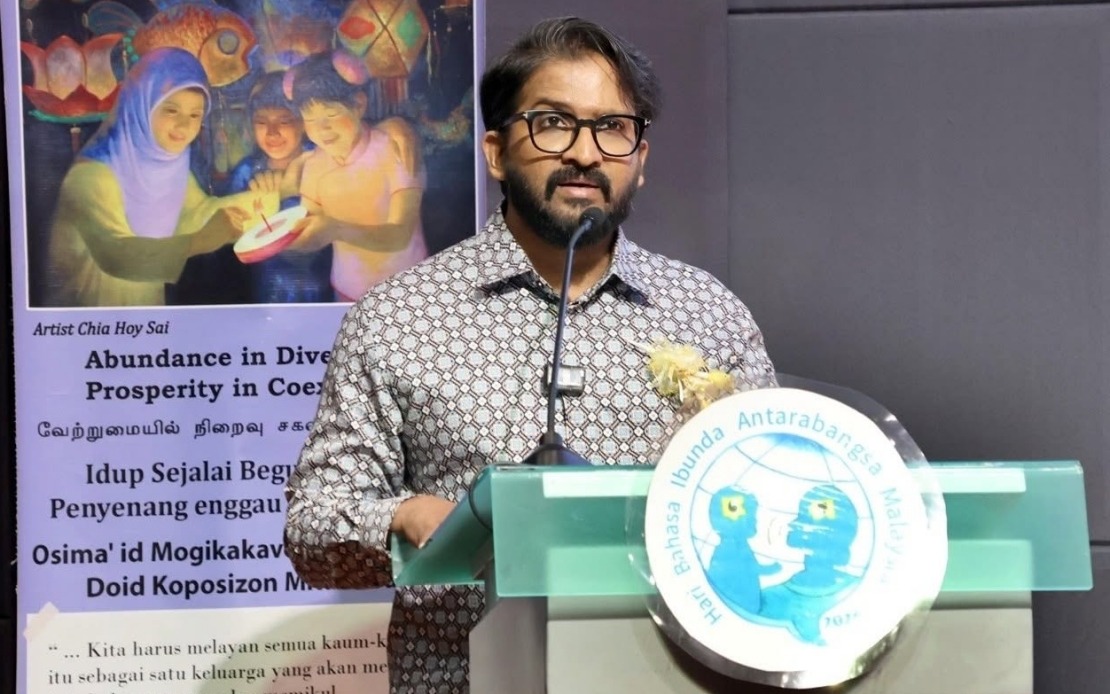
Deputy National Unity Minister R. Yuneswaran has made a case for prioritising mother-tongue education as a critical tool for addressing the persistent tensions surrounding race, religion and royalty—commonly referred to as 3R issues—that regularly ignite conflicts on social media platforms across Malaysia. Speaking in a Facebook post on June 21, Yuneswaran contended that strengthening linguistic proficiency among young people in their heritage languages could help mitigate the misunderstandings and cultural disconnects that fuel divisive discourse in the digital sphere.
The minister attributed the frequency of 3R controversies to a fundamental deficit in mutual understanding. Rather than viewing such incidents as inevitable expressions of difference, Yuneswaran framed them as symptoms of inadequate knowledge about neighbours' histories, languages and cultural contexts. This diagnosis suggests that the solution lies not in suppressing discussion of sensitive topics but in building the intellectual and cultural foundations necessary for respectful engagement across communal boundaries. Language, in this framework, becomes more than a practical communication tool—it functions as a bridge to understanding the worldviews and values embedded within different communities.
Yuneswaran emphasised that language carries profound symbolic weight. Beyond its utilitarian function, language encapsulates a people's identity, preserves their heritage, and transmits the values that define their communities. This perspective aligns with academic understanding of linguistic diversity as essential to cultural preservation and social resilience. By investing in mother-tongue proficiency, Malaysia would be affirming the intrinsic worth of each community's contributions to the national fabric rather than treating linguistic diversity as an inconvenience to be minimised.
The minister highlighted Malaysia's exceptional linguistic landscape as a potential asset rather than a liability. With approximately 130 languages spoken across the country, Malaysia represents one of the world's most linguistically diverse nations. Rather than viewing this multiplicity as inherently fragmented or problematic, Yuneswaran advocated reframing linguistic diversity as evidence of Malaysia's cultural richness. This reorientation requires a deliberate shift in public discourse—from perceiving minority languages as threats to national unity to recognising them as expressions of Malaysia's pluralistic identity.
A key element of Yuneswaran's argument directly addresses persistent anxieties about the relationship between mother-tongue education and national integration. Drawing on his own background as an Indian Malaysian educated in both Chinese and national schools, he demonstrated through personal testimony that proficiency in one's heritage language does not compromise mastery of the national language or other languages. Instead, such multilingualism enriches cognitive development and cultural awareness. This counterargument is particularly significant for Malaysian policymakers and parents concerned that emphasising mother tongues might dilute children's connection to Bahasa Malaysia or reduce their competitive advantage in an English-dominant globalised economy.
Yuneswaran further contended that grounding oneself in mother-tongue literacy actually enhances cross-cultural respect and understanding. When individuals develop deep knowledge of their own cultural heritage through language, they acquire the conceptual vocabulary and historical awareness necessary to appreciate similar depths in other traditions. Conversely, disconnection from one's linguistic roots can generate insecurity that manifests as defensive or aggressive positioning toward outsiders. By strengthening the former while minimising the latter, educational policy might reduce the psychological drivers of 3R conflicts.
The Deputy National Unity Minister positioned his advocacy within Malaysia's broader development agenda. The 13th Malaysia Plan explicitly assigns the National Unity Ministry responsibility for advancing nation-building initiatives centred on understanding, respect and reciprocal learning. Yuneswaran's emphasis on mother-tongue education should be understood as operationalising this mandate—translating abstract commitments to unity into concrete linguistic and educational priorities. This framing gives his proposal institutional weight and suggests that language policy constitutes a legitimate domain of government concern, not merely a technical educational matter.
The minister's concluding remarks encapsulate his core thesis: language functions as a unifying force, and linguistic competence strengthens Malaysia's overall cohesion. This formulation inverts conventional hierarchies that privilege national and international languages while marginalising heritage languages. Instead, Yuneswaran suggested that acknowledging and strengthening the full spectrum of Malaysian linguistic identity paradoxically strengthens rather than weakens national bonds. The pathway to unity, in this view, runs through rather than around Malaysia's cultural diversity.
For Southeast Asian observers, Yuneswaran's position reflects broader regional discussions about language policy and national identity. Countries throughout the region grapple with similar tensions between preserving heritage languages and fostering national integration. Malaysia's particular challenge—managing the coexistence of multiple indigenous languages, Bahasa Malaysia, English, and the heritage languages of diaspora communities—mirrors dynamics in Indonesia, the Philippines, and other linguistically heterogeneous states. How Malaysia addresses these questions carries implications for regional approaches to multilingualism and social cohesion more broadly.
The practical implementation of Yuneswaran's proposal remains unclear. Strengthening mother-tongue proficiency requires investments in curriculum development, teacher training, and educational infrastructure—particularly in rural areas where heritage language instruction may be limited. Additionally, questions persist about which languages should receive support, how resources should be allocated, and how such initiatives coordinate with existing education policies centred on English and Bahasa Malaysia. These logistical considerations determine whether his call for greater emphasis translates into meaningful institutional change or remains primarily rhetorical.
Moreover, while language education constitutes an important component of intercultural understanding, addressing 3R tensions comprehensively requires complementary efforts across multiple domains. Media literacy initiatives, educational content promoting historical awareness, and platforms enabling structured dialogue across communities would all strengthen the foundation that Yuneswaran's linguistic proposal aims to build. Language proficiency alone cannot resolve conflicts rooted in power asymmetries, competing political interests, or historical grievances—though it may create conditions more conducive to productive engagement around such issues.
Yuneswaran's intervention nonetheless identifies a genuine mechanism through which educational and cultural policy can contribute to social cohesion. By treating linguistic diversity not as a problem to be managed but as a resource to be developed, Malaysia could model an approach to pluralism that other diverse nations might learn from. The question is whether this vision, articulated from within government, will generate sufficient political support and resource allocation to move beyond advocacy toward implementation.