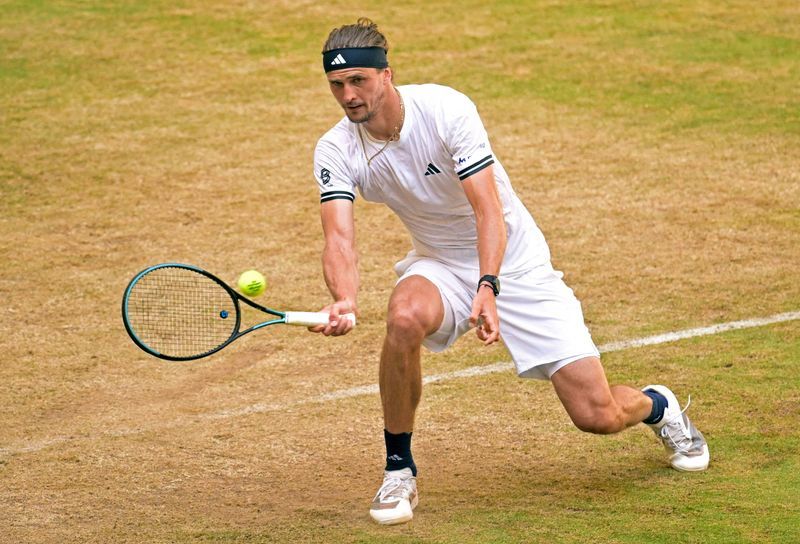
Alexander Zverev's hopes of capturing the Halle Open title came to an abrupt halt on Saturday when he fell to American Taylor Fritz 6-7(4) 6-4 7-5, a result the German world number three has attributed to equipment failure rather than purely sporting performance. The semi-final contest, which stretched across two hours and 39 minutes of gruelling baseline exchanges, was marred by a critical malfunction in the glucose monitoring technology Zverev relies upon to manage his Type 1 diabetes throughout competitive matches.
The 26-year-old explained that his glucose sensor provided drastically inaccurate readings during the encounter, displaying dangerously high values when his actual blood sugar levels were critically low. This reversal of the true metabolic situation compelled Zverev to administer substantially more insulin than his body required, triggering a cascade of physical complications that undermined his court performance. The miscalculation became so severe that during the opening 45 minutes alone, he consumed approximately 350 grams of sugar in an attempt to counteract the medication overdose, yet he continued feeling profoundly unwell throughout the contest.
Zverev has managed Type 1 diabetes since early childhood, diagnosed at just four years old, making glucose regulation an integral component of his professional career for over two decades. His reliance on Medtronic technology—specifically their continuous glucose monitoring systems—has enabled him to compete at the highest echelons of professional tennis without the condition constraining his aspirations. The German has utilised these particular sensors since 2016 or 2017, establishing nearly a decade of dependable data management and trust in the equipment's accuracy. The malfunction represented an unprecedented occurrence within this extended period, with Zverev emphasising that in approximately nine years of continuous sensor use, he had never encountered such a substantial measurement error.
Despite the significant physical disadvantage created by the faulty equipment, Zverev demonstrated considerable character in remaining competitive throughout the match rather than withdrawing or allowing the situation to become an excuse for defeat. He subsequently acknowledged that Fritz executed a superior tactical performance and earned his progression through straightforward tennis merit, respecting his opponent's contributions to the victory. This gracious perspective reflects the professionalism expected at elite levels, even when athletes operate under genuine physiological handicaps during competition. Zverev's candour about the circumstances neither diminishes Fritz's achievement nor suggests the American's victory was somehow tainted by external factors.
The result extends a troubling recent pattern for Zverev against the American contingent, as he entered the semi-final having suffered six consecutive defeats against Fritz without securing a single victory in their recent matchups. This losing streak created additional pressure on the German to reverse the trend on grass courts at Halle, where he had harboured legitimate championship ambitions. The combination of the equipment failure and Fritz's current superiority in their head-to-head record created a compound challenge that ultimately proved insurmountable, regardless of Zverev's competitive desire and technical abilities.
The timing of this mechanical failure carries particular significance given its proximity to the 2024 Wimbledon Championships, scheduled to commence on June 29 and conclude on July 12—merely days following the Halle tournament. Zverev, as a three-time Grand Slam finalist, remains a genuine threat to challenge for major titles at the All England Club, where grass-court prowess becomes paramount. Nevertheless, he has publicly stated that confidence in his monitoring equipment remains unshaken and that the singular malfunction does not represent cause for concern heading into his Wimbledon preparations. This reassurance carries weight given his extensive experience managing the equipment in high-stakes competitions, though equipment reliability will doubtless remain under heightened scrutiny.
The incident underscores the increasingly complex intersection between athletic performance and medical technology in professional sport. Competitors managing chronic conditions at elite levels depend upon sophisticated devices functioning flawlessly under extreme physical and emotional stress, with equipment failure capable of producing consequences far beyond typical mechanical problems. For Zverev, whose condition demands constant monitoring and intervention, technological reliability is not merely a convenience but a fundamental prerequisite for competing fairly and safely. The rarity of his malfunction—a singular occurrence across nine years of use—actually demonstrates the reliability of modern continuous glucose monitoring systems, though paradoxically also highlights the catastrophic impact when malfunction does occur.
Zverev's experience may prompt useful conversations within professional tennis regarding support for athletes managing chronic conditions, equipment redundancy protocols, and manufacturer accountability when devices deployed under competitive conditions fail to perform specifications. The tennis community generally embraces inclusion of athletes with medical conditions, yet practical safeguards ensuring equipment reliability remain underdeveloped compared to other professional sports. As tennis continues attracting competitors managing various chronic conditions at elite levels, establishing standardised protocols around medical device reliability could enhance fairness and safety for all involved.