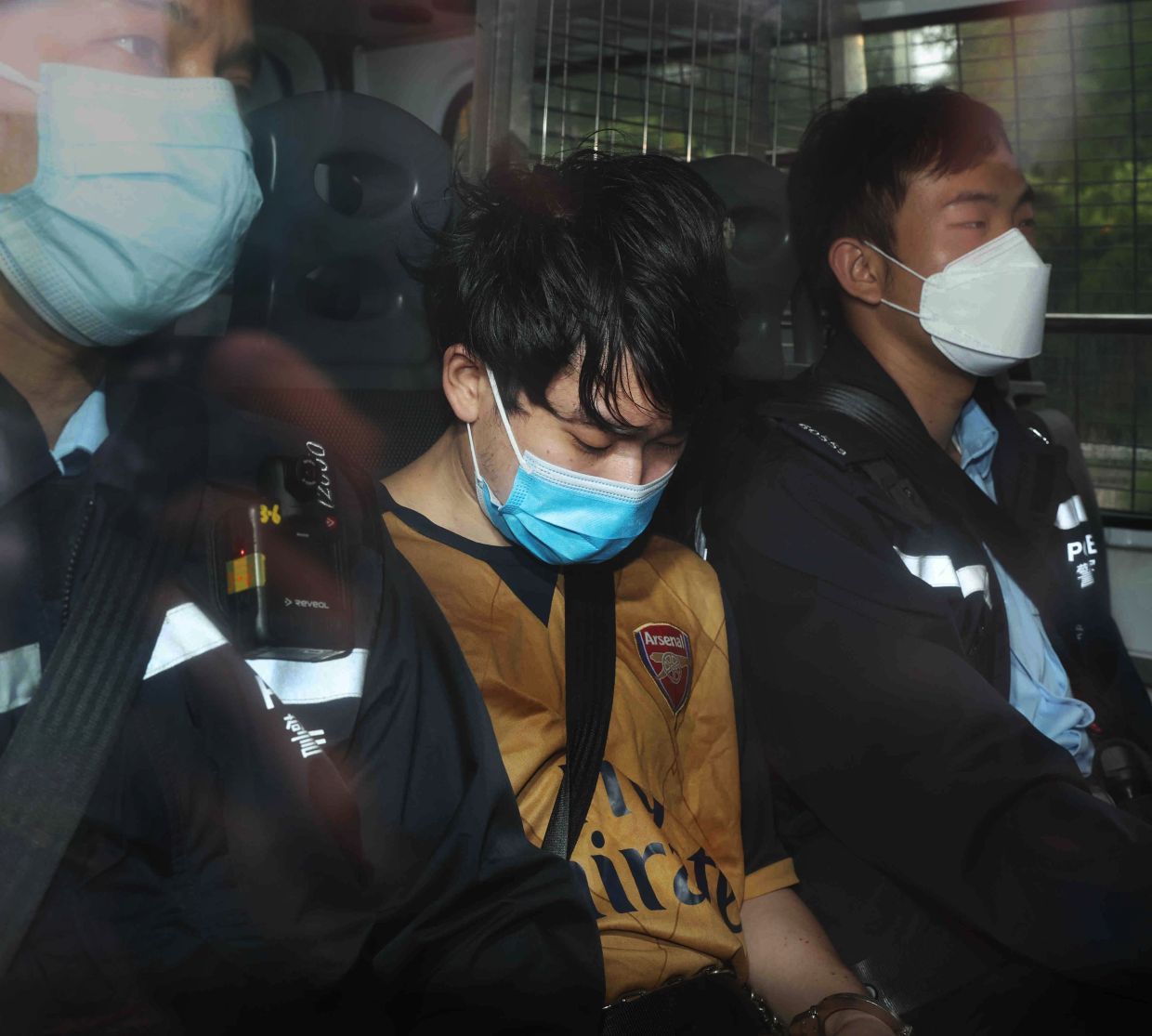
A 29-year-old unemployed man in Hong Kong has advanced an extraordinary defence in his murder trial, asserting that he fatally beat his girlfriend while attempting to assist her with weight loss by deliberately depriving her of sleep. Ng Ka-sing faces capital charges at the High Court over the death of his 30-year-old partner Yip Tsz-ching, whose body was discovered wrapped in quilts and plastic sheeting on a residential street in April 2022, nearly four years after the alleged crime. The case has drawn scrutiny for its disturbing allegations and the defendant's shifting explanations to authorities regarding how injuries covering more than half of the victim's body came to occur.
The alleged killing took place between April 28 and 29, 2022, in a 700 square foot flat at Galore Garden in Hung Shui Kiu that the couple shared with relatives. Prosecutors have rejected Ng's offer to plead guilty to the lesser charge of manslaughter, choosing instead to pursue the full murder indictment. Senior public prosecutor Audrey Parwani opened the case by emphasising that the defence's account strains credibility, noting in her statement to the jury that Ng had provided multiple conflicting explanations to police regarding how Yip sustained injuries characterised as extensive corrosive burns affecting 55 per cent of her body surface.
According to police records presented in court, Ng admitted during his cautioned interview that he struck his girlfriend repeatedly with a rod whilst attempting to keep her awake, believing this approach would facilitate weight loss. The attacks allegedly occurred in two separate phases: initially between 10pm on April 27 and 1:30am on April 28, then resuming between 3am and 5:30am on April 28. During this period, Ng claimed he asked whether he should cease the beatings, at which point a sworn sister who lived in the shared flat—a family member maintaining close ties with the household—allegedly encouraged him to continue. His decision to prolong the assault, he told investigators, stemmed from the fact that Yip had not explicitly instructed him to stop.
The account of events becomes increasingly troubling when considering the chemical injuries Yip sustained. Ng asserted that his girlfriend had poured drain cleaner upon herself, whilst he claimed his own application of the corrosive liquid to the floor was intended to stimulate her feet. He further contended that Yip had struck herself against a wall seven to eight times after slipping on the contaminated floor. By approximately 5am on April 28, the victim reportedly expressed concerns about pain and the possibility she might not survive, subsequently losing consciousness at 7:21am—her final words captured in the timeline of events.
The case entered public consciousness when early morning joggers observed a human leg protruding from a rolled quilt loaded onto a wheelboard near Tin Ha Road at approximately 6am on April 29. Jogger Lau Kwok-yan, who alerted police, testified that Ng stood passively on the street without displaying signs of distress or panic whilst awaiting officers. Street cleaner Wong Ah-sum recalled confronting Ng about the bundle, with the accused plainly identifying it as a "corpse" and stating his intention to transport it to a police station. When arrested at 6:36am, Ng's statement was remarkably direct: "This was my girlfriend. I hit her to death with a rod by mistake."
Forensic examination revealed meticulous concealment efforts that contradict claims of accidental harm. The victim's body was secured to an overturned wooden chair using black rubbish bags, then covered with a quilt. Her head was wrapped extensively in cling film and adhesive tape, a detail suggesting deliberate containment rather than spontaneous action following an accident. Government pathologist Dr Foo Ka-chung determined that Yip had been deceased for between 12 and 24 hours at the time of discovery, establishing a timeline consistent with the alleged attack window.
Dr Foo's autopsy findings proved pivotal to the prosecution's case. Beyond the corrosive chemical burns affecting her chest, abdomen, and limbs, the victim sustained multiple bruises, abrasions, and lacerations across her head and body consistent with blunt force trauma such as punching and kicking. Critically, the pathologist determined that Yip's ultimate cause of death was suffocation following head injuries—a conclusion that sits uneasily with the defendant's account of a weight-loss experiment conducted through sleep deprivation. The extent and distribution of injuries suggested a sustained and forceful assault rather than incidental harm.
The case presents Malaysian observers with disturbing echoes of intimate partner violence that transcends geographical borders, though the Hong Kong legal framework and trial procedures differ markedly from Malaysian practice. The defence strategy of offering a manslaughter plea whilst simultaneously advancing an implausible accidental death narrative appears designed to hedge against a conviction on the more serious charge. Prosecution counsel has signalled through her opening remarks that the defence position lacks coherence, a judgment that the jury of seven will ultimately determine.
The trial before Mrs Justice Judianna Barnes is anticipated to consume 18 days of court time, suggesting substantial additional evidence and witness testimony lies ahead. For Malaysian legal professionals and observers of regional crime jurisprudence, the case illustrates how homicide trials involving intimate relationships often hinge upon the credibility of the accused's explanation and whether physical evidence aligns with their narrative. The positioning of the victim's body, the chemical burns, the rope restraints, and the systematic concealment all suggest premeditation and intentional harm rather than accidental consequences of a misguided health intervention, notwithstanding the defence's continued assertion.