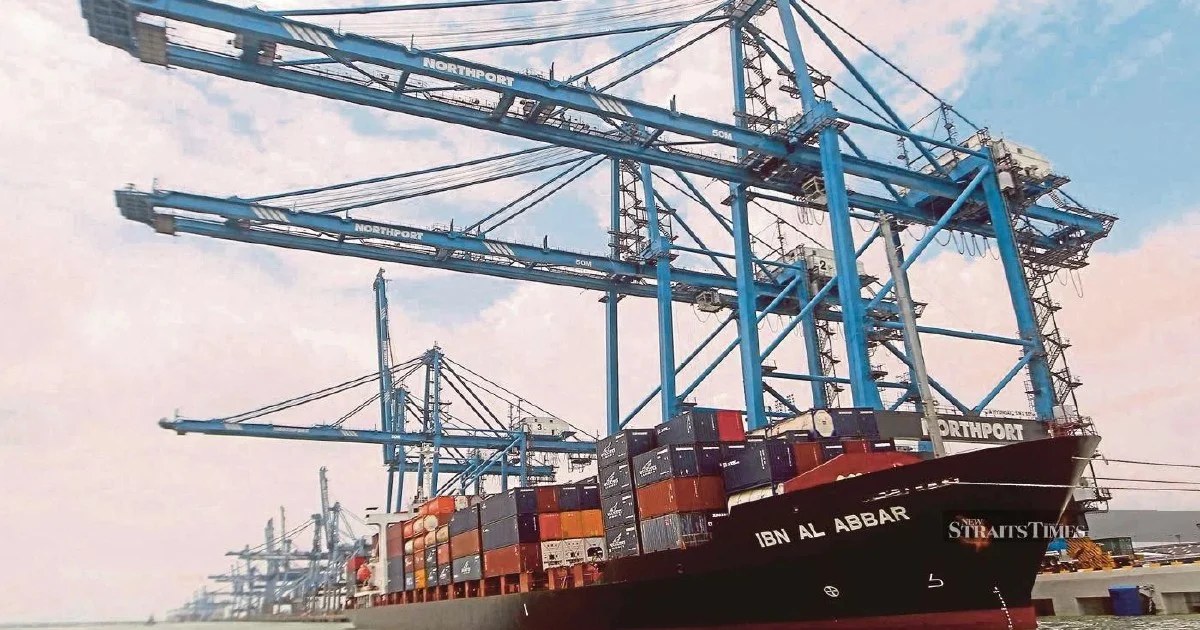
Transport Minister Anthony Loke has signalled that the transformative Port Klang 3 development programme remains aligned with its timeline and could realistically move into active construction phases during the current year, provided that pending land-related negotiations with the Selangor state authorities reach successful conclusions. The minister's remarks underscore the government's commitment to advancing this strategically crucial maritime infrastructure enhancement despite obstacles that have periodically threatened the project's momentum.
Port Klang 3 represents one of Malaysia's most significant port development undertakings in recent years, designed to substantially expand the container-handling capacity of the nation's largest and busiest port complex. The proposed facility would represent a major leap forward in accommodating the surging volume of containerised cargo flows through the region and positioning Malaysia competitively within Southeast Asia's increasingly crowded port landscape. The project aligns with broader economic diversification objectives and aims to reinforce Malaysia's standing as a crucial transshipment hub linking East and West maritime trade corridors.
The land acquisition challenge that Loke referenced reflects the complex regulatory and administrative environment surrounding major infrastructure development in Malaysia. Securing appropriate parcels and resolving title matters requires coordination across multiple governmental bodies, and the necessity for state government alignment adds an additional layer of procedural complexity. These negotiations, while sometimes protracted, are fundamental to ensuring that development proceeds with full legal clarity and community stakeholder engagement.
The timeline reference carries particular significance given Malaysia's broader infrastructure ambitions. The port sector remains fundamental to the nation's trading position, and enhancements at Port Klang directly influence competitiveness relative to neighbouring rivals like Singapore and Port Tanjung Pelepas. Delays at this juncture could have rippling consequences for shipping lines, cargo handlers, and importers and exporters relying upon efficient passage through Malaysian ports. Industry observers have closely monitored this project's progression as an indicator of the government's capacity to deliver major capital-intensive undertakings.
Loke's public confirmation, while circumscribed by the contingency regarding land matters, effectively signals to the business community and international port operators that governmental commitment to the project remains firm. Such reassurance matters considerably in attracting the private sector investment and technical partnerships typically necessary for projects of this magnitude. Uncertainty regarding timelines frequently chills investor enthusiasm and can prompt alternative site selection by multinational operators.
The Selangor government's cooperation remains essential since the proposed expansion would necessarily require parcels currently falling under state jurisdiction. The negotiations presumably involve questions of compensation valuations, environmental clearance protocols, and alignment with Selangor's own development masterplans. Such coordination between federal transport authorities and state administrations exemplifies the ongoing tension between centralised infrastructure vision and devolved planning powers within Malaysia's federal structure.
From a regional perspective, Port Klang 3's advancement would reinforce Malaysia's position within critical supply chain networks increasingly concentrated in Southeast Asia. The port serves as a gateway for cargo flowing to and from economies across the Indian Ocean and Pacific regions. Enhanced capacity would enable Malaysia to capture greater proportions of regional transshipment traffic and position domestic cargo handlers and logistics operators more competitively against counterparts in Thailand, Vietnam, and other regional competitors.
The economic implications extend beyond port operations themselves. Port development typically catalyses investments in containerised cargo processing facilities, cold storage installations, and advanced logistics infrastructure throughout surrounding areas. The broader Port Klang cluster has already emerged as a logistics and manufacturing nexus; successful expansion would deepen this specialisation and potentially create employment multiplier effects throughout connected supply chain sectors.
International shipping lines operating regional networks have consistently identified port capacity constraints as limitations upon their Southeast Asian routing strategies. Companies managing the voluminous East-West container trades have indicated that enhanced Malaysian capacity would enable more flexible scheduling and potentially improved service frequency along critical trade routes. Port operators' willingness to invest in terminal equipment and hiring depends substantially upon confidence that underlying port infrastructure will materialise according to published timelines.
The resolution of land issues, whilst presented as a prerequisite rather than an insurmountable barrier, deserves careful monitoring over coming months. Infrastructure projects across emerging economies frequently encounter delays rooted in land acquisition challenges, environmental assessments, or stakeholder objections. Loke's carefully conditional phrasing—emphasising the pending resolution of land matters rather than confirming definitive commencement—reflects the genuine uncertainties that still attach to the undertaking despite ministerial enthusiasm.
Markets and industry participants will likely interpret Loke's statement as moderately encouraging while remaining appropriately cautious. The prospect of construction beginning this year, contingent upon specific prerequisite resolution, provides a credible pathway forward whilst acknowledging that complications remain. Shipping lines and logistics operators servicing Malaysian trade will continue monitoring governmental progress on land negotiations as a key indicator of whether Port Klang 3 will ultimately achieve its transformative potential for regional maritime commerce.