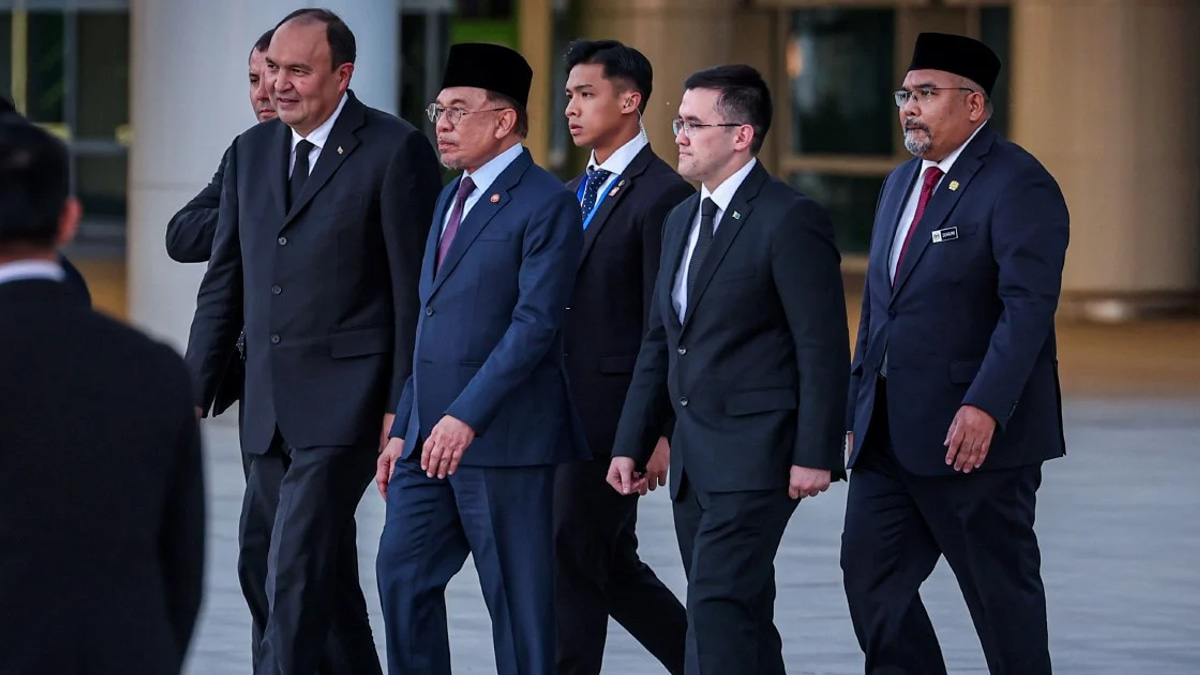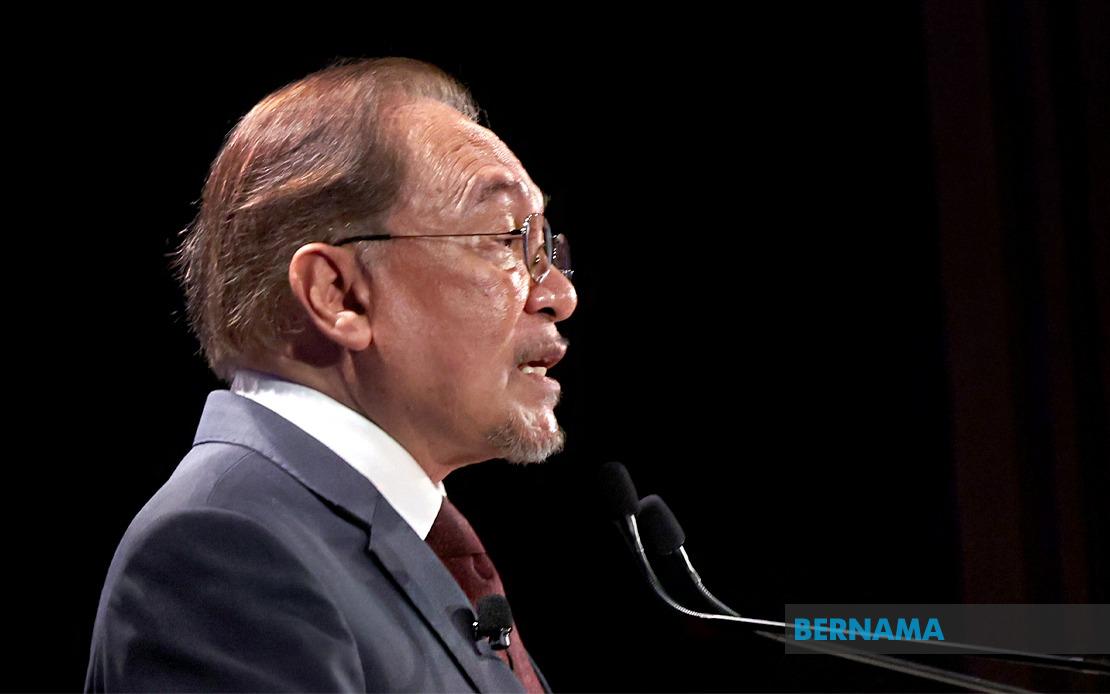
Prime Minister Datuk Seri Anwar Ibrahim's final day in Turkmenistan will showcase the breadth and depth of Malaysia's engagement with this strategically positioned Central Asian nation. The second leg of his official visit to the capital, Ashgabat, has been deliberately packed with high-level diplomatic activities designed to reinforce bilateral relations and chart new avenues for economic cooperation between Kuala Lumpur and the government in the White Marble City.
The morning agenda begins with formal courtesies when President Serdar Berdimuhamedov welcomes the Malaysian Prime Minister at the Presidential Palace in a ceremonial setting befitting the significance of the bilateral relationship. Following the welcoming ceremony, both leaders will engage in a one-on-one meeting before transitioning to a broader bilateral dialogue. This structured approach—moving from personal to collective discussions—allows space for candid exchanges on bilateral concerns before widening the conversation to encompass government delegations and technical specialists from both nations.
The substance of these discussions will centre on Malaysia's strategic interests in the region. Both governments intend to examine the current trajectory of their relationship across multiple sectors. Trade and investment naturally feature prominently, particularly given Malaysia's substantial economic footprint in Turkmenistan through Petronas, which has accumulated investments exceeding RM52.73 billion since establishing operations in 1996. Beyond hydrocarbons, the agenda encompasses agriculture and commodities, a sector where Central Asian producers and Southeast Asian markets offer complementary opportunities. Energy cooperation extends beyond traditional oil and gas into emerging renewable and sustainable energy frameworks, reflecting global transition pressures.
Education, digital infrastructure, and science and technology collaborations represent forward-looking dimensions of the partnership. For Malaysia, enhancing technological exchange and research partnerships with Turkmenistan's scientific institutions can strengthen regional innovation ecosystems. Digital cooperation holds particular relevance as both nations navigate the complexities of digital transformation and cybersecurity in an increasingly interconnected world. Tourism promotion also features as a mutual opportunity, enabling both nations to showcase cultural heritage and generate economic returns from cross-border visitor flows.
Beyond bilateral matters, the two leaders will exchange perspectives on broader geopolitical developments. Regional dynamics within Central Asia—particularly interactions among Kazakhstan, Uzbekistan, Afghanistan, and Iran—affect Turkmenistan's strategic calculations and indirectly influence Malaysia's regional partnerships. Similarly, ASEAN developments carry significance, as Malaysia will brief its Turkmen counterpart on Southeast Asian regional architecture, including Association activities and Malaysia's particular roles and priorities. This exchange of viewpoints on interconnected regional issues demonstrates how bilateral diplomacy increasingly incorporates wider strategic awareness.
The formal output of these discussions will materialize in a comprehensive joint statement and multiple binding agreements. Most symbolically, the two governments will exchange an Air Services Agreement, directly enabling enhanced connectivity between Malaysia and Turkmenistan. This aviation accord can catalyze increased business travel, tourism flows, and people-to-people exchanges. Additional memoranda will bind Malaysia's Ministry of Transport and Turkmenistan's State Service in transportation cooperation, potentially spanning maritime, rail, and logistics frameworks relevant to regional connectivity initiatives.
Academic and scientific cooperation will be formalized through an MoU between the Academy of Sciences Malaysia and the Academy of Sciences of Turkmenistan, institutionalizing research collaboration and scholarly exchange. Separately, the foreign affairs institutes of both nations will sign a dedicated cooperation framework, facilitating diplomatic training, policy dialogue, and institutional learning. The exchange of documents specifically addressing oil and gas cooperation underscores Petronas' continuing centrality to the bilateral relationship and signals commitment to sustaining this critical economic partnership amid global energy transition pressures.
The Prime Minister's schedule incorporates cultural and religious elements reflecting Malaysia's own national identity and respect for Turkmenistan's Islamic heritage. Anwar's attendance at Friday prayers at the Turkmenbashi Ruhy Mosque demonstrates respect for local traditions and underscores Malaysia's identity as a Muslim-majority nation engaged constructively with Central Asian partners. This religious observance, combined with the formal luncheon at the Presidential Palace, creates a balanced diplomatic programme mixing official business with personal engagement and cultural acknowledgment.
The Malaysia-Turkmenistan Forum, jointly officiated by both leaders at the Chamber of Commerce and Industry of Turkmenistan, will bring together private sector representatives, investors, and business leaders from both countries. This forum serves crucial functions beyond its ceremonial aspects: it creates dedicated space for commercial actors to identify partnership opportunities, negotiate contracts, and establish business networks. For Malaysian enterprises considering Central Asian expansion, such forums provide essential platforms to conduct due diligence and develop market understanding. Conversely, Turkmen businesses gain exposure to Malaysian market dynamics and investment opportunities.
Accompanying the Prime Minister are several ministerial colleagues whose portfolios directly align with visit objectives. Minister of Investment, Trade and Industry Datuk Seri Johari Abdul Ghani brings expertise in commercial frameworks and bilateral trade promotion. Minister of Economy Akmal Nasrullah Mohd Nasir ensures discussion of macroeconomic dimensions and structural cooperation frameworks. This composition ensures that technical expertise matches diplomatic messaging, enabling productive conversations across multiple portfolio areas.
Ashgabat itself carries symbolic significance as the world's white marble capital, a designation reflecting the city's distinctive architectural character and development trajectory. The city's monumental architecture, extensive gold-leaf detailing, and meticulously planned avenues convey deliberate nation-building and centralized resource deployment. For Malaysian officials, such observations offer insights into Turkmenistan's governance priorities and development philosophy, informing approaches to bilateral engagement and partnership structuring.
Turkmenistan's geographic position deserves consideration for Malaysian strategic interests. Bordered by Kazakhstan and Uzbekistan to the north, Afghanistan to the southeast, Iran to the south and southwest, and the Caspian Sea to the west, Turkmenistan occupies a critical nodal position in Central Asian geopolitics. The country's resources, stability, and strategic location make it a valuable partner for Malaysian companies pursuing Central Asian expansion and for Malaysia's broader foreign policy seeking influence and presence in regions of growing geopolitical consequence.
The bilateral trading relationship has demonstrated resilience and growth. In 2025, Turkmenistan ranked as Malaysia's fourth largest trading partner among Central Asian nations, with total bilateral trade reaching RM75.80 million. Malaysian exports, valued at RM75.50 million, showed a commendable 9 per cent increase year-on-year, suggesting growing market penetration and business confidence. These figures, while modest compared to Malaysia's global trade volumes, reflect emerging partnership potential and room for expansion as both economies identify complementary opportunities and reduce trade barriers.
The culminating press conference with Malaysian media will allow Prime Minister Anwar to contextualize the visit within Malaysia's broader foreign policy strategy, explaining the significance of Central Asian engagement and the expected outcomes of the bilateral discussions. This public communication dimension ensures that Malaysian stakeholders—business communities, civil society, and the general public—understand the government's diplomatic priorities and the practical benefits anticipated from renewed engagement with Turkmenistan.
%22%2F%3E%3C%2Fpattern%3E%3C%2Fdefs%3E%3Crect%20width%3D%22100%25%22%20height%3D%22100%25%22%20fill%3D%22url(%23phyc2bg)%22%2F%3E%3Crect%20width%3D%22100%25%22%20height%3D%22100%25%22%20fill%3D%22url(%23phyc2bp)%22%2F%3E%3Ctext%20x%3D%2250%25%22%20y%3D%2250%25%22%20text-anchor%3D%22middle%22%20dominant-baseline%3D%22central%22%20fill%3D%22rgba(255%2C255%2C255%2C0.95)%22%20font-family%3D%22Georgia%2C%20'Times%20New%20Roman'%2C%20serif%22%20font-weight%3D%22700%22%20font-size%3D%22170%22%20letter-spacing%3D%22-0.02em%22%3EMalaysia%3C%2Ftext%3E%3C%2Fsvg%3E)