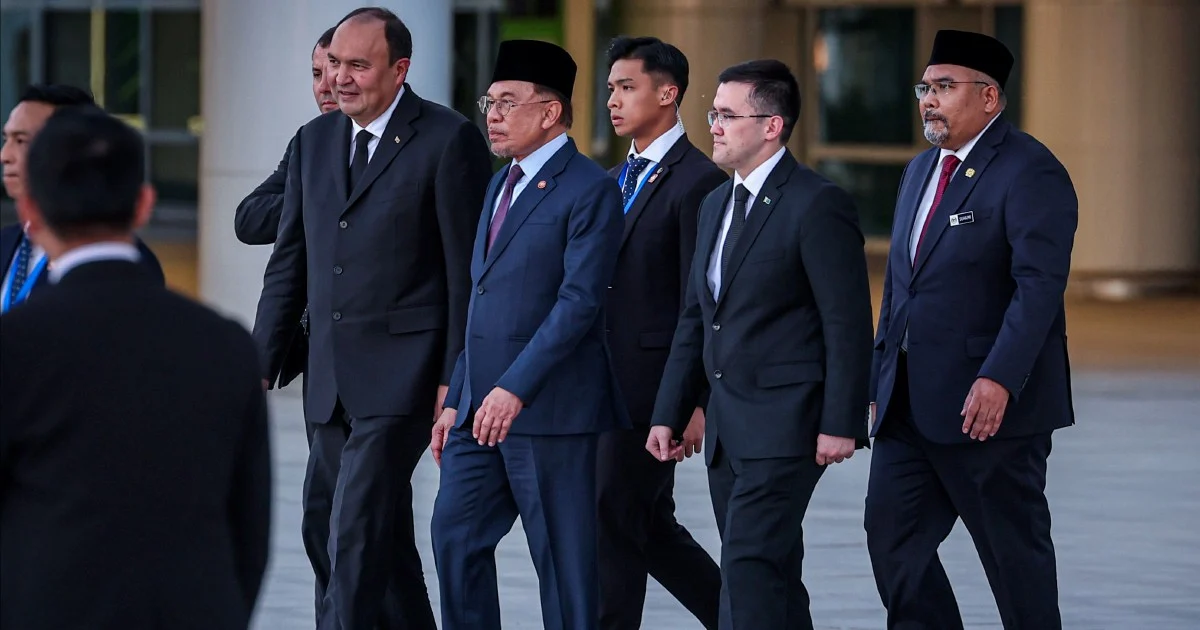
Prime Minister Datuk Seri Anwar Ibrahim's concluding day in Turkmenistan is set to be marked by a succession of top-tier diplomatic engagements as Malaysia seeks to deepen its economic footprint in the strategically positioned Central Asian country. The final stretch of his official visit comes as both nations explore opportunities for enhanced commercial and financial collaboration in a region that has historically remained peripheral to Malaysian business interests.
Turkmenistan's position along the Caspian Sea's eastern littoral gives it considerable geopolitical and economic significance. The nation serves as a crucial energy hub, with vast natural gas reserves and an expanding portfolio of development initiatives that extend beyond hydrocarbon production. For Malaysia, establishing stronger bilateral relationships with Caspian region states represents a broader strategic pivot towards diversifying economic partnerships beyond traditional markets in Southeast Asia and the Middle East.
The bilateral agenda during Anwar's visit touches on several interconnected economic dimensions. Trade expansion constitutes a primary focus, with both governments evaluating mechanisms to facilitate the movement of goods and services between the two countries. Beyond simple merchandise trade, the discussions encompass investment frameworks designed to encourage Malaysian capital flows into Turkmenistan's infrastructure projects and industrial development zones. Conversely, Turkmen investment in Malaysian ventures, particularly in technology and energy sectors, forms part of the reciprocal arrangements being explored.
For Malaysian enterprises, Turkmenistan presents an intriguing proposition as a gateway to broader Central Asian markets. The country maintains trade relationships across the former Soviet republics and sits at the intersection of corridors linking Europe, Asia, and the Middle East. Companies engaged in manufacturing, logistics, technology services, and industrial goods see potential in establishing operations or distribution networks from Turkmenistan, thereby reducing costs and logistical complexity compared to serving the region from Malaysia directly.
The energy sector looms particularly large in bilateral considerations. While Malaysia possesses its own petroleum and liquefied natural gas industries, opportunities exist for technological exchange and joint ventures. Turkmenistan's aspirations to modernise its energy infrastructure and develop renewable capacity align with Malaysia's emerging expertise in green technology and sustainable development. Additionally, Malaysian financial institutions and engineering firms could participate in major infrastructure projects that Turkmenistan is advancing as part of its economic diversification strategy.
Beyond commerce, the diplomatic engagement carries broader regional implications. Central Asia has traditionally occupied a lower priority in Southeast Asian foreign policy, but Malaysia's proactive engagement with Turkmenistan signals a maturation of regional ambitions. By establishing closer ties with Central Asian powers, Malaysia positions itself as a bridge between Asia's Pacific and Eurasian dimensions, potentially enhancing its diplomatic relevance and economic opportunities. Such positioning becomes increasingly valuable as global supply chains reconfigure and nations seek alternative trade routes beyond traditional maritime corridors.
The high-level nature of the engagements occurring during Anwar's visit underscores the seriousness with which both governments approach this relationship. When prime ministers personally engage in bilateral discussions rather than delegating to lower-ranking officials, it signals to business communities and investors that political commitment undergirds the commercial agenda. This messaging effect often catalyses corporate interest and facilitates the negotiation of major deals that might otherwise proceed more sluggishly through standard diplomatic channels.
Education and people-to-people exchange programmes likely feature among the topics under discussion. Malaysia has successfully marketed its higher education sector to international students and could appeal to Turkmen families seeking quality tertiary education in an English-language environment. Conversely, Turkmenistan could become a destination for Malaysian students and professionals interested in understanding Central Asian markets and business practices, creating networks that subsequently facilitate commercial transactions.
The visit reflects Malaysia's measured but deliberate expansion of ties across diverse regions. While Southeast Asia and the Middle East remain primary focus areas, engagement with Central Asia allows Malaysian policymakers to hedge strategic risks and reduce economic dependency on any single region. This diversification approach, pursued consistently across administrations, seeks to insulate Malaysia's economy and diplomatic interests from the vagaries of any particular regional bloc's political or economic misfortunes.
Looking forward, the outcomes of Anwar's discussions in Ashgabat may culminate in formal agreements or memoranda of understanding establishing joint commissions or working groups to pursue specific initiatives. These institutional frameworks, though sometimes dismissed as largely symbolic, do create mechanisms through which government and business officials maintain regular contact and coordinate efforts over extended periods. They can eventually spawn concrete collaborations even when initial enthusiasm wanes.
The Central Asian dimension of Malaysia's foreign policy reflects the country's recognition that globalisation necessitates engagement with distant but increasingly relevant partners. Turkmenistan, despite its geographical distance from Southeast Asia, offers complementary economic attributes and strategic position that warrant sustained Malaysian attention. As Anwar's visit draws to a close, the commitments made and relationships nurtured during his time in Ashgabat may well establish foundations for commercial partnerships that mature over coming years, benefiting enterprises and consumers in both nations.