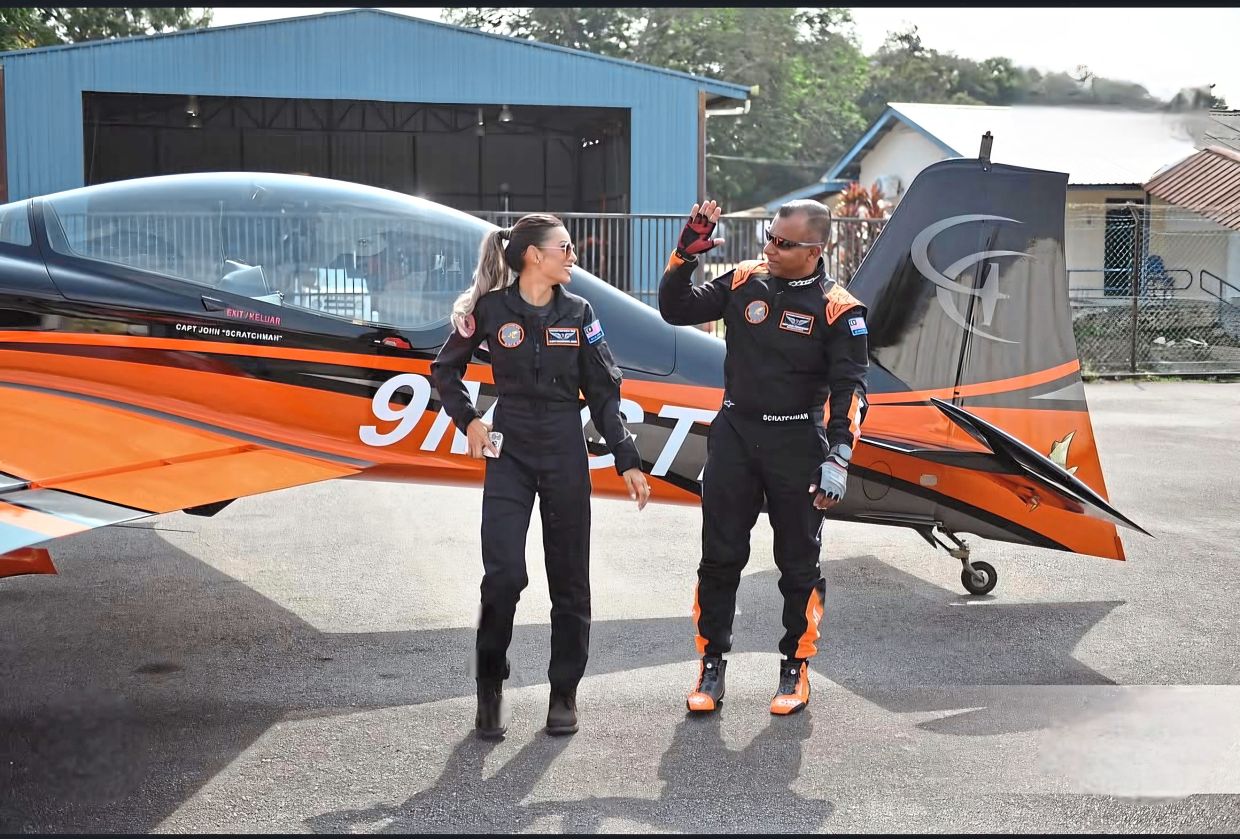
Samantha Laura John has fulfilled a lifelong dream that began watching her father prepare for military combat exercises. The 26-year-old completed her pilot training in Ipoh in 2025, becoming the latest in a lineage of Malaysian aviators devoted to the skies. Her father, Lieutenant-Colonel (R) John Sham Alagarsamy, spent 26 years as a Royal Malaysian Air Force fighter pilot before transitioning to commercial aviation in 2019. Today, Samantha joins a growing but still modest cohort of female pilots in Malaysia, achieving certification despite a landscape where women remain underrepresented in cockpits across the region.
Samantha's aviation passion crystallised during childhood as she witnessed her father's military career unfold across multiple air force installations. Watching him prepare for navigation exercises and combat readiness drills, she developed profound admiration for his service and the discipline aviation demanded. The frequent postings—from Labuan to Kuantan, Alor Setar, and Butterworth—exposed her to military culture's structured environment and instilled in her an understanding of the responsibility pilots bear in protecting Malaysia's airspace and maritime borders. Rather than deterring her, these relocations became formative experiences that reinforced her determination to enter aviation professionally.
John's philosophy on parenting emphasised aspiration without coercion. He consistently encouraged his children to pursue their dreams while avoiding the trap of forcing them into predetermined paths. "I always told them that if they aim for the stars, at least they'd reach the sky," he explained, reflecting a balanced approach that respected individual agency while modelling dedication through his own career. This parenting style mirrors findings from research at Universiti Teknologi Malaysia examining how parent-child relationships influence vocational decisions. Strong communication, trust, and relational bonds create environments where young people feel empowered to explore professional interests without excessive parental pressure, yet with clear familial support.
The path from aspiration to achievement, however, proved non-linear for Samantha. After completing her IGCSE examinations, she enrolled in a two-year cadet pilot programme with an airline operator in Sepang, Selangor in 2018. Though the role offered valuable experience, she discovered it did not align with her deeper calling. Rather than accepting this mismatch, she reassessed her priorities and recommitted to formal pilot training. This willingness to course-correct demonstrates maturity and self-awareness—qualities particularly valuable in aviation, where decision-making under pressure directly impacts safety. Her eventual graduation from flight school validates both her tenacity and the wisdom of remaining true to her fundamental interests.
Her father's career trajectory provides instructive context for understanding Malaysian aviation's evolution. John served as a fighter pilot, instructor, and examiner before pivoting to commercial aviation. Beyond his military credentials, he holds a distinction rarely achieved in Malaysia: he is the country's only civil aviator formally recognised by the Civil Aviation Authority of Malaysia for aerobatic expertise. His performances at major air shows, including the prestigious Langkawi International Maritime and Aerospace Exhibition, have showcased advanced flying capabilities while promoting Malaysian aviation competence internationally. This multifaceted career—spanning military service, commercial aviation, aerobatics, and now flight instruction—illustrates the diverse opportunities available within the aviation sector for skilled professionals.
What distinguishes John further is his engagement beyond aviation. He is an accomplished musician and professional deejay operating under the moniker "Scratchman," winning the Malaysian Open DJ Competition in 1992 during the vinyl and turntablism era. This creative dimension reveals a personality that refuses compartmentalisation, blending technical mastery across seemingly disparate domains. His recognition with the Most Gallant Order of Military Service during his RMAF tenure underscores the respect accorded to his professional contributions. These varied accomplishments suggest that Samantha has inherited not merely a professional blueprint, but an approach to life that values excellence, continuous learning, and creative expression.
Currently, Samantha resides in Kota Kinabalu, where she operates an event management company alongside her husband, David Chong. She also provides vocal coaching services, maintaining creative and entrepreneurial interests parallel to her aviation qualification. This diversified professional portfolio mirrors her father's multifaceted engagement with work and life. She has publicly stated her intention to eventually return to aviation and pursue commercial flying professionally, though her current focus reflects practical life circumstances. The flexibility of her present arrangement allows her to leverage her pilot's license while building business experience and stability with her family unit.
Integration of family members into aviation careers represents a broader pattern in Malaysia and Southeast Asia. Sisters Safia Amira Abu Bakar and Safia Anisa Abu Bakar followed their father, Captain Abu Bakar Shafie, into aviation, demonstrating how professional legacies can transmit across generations when combined with supportive family dynamics. These examples suggest that aviation in Malaysia continues attracting second-generation professionals who have grown up around the industry's demands and rewards. For women particularly, having role models within one's own family—especially fathers who advocate for daughters' professional ambitions—may significantly influence their willingness to pursue paths traditionally dominated by men.
The 2012 family relocation to Canberra proved pivotal in broadening Samantha's perspective. While John pursued a master's degree in military and defence studies from the Australian National University during an attachment to the Australian Defence Force, Samantha gained exposure to international defence cooperation and comparative aviation systems. This exposure to global aviation standards and military frameworks enriched her understanding of how Malaysian aviation operates within broader regional and international contexts. Such international experience, increasingly valuable in a globalised aviation industry, may enhance her career prospects should she transition to commercial flying or international aviation roles.
The relationship between Samantha and John reflects deeper dimensions of Malaysian family culture and professional inheritance. Her respectful demeanour when discussing her father stems from discipline and values instilled throughout childhood, yet maintains genuine warmth and admiration. John emphasises that parental impact materialises primarily through demonstrating values rather than simply articulating them. He notes that "it is measured by the positive impact we leave on others, especially our children, who often learn more from what we do than what we say." This insight acknowledges that career aspirations form within family environments where children observe parents' commitment, resilience, and integrity across decades.
The therapeutic dimension Samantha describes when piloting—the necessity for complete focus, six-dimensional situational awareness, and forward-thinking cognition—captures something fundamental about aviation that transcends technical proficiency. For her, the cockpit represents a space demanding presence and mental engagement that presumably distinguishes it from other professional pursuits. This psychological dimension, rarely discussed in career narratives, suggests that for second-generation aviators like Samantha, the attraction extends beyond parental influence to encompass genuine professional and personal satisfaction derived from aviation's unique demands.
Samantha's achievement arrives at a moment when Malaysia increasingly recognises the necessity of expanding female representation in aviation and defence sectors. Her graduation as a qualified pilot contributes to broadening the talent pool and normalising women's presence in historically male-dominated fields. The father-daughter dynamic, publicly shared through media engagement, sends symbolic messages about the accessibility of aviation careers to women and the importance of familial encouragement. As she contemplates her return to commercial aviation, Samantha embodies both personal aspiration and broader sectoral evolution, suggesting that Malaysia's aviation future will benefit from the contributions of skilled professionals regardless of gender, united by passion for flight and commitment to excellence.