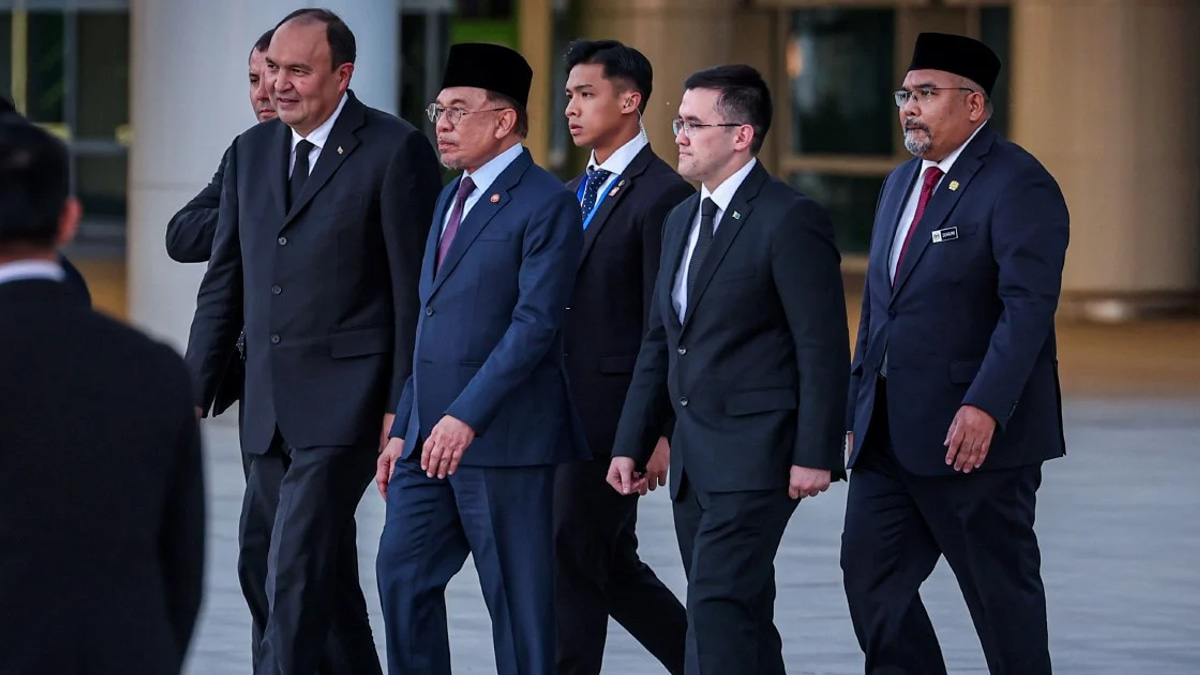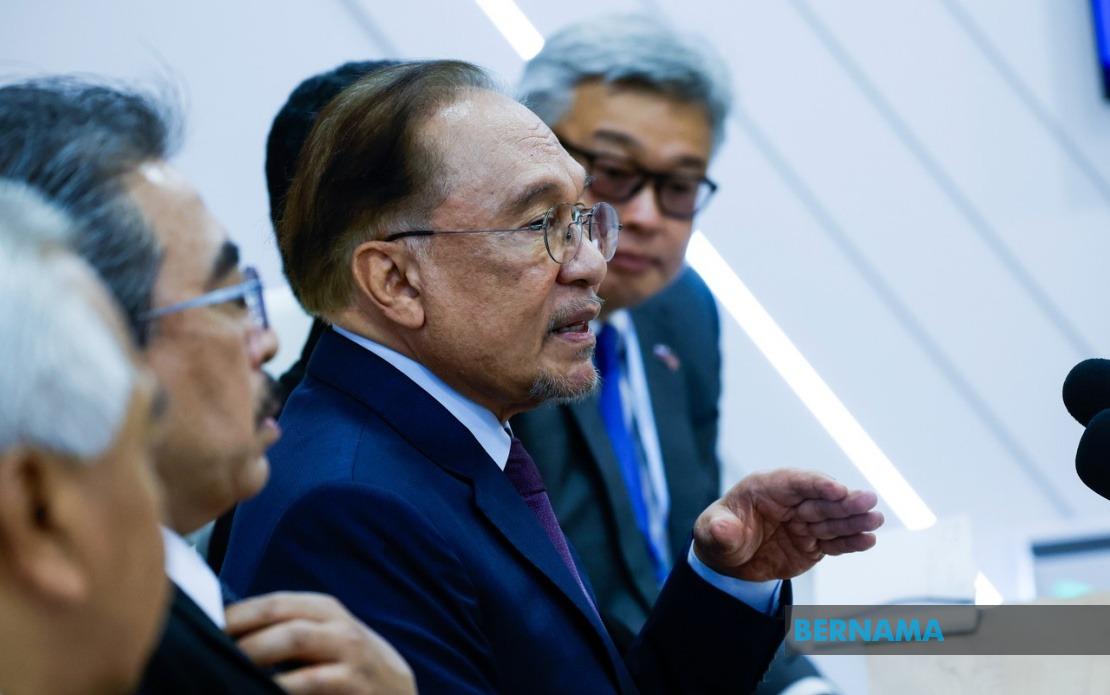
Prime Minister Datuk Seri Anwar Ibrahim has secured a strategic commitment from Russia to guarantee Malaysia's long-term supply of petroleum, oil, and gas following his two-day working visit to Kazan, marking a watershed moment in bilateral energy relations between the two countries. The agreement represents a fundamental shift away from Malaysia's previous reliance on short-term or annually renewed energy contracts, instead establishing a stable, multi-year framework designed to insulate the nation from volatile global energy markets and geopolitical uncertainties. The announcement came during the 35th ASEAN-Russia Commemorative Summit, where Anwar met with Russian President Vladimir Putin to discuss enhanced cooperation across energy security, trade, investment, tourism, and technology sectors.
The energy supply arrangement stands at an advanced stage of completion, with Anwar indicating that the foundational principles have already been agreed upon by both governments and their respective energy companies. Representatives from Russian and Malaysian petroleum enterprises have already convened in Kazan to finalise the technical and commercial details of the pact. The Prime Minister directed his delegation to expedite the signing process upon returning to Malaysia, emphasising that the drafted agreement merely awaits formal review and signature by authorised representatives. This mechanism reflects the growing momentum in Malaysia-Russia energy partnerships, particularly through Petronas, Malaysia's national oil corporation, which has established increasingly robust bilateral channels with Russian counterparts.
Beyond the immediate energy accord, Anwar advocated for a more assertive Malaysian approach to economic engagement with Russia and other emerging economies, cautioning against what he characterised as an excessively cautious posture in international economic relations. He stressed that Malaysia possesses untapped potential for deeper commercial integration with Russia across multiple sectors, provided the nation adopts a more proactive diplomatic and business strategy. This positioning reflects broader Malaysian strategic thinking regarding supply chain diversification and the reduction of dependency on traditional Western trading partners, a concern amplified by recent geopolitical tensions and sanctions regimes affecting international commerce.
During bilateral discussions with Rustam Minnikhanov, the Head of the Republic of Tatarstan, Anwar explored an expanded cooperation framework encompassing trade, investment, education, tourism, the halal industry, technology, and human capital development. Tatarstan's status as one of Russia's most significant oil-producing regions made it a natural focal point for discussions about downstream petroleum activities, refining operations, and petrochemical manufacturing. The dialogue underscored Malaysia's recognition that energy cooperation extends beyond crude extraction into higher-value industrial sectors where technical expertise and capital investment could generate additional economic benefits for both jurisdictions. These conversations also identified prospects in scientific research and higher education, where Malaysian and Russian institutions could collaborate on innovation and talent development initiatives.
The bilateral relationship has expanded measurably across economic indicators. In 2025, Russia ranked as Malaysia's ninth-largest trading partner among European nations, with total trade valued at RM8.72 billion (US$2.04 billion). Malaysian exports to Russia predominantly comprise electrical and electronic products, machinery, equipment components, and processed foodstuffs, reflecting the complementary nature of both economies. Conversely, Malaysia imports petroleum products, minerals, chemicals, and chemical-based materials from Russia, a pattern that underscores the strategic importance of securing long-term supply arrangements for energy-intensive industries and consumer markets. The regional dimension also warrants attention: across ASEAN, total trade with Russia reached US$18.1 billion in 2024, while Russian foreign direct investment in the bloc totalled RM367.90 million (US$92.97 million), indicating modest but growing commercial engagement.
Anwar championed the finalisation of the ASEAN-Russia Strategic Programme on Trade and Investment Cooperation for 2026-2035, characterising the accord as instrumental for catalysing the next phase of regional economic collaboration. This framework positions Southeast Asia as a coherent economic bloc in Russia's strategic calculus, particularly as international sanctions and Western economic restrictions incentivise Russian enterprises to cultivate non-Western markets. The programme's adoption reflects both parties' recognition that sustained economic engagement serves mutual interests, facilitating technology transfer, investment flows, and mutually beneficial trade relationships despite broader geopolitical tensions affecting Russia's international standing.
Facilitating human and cultural exchanges represents another pillar of the expanded bilateral relationship. Anwar called for the implementation of visa-free travel arrangements and the establishment of direct commercial flights connecting Malaysia and Russia, measures designed to enhance tourist arrivals and strengthen people-to-people connections. Such initiatives would reduce administrative friction and travel costs for business professionals, academics, and tourists traversing both nations, thereby normalising bilateral engagement and building constituencies within each country invested in sustaining cooperative relations. The emphasis on tourism and educational exchanges also serves softer diplomatic objectives, cultivating mutual understanding and reducing the influence of Western narratives regarding Russia within Malaysian public discourse.
Malaysia's engagement with Russia reflects broader strategic calculations regarding energy security and supply chain resilience. The nation confronts structural energy vulnerabilities as a petroleum exporter facing declining domestic reserves and growing domestic consumption pressures. Long-term supply agreements with diversified international partners mitigate exposure to supply shocks, price volatility, and geopolitical disruptions that could threaten economic stability. Russia's own energy sector, despite international sanctions, possesses substantial production capacity and established export infrastructure, making it a logical partner for Malaysian energy procurement strategies. The geopolitical dimension cannot be overlooked: Malaysia's cultivation of energy ties with Russia signals diplomatic independence from Western-led economic arrangements and reflects the nation's non-aligned foreign policy tradition.
Anwar's subsequent departure for Turkmenistan represented a continuation of this Central Asian energy diplomacy strategy, indicating that the Malaysian government views the broader region as critical to long-term energy security objectives. Turkmenistan possesses vast natural gas reserves and represents another potential supplier for diversified energy sourcing. The regional tour signals that Malaysia is pursuing a comprehensive energy partnership strategy across multiple Central Asian jurisdictions, rather than relying on bilateral arrangements with individual nations. This approach acknowledges that energy markets increasingly function as integrated regional systems, where supply diversification across multiple sources and delivery routes provides greater resilience than single-source dependence.
The timing of Anwar's Central Asian mission reflects Malaysia's responsiveness to global energy market volatility and geopolitical uncertainties affecting traditional supply chains. Escalating tensions in West Asia, maritime security concerns in critical chokepoints, and ongoing sanctions regimes have elevated energy security concerns for importing nations worldwide. Malaysia, as an energy-intensive middle-income economy transitioning toward higher-value manufacturing and services, requires stable, affordable energy supplies to sustain economic growth. Anwar's diplomatic engagement in Russia and Central Asia represents a calculated attempt to establish contractual frameworks that shield Malaysia from supply disruptions and price shocks whilst diversifying the nation's energy portfolio beyond traditional Middle Eastern suppliers and Southeast Asian producers.
These diplomatic initiatives also carry implications for Malaysia's positioning within broader regional architecture and international alignments. By actively cultivating energy partnerships with Russia and Central Asia, Malaysia demonstrates strategic autonomy and refuses alignment with Western-led sanctions or economic isolation efforts targeting these regions. This stance aligns with ASEAN's stated commitment to strategic autonomy and non-alignment, positioning Malaysia as a bridge between Europe, Asia, and the wider Global South. The energy agreements function simultaneously as economic arrangements and geopolitical statements, signalling Malaysian willingness to engage with non-Western powers and resist pressures toward exclusive Western-oriented trade and investment relationships.
%22%2F%3E%3C%2Fpattern%3E%3C%2Fdefs%3E%3Crect%20width%3D%22100%25%22%20height%3D%22100%25%22%20fill%3D%22url(%23phyc2bg)%22%2F%3E%3Crect%20width%3D%22100%25%22%20height%3D%22100%25%22%20fill%3D%22url(%23phyc2bp)%22%2F%3E%3Ctext%20x%3D%2250%25%22%20y%3D%2250%25%22%20text-anchor%3D%22middle%22%20dominant-baseline%3D%22central%22%20fill%3D%22rgba(255%2C255%2C255%2C0.95)%22%20font-family%3D%22Georgia%2C%20'Times%20New%20Roman'%2C%20serif%22%20font-weight%3D%22700%22%20font-size%3D%22170%22%20letter-spacing%3D%22-0.02em%22%3EMalaysia%3C%2Ftext%3E%3C%2Fsvg%3E)