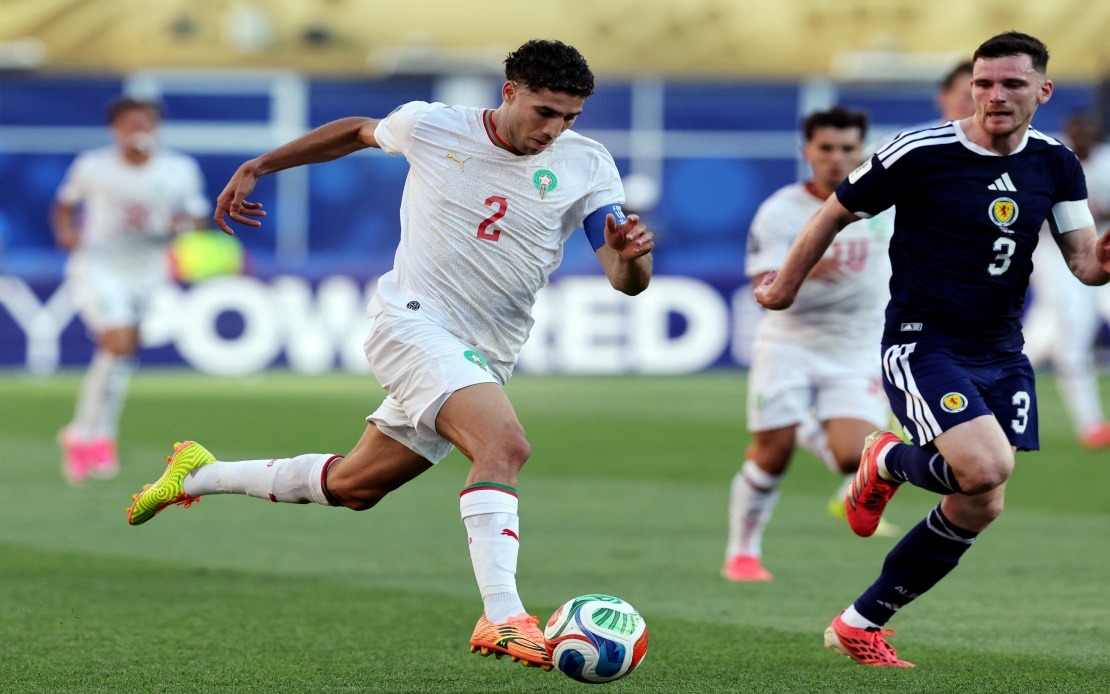
Morocco's head coach Mohamed Ouahbi has stepped forward to defend his captain Achraf Hakimi in the face of significant crowd hostility during the team's 1-0 World Cup triumph over Scotland on Friday in Foxborough, Massachusetts. The timing of the incident proved particularly sensitive, arriving just hours after a French court confirmed that the Paris Saint-Germain right-back must stand trial on rape allegations. Despite the charged atmosphere and the personal difficulties surrounding his player, Ouahbi chose to emphasize Morocco's unity and Hakimi's sporting qualities rather than engage with the legal proceedings.
The hostile reception became apparent the moment the teams were announced before kick-off, with portions of the crowd directing sustained boos and whistles toward Hakimi. The negative response intensified each time the defender touched the ball during the match, creating a challenging environment for the player to perform. Such scenes are increasingly rare at international football tournaments, where the focus typically remains on the sport itself, though mounting off-field controversies have occasionally penetrated the stadium atmosphere in recent years.
A French appeals court in Versailles had announced earlier that same day that Hakimi must face trial on charges related to an alleged rape incident involving a 24-year-old woman at his Paris residence in 2023. The legal development represented a significant escalation in the case, coming after Hakimi had appealed against an earlier investigation judge's determination. The timing of the court announcement and the World Cup match created an unusual convergence of sporting and legal matters, placing intense scrutiny on the player during international competition.
When asked about the crowd reaction and the broader situation, Ouahbi firmly rejected any suggestion that off-field matters should undermine team cohesion. His measured response reflected a deliberate strategy to shield his player while maintaining focus on Morocco's World Cup campaign. The coach's statement emphasized that the squad stood united behind Hakimi, framing the situation as one requiring collective support rather than individual judgment or commentary. This approach attempted to insulate the team from external pressures that might prove distracting during crucial tournament matches.
Ouahbi's characterization of Hakimi's performance during the Scotland encounter painted a picture of a player who had risen above the hostility to deliver a strong display. By describing the defender as "very strong" and noting that he remained "relaxed" despite the circumstances, the coach sought to establish that neither the crowd reaction nor the legal developments had compromised Hakimi's ability to contribute meaningfully to the team. This assessment carried particular weight given that international football demands both technical proficiency and psychological resilience, especially when players face personal challenges.
The decision by Ouahbi and the coaching staff to avoid detailed discussion of the legal case reflected a broader approach increasingly adopted by national team management when players face off-field controversies. Rather than address the substance of accusations or court proceedings, the focus shifted entirely to the sporting domain and the player's contribution to team objectives. This strategy aims to maintain professionalism and prevent legal matters from fragmenting team culture during important competitions when unity becomes essential for success.
Teammates of Hakimi also demonstrated solidarity by declining to engage with questions about the rape charges, mirroring their coach's preference to compartmentalize sporting and legal matters. This unified silence suggested either a deliberate team decision to avoid commentary or a natural reluctance among players to discuss a teammate's personal crisis. Such restraint, while potentially frustrating to journalists seeking responses, often reflects an understanding within professional football environments that excessive discussion of sensitive matters can amplify divisions and complicate the psychological environment.
Hakimi himself had previously issued a statement through social media following the court announcement, asserting that he would finally have the opportunity to present his account. His response suggested a desire to move through the legal process and speak to the allegations, marking a shift from earlier silence. The statement carried implicit confidence that the trial proceedings would provide a platform for his defense and vindication, though court processes typically unfold over extended periods in France.
From a Southeast Asian and Malaysian perspective, the incident highlights the increasing intersection between global football and international legal proceedings, a reality that affects players across all leagues and nationalities. Malaysian followers of international football increasingly encounter situations where domestic athletes or regional competitors face off-field legal challenges while representing their countries. The response from Morocco's coaching staff—prioritizing team unity and sporting performance while avoiding judgment—offers a template that sports organizations across the region might consider when navigating similar circumstances involving their own players.
The broader implications for international football governance remain unclear, particularly regarding how tournaments and federations should respond when players face serious allegations. Unlike domestic leagues where club management can sometimes manage situations with greater discretion, international tournaments place such matters under intense media and public scrutiny, creating challenges for coaches attempting to maintain team cohesion while respecting the gravity of legal proceedings. As Morocco continues its World Cup campaign, the football world will observe whether this approach successfully insulates the team from distraction or whether the controversy continues to complicate the squad's tournament experience.
Ouahbi's backing of Hakimi, while emphasizing sporting factors, ultimately represents a bet on resilience and unity during adversity. Whether such support proves sufficient to allow the player to perform at the highest level while navigating serious legal challenges remains to be seen, but the coach's public stance signals that Morocco's leadership remains committed to supporting one of the team's most important defensive assets through a difficult period.