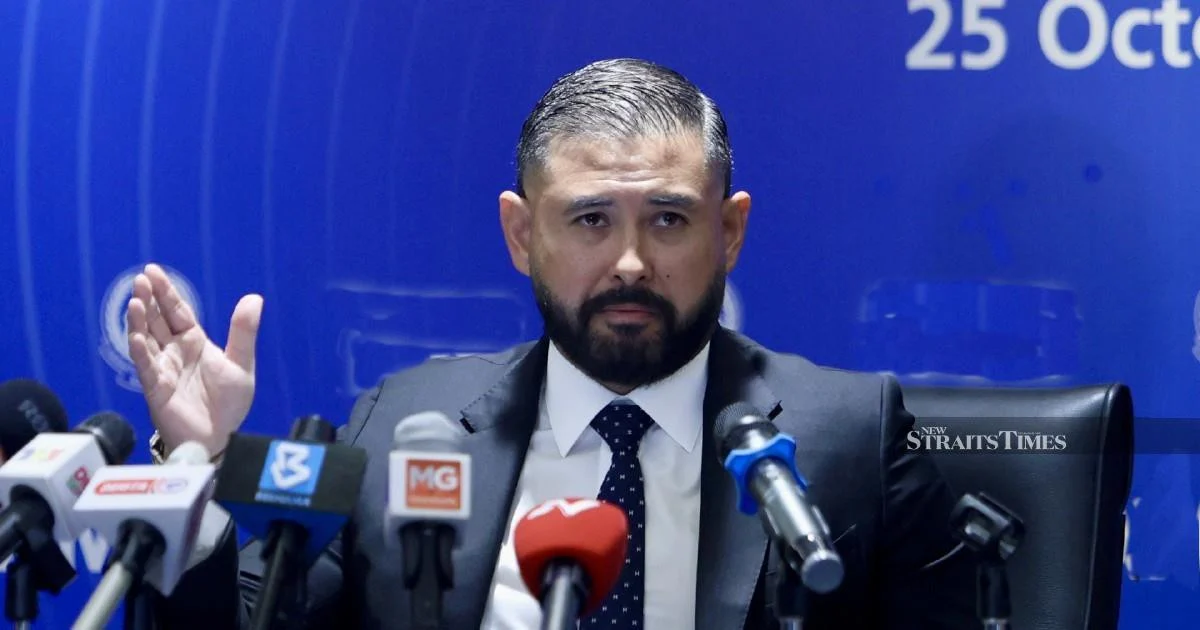
Johor's regent, Tunku Ismail Sultan Ibrahim, has rejected the Prime Minister's recent framing of Johor as a wealthy state struggling with substantial financial leakages. Rather than accepting this narrative, the regent has redirected criticism toward the federal government itself, arguing that Kuala Lumpur is the actual culprit behind the state's revenue not being distributed fairly back to Johor. His statement represents a significant pushback against the federal government's characterisation of the state's fiscal challenges and reflects growing tensions over how national revenues are allocated between the centre and Malaysia's most developed state.
The regent's intervention into a debate traditionally managed by political leaders underscores the deeper frustration within Johor's ruling establishment. The distinction between identifying internal leakages and external revenue extraction is crucial to understanding the state's economic grievances. While leakages typically refer to wasteful spending, misallocation, or inefficiency within a state's own governance structures, the regent's framing shifts accountability entirely to federal mechanisms—suggesting that the issue lies not in how Johor manages its affairs but in how the federal system extracts and redistributes resources away from the state.
Johor occupies a singular position within Malaysia's federal structure. As the nation's second-largest economy by gross domestic product and a major contributor to national revenue through its ports, manufacturing sectors, and tourism, the state has long argued that it receives disproportionately little in return for its economic contributions. This historical grievance has intensified during recent political transitions, particularly as Johor has shifted its political alignment and sought greater autonomy in economic policymaking. The regent's statement must be understood within this context of accumulated frustration over revenue sharing arrangements.
The federal government's characterisation of Johor as plagued by leakages implies that the state's governance structures are inherently inefficient, a characterisation the regent appears to have taken as both inaccurate and politically damaging. By reframing the problem as federal extraction rather than state incompetence, the regent is protecting Johor's administrative reputation while simultaneously mounting a more fundamental critique of the federation's resource distribution system. This rhetorical shift carries political weight, particularly as Johor continues to assert its interests within the broader national conversation about federalism and state autonomy.
The revenue-sharing tensions between Johor and the federal centre are not entirely new, but they have become more prominent in recent years as economic pressures have mounted across Malaysia. The state government has consistently argued that the current system of revenue allocation, which includes federal taxes collected within Johor that are subsequently redistributed according to federal formulas, systematically disadvantages economically strong states. From Johor's perspective, the state generates wealth that benefits the nation as a whole, yet receives returns that do not reflect its economic contributions proportionally.
This dispute also reflects broader debates occurring across Malaysia's federal system. Selangor and Sabah have similarly articulated concerns about revenue distribution, though perhaps with less public prominence than Johor's regent has now granted this issue. The question of how much autonomy and financial benefit states should retain from revenues generated within their territories remains unresolved in Malaysian federalism, creating ongoing friction between state and federal authorities regardless of their political composition. Johor's intervention raises these systemic questions anew and may influence how other states approach similar grievances.
The Prime Minister's emphasis on leakages within Johor could be interpreted as a suggestion that the state should focus on improving internal governance before expecting greater federal transfers or autonomy. The regent's counter-argument implicitly rejects this framing, asserting instead that the state's fiscal challenges stem from structural inequities in the federal arrangement rather than from mismanagement. This distinction is significant because it deflects blame from Johor's administration and instead interrogates the legitimacy of the entire revenue distribution framework.
For Malaysian and Southeast Asian observers, this exchange illuminates the persistent tensions between centre and periphery in federal systems, particularly when wealthy states believe they are subsidising less developed regions without adequate recognition or reciprocal benefit. Johor's argument, if broadly adopted by other economically significant states, could eventually force a comprehensive renegotiation of Malaysia's federal financial arrangements. The regent's intervention suggests that such a renegotiation may be approaching on the political horizon.
The implications extend beyond mere budgeting mechanics. How the federal government responds to the regent's challenge will signal whether it is willing to engage seriously with state-level concerns about revenue equity or whether it will maintain the current system despite mounting pressure for change. The outcome of this dispute could influence not only Johor's political trajectory but also the broader relationship between Malaysian states and their federal government, potentially reshaping how resource distribution is negotiated across the federation in coming years.