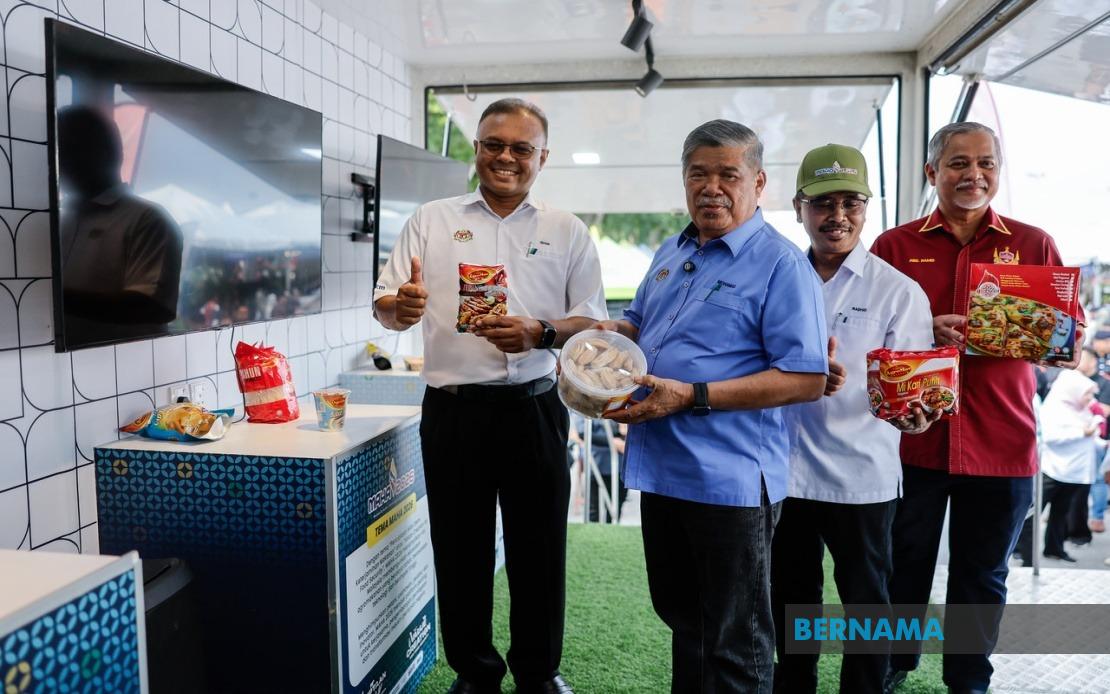
The Malaysia Agriculture, Horticulture and Agrotourism Show in 2026 will mark a significant milestone by welcoming international exhibitors for the first time, fundamentally expanding the scope and reach of the biennial event. Agriculture and Food Security Minister Datuk Seri Mohamad Sabu announced the breakthrough during a press conference in Shah Alam following the launch of the Central Zone's Road to MAHA 2026 programme, signalling Malaysia's commitment to positioning the event as a regional and global agricultural marketplace.
A diverse roster of countries has already confirmed participation, representing major agricultural players across multiple continents. Brazil brings expertise in tropical agriculture and agribusiness innovation, while China and its Guangxi region represent Asia's agricultural heavyweight. The United States, Japan, and South Korea will showcase advanced farming technologies and agrotourism models, while Hungary's participation underscores Europe's interest in Southeast Asian agricultural opportunities. Additional confirmations from Uzbekistan and other nations are expected as preparations intensify, indicating robust international interest in connecting with Malaysian stakeholders.
For Malaysian farmers, agribusiness companies, and agricultural service providers, this internationalisation presents unprecedented commercial opportunities. The inclusion of foreign exhibitors transforms MAHA from primarily a domestic showcase into a genuine cross-border marketplace where local participants can establish direct relationships with international buyers, technology providers, and potential joint venture partners. This direct access to global markets addresses a persistent challenge for Malaysian agricultural enterprises seeking to scale operations and access new distribution channels without the intermediaries and costs typically associated with international trade.
Ministry secretary-general Datuk Isham Ishak emphasised that the international participation will facilitate knowledge transfer and technological advancement across the sector. Visitors and exhibitors will encounter cutting-edge agricultural technologies, sustainable farming practices, and business models that have proven successful in other markets. This exposure allows Malaysian farmers to evaluate and potentially adopt innovations suited to local conditions, while service providers can identify new products and solutions to integrate into their operations. The competitive dynamics created by international presence will likely accelerate innovation adoption across the Malaysian agricultural landscape.
The ministry has structured comprehensive business-matching sessions into the MAHA 2026 programme, creating structured opportunities for commercial transactions. These sessions will facilitate both imports and exports, enabling Malaysian exporters to negotiate directly with foreign buyers seeking agricultural products, while also allowing local businesses to source inputs, equipment, and technologies from international suppliers at competitive rates. This bilateral trade approach strengthens Malaysia's position within regional and global agrifood supply chains while supporting local producers in accessing premium international markets.
The timing of this international expansion aligns with Malaysia's broader food security strategy, a concern that transcends national borders. Minister Mohamad emphasised that food security represents an interconnected global challenge that no single nation can address in isolation. By fostering international cooperation through MAHA 2026, Malaysia demonstrates recognition that agricultural resilience depends on diversified sourcing relationships, shared technological advancement, and collaborative problem-solving. This perspective positions Malaysia as an engaged regional partner in food security rather than a purely inward-focused nation.
Concurrently with the MAHA 2026 announcement, the government launched SISDA (Surveillance and Intervention Supply Demand Agrofood), a sophisticated digital platform designed to revolutionise agricultural market monitoring. This system represents the technological backbone supporting Malaysia's food security objectives, utilising advanced analytics to predict supply disruptions, identify pricing anomalies, and enable timely government interventions. By integrating big data analytics and machine learning, SISDA provides policymakers with real-time visibility into market conditions, enabling proactive rather than reactive responses to supply shocks that could destabilise domestic food prices or farmer incomes.
The SISDA system addresses a critical gap in Malaysian agricultural governance—comprehensive market intelligence spanning the entire agrifood supply chain from production through retail distribution. Traditional monitoring approaches often lag market realities by weeks or months, limiting governmental effectiveness in maintaining price stability for consumers or ensuring adequate returns for farmers. Through continuous data collection and algorithmic analysis, SISDA generates early warning signals when supply constraints, demand surges, or price volatility emerge, allowing authorities to implement targeted interventions before market dysfunction occurs. This proactive approach reduces the likelihood of sudden price spikes that burden households while protecting farmer incomes from catastrophic market collapses.
For Malaysian consumers, the combined impact of MAHA 2026's international dimension and SISDA's monitoring capabilities creates a structural improvement in food security and price stability. Access to diverse international agricultural products reduces dependency on domestic supply alone, particularly for items facing seasonal shortages or climatic pressures. Simultaneously, sophisticated market monitoring ensures that whatever domestic and imported supplies flow into Malaysia are distributed efficiently and priced fairly. The collaboration between supply-side expansion through international agricultural partnerships and demand-side management through data-driven surveillance creates a more resilient food system.
The announcement also reflects evolving regional dynamics within Southeast Asia's agricultural sector. As regional economies develop and populations grow, competition intensifies for both inputs and market access. Malaysia's strategy of welcoming international exhibitors while simultaneously implementing sophisticated market monitoring suggests confidence in local agricultural competitiveness and a pragmatic approach to globalisation. Rather than retreating from international competition, Malaysia is creating infrastructure—both physical through MAHA and digital through SISDA—to help local farmers and agribusinesses succeed within increasingly internationalised markets.
Looking forward, the success of MAHA 2026's international dimension will likely influence subsequent iterations of the show and agricultural policy more broadly. If foreign participation generates measurable commercial benefits for Malaysian exhibitors, the government may expand agricultural digitalisation initiatives, strengthen quarantine and certification procedures to facilitate agricultural exports, and deepen bilateral agricultural partnerships. Conversely, if international participation fails to produce tangible opportunities for local stakeholders, it could trigger policy recalibrations. The outcomes will provide crucial data about Malaysian agricultural competitiveness and the effectiveness of marketplace-based approaches to food security and rural development.