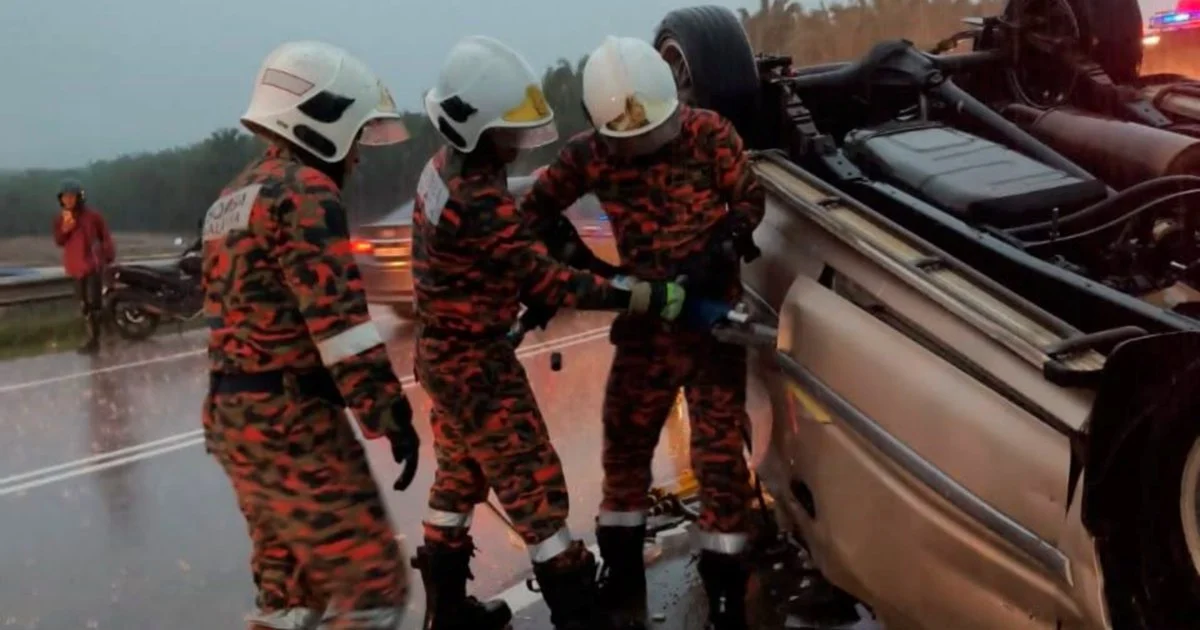
A tragic sequence of vehicle accidents unfolded across Pahang's east coast today, claiming four lives including two sisters in what authorities are investigating as separate incidents that occurred within a remarkably short timeframe in the Maran and Pekan districts.
The timing and proximity of the two fatal collisions have drawn the attention of local emergency services and traffic management authorities, who are currently piecing together the circumstances that led to the loss of four lives in such rapid succession. The tragic events underscore the persistent road safety challenges that continue to plague Malaysian highways and regional routes, particularly in areas with variable road conditions and traffic volumes like those found throughout Pahang state.
The Maran district, located in the southern portion of Pahang, and Pekan, its district capital situated further northeast along the Kuantan River valley, are both areas traversed by significant numbers of commercial and private vehicles daily. The dual incidents occurring so close together in time and geographic proximity have raised questions about whether common factors—such as weather conditions, road maintenance issues, or vehicle mechanical problems—may have contributed to both accidents or whether they represent independent tragic events.
The involvement of two sisters among the fatalities adds a deeply personal dimension to this traffic tragedy, highlighting the interconnected nature of family units and how a single moment on the road can alter the lives of multiple relatives and extended family networks. In Malaysian society, where family bonds remain particularly strong and multigenerational households are common, such losses reverberate far beyond the immediate victims to affect broader kinship networks and communities.
Road traffic accidents remain one of the leading causes of death among working-age adults throughout Southeast Asia and Malaysia specifically. The cumulative impact of these incidents—whether measured in terms of fatalities, injuries, disabilities, or economic cost to families and the healthcare system—represents a substantial public health challenge that extends well beyond individual tragedy. Each accident typically involves not only the immediate victims but also emergency responders, families, employers, and communities who bear the emotional and financial consequences.
Pahang state, despite its natural attractions and economic importance as a commercial hub, has experienced recurring challenges with traffic safety on its major routes. The state's geographic characteristics—spanning from coastal lowlands to inland terrain with variable elevation—create diverse driving conditions that demand heightened caution from motorists. Construction sites, commercial traffic, and seasonal variations in weather can all contribute to increased accident risk during certain periods.
The investigation into both accidents will likely examine multiple variables including vehicle maintenance records, driver behavior and fatigue, environmental conditions at the time of each incident, visibility factors, and road surface conditions. Traffic authorities will also consider whether speed, mechanical failure, or human error played determining roles. Such investigations are crucial not only for legal accountability but also for identifying patterns that might inform future road safety improvements and public awareness campaigns.
For Malaysian families and communities, these incidents serve as sobering reminders of the importance of defensive driving practices, vehicle maintenance, and adherence to speed regulations. The reality that fatal accidents can occur within the same hour in nearby geographic locations underscores how quickly circumstances can change on the road and how unpredictable traffic dangers can be, even for experienced drivers navigating familiar routes.
The broader context of Malaysian road safety reveals ongoing concerns about enforcement of traffic regulations, the quality of vehicle safety standards, driver education and awareness levels, and the adequacy of road infrastructure. While technological improvements and awareness campaigns have been implemented nationwide, fatality rates on Malaysian roads continue to warrant sustained attention from policymakers, law enforcement, and the public sector.
Emergency response teams across Pahang and neighboring districts remain mobilized to address traffic incidents, with hospitals and medical facilities in both Maran and Pekan areas likely involved in the emergency response to these accidents. The coordination between police, traffic management authorities, fire and rescue services, and medical personnel represents a critical infrastructure that responds to these crises but cannot prevent them entirely without broader systemic improvements.
This twin tragedy occurring within a single hour across Pahang communities will likely prompt renewed discussions among state authorities about road safety initiatives, infrastructure improvements, and public communication campaigns aimed at reducing preventable accidents. For Malaysian road users generally, such incidents reinforce the unpredictable nature of vehicle accidents and the critical importance of maintaining full attention, proper vehicle maintenance, and compliance with all traffic safety guidelines regardless of journey distance or familiarity with routes.
%22%2F%3E%3C%2Fpattern%3E%3C%2Fdefs%3E%3Crect%20width%3D%22100%25%22%20height%3D%22100%25%22%20fill%3D%22url(%23ph58ve7g)%22%2F%3E%3Crect%20width%3D%22100%25%22%20height%3D%22100%25%22%20fill%3D%22url(%23ph58ve7p)%22%2F%3E%3Ctext%20x%3D%2250%25%22%20y%3D%2250%25%22%20text-anchor%3D%22middle%22%20dominant-baseline%3D%22central%22%20fill%3D%22rgba(255%2C255%2C255%2C0.95)%22%20font-family%3D%22Georgia%2C%20'Times%20New%20Roman'%2C%20serif%22%20font-weight%3D%22700%22%20font-size%3D%22170%22%20letter-spacing%3D%22-0.02em%22%3EMinistry%3C%2Ftext%3E%3C%2Fsvg%3E)