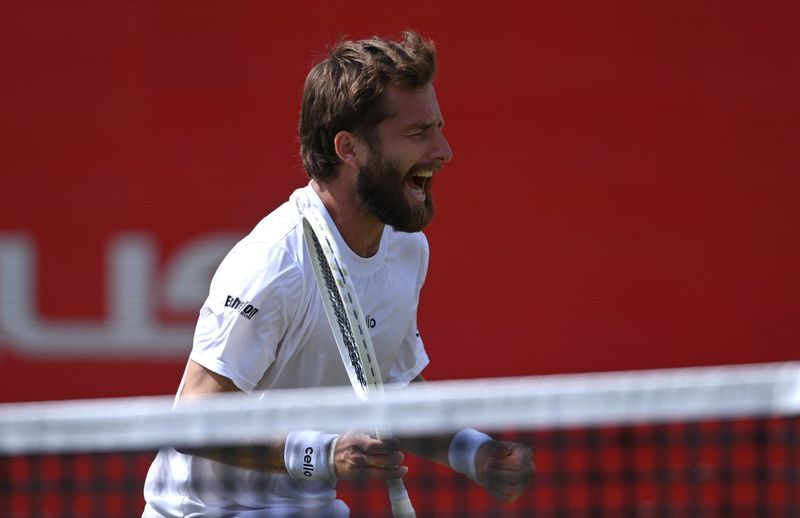
French tennis player Corentin Moutet has forfeited almost his entire prize purse from the Queen's Club championships after incurring a substantial fine for profanity during a live broadcast interview. The 27-year-old world number 36 was penalised $40,000 by the ATP following the expletive-laden post-match comments he made on court to BBC broadcasters immediately after defeating Giovanni Mpetshi Perricard in his opening match. Since Moutet earned only $43,000 for advancing to the second round, the fine has effectively eliminated nearly his entire financial gain from the London grass-court tournament.
The incident unfolded when Moutet was being interviewed courtside by the BBC following his victory over his fellow countryman. During the conversation, he used profanities on seven separate occasions, prompting the interviewer to request that he refrain from repeating the language. Remarkably, Moutet continued swearing three additional times despite this direct appeal before the broadcast was terminated prematurely. Both the BBC and tournament officials subsequently issued apologies to the spectators in attendance and viewers watching at home who had been subjected to the offensive language.
The ATP's disciplinary decision cited unsportsmanlike conduct as the grounds for the punishment, a determination that has proven costly for the French player. However, Moutet has signalled his intention to contest the ruling and has lodged an appeal against the fine, suggesting he believes the penalty is disproportionate or that mitigating circumstances exist that warrant reconsideration. The outcome of his appeal remains uncertain, though such challenges to disciplinary decisions in professional tennis rarely succeed.
Moutet's troubles at Queen's extended beyond the disciplinary fine. Having secured his second-round berth with the victory over Perricard, he subsequently lost his next match against Spain's Alejandro Davidovich Fokina, eliminating him from the tournament. This early exit meant his time in London was comparatively brief, making the financial impact of the fine even more acute given his limited prize money from the event.
The immediate cause of Moutet's outburst appears to have been frustration with a specific moment during his match against Perricard. When describing an ace struck against him at match point—delivered at the considerable speed of 142 miles per hour on the second serve—Moutet became visibly agitated and expressed his emotions through repeated obscenities during the subsequent BBC interview. For context, a 142mph second serve is an exceptionally powerful delivery, and facing such velocity at a crucial juncture would test the composure of any competitor.
Following the broadcast incident, Moutet attempted to downplay the significance of his behaviour by posting on Instagram that he had simply been joking. This explanation was met with skepticism by tournament officials and the ATP, who proceeded with the formal disciplinary process regardless. The claim that the swearing was humorous in intent rather than a genuine expression of frustration does not appear to have influenced the governing body's decision to pursue the substantial fine.
This incident represents merely the latest chapter in Moutet's ongoing struggles with behavioural conduct in professional tennis. The Frenchman carries a history of disciplinary issues that extends back several years and demonstrates a pattern of difficulty maintaining composure under pressure. In 2022, he reached a low point in his career when he was defaulted—removed from competition entirely—from the Adelaide International after a match against Serbia's Laslo Djere, during which he directed profanities at the umpire. Such a dramatic punishment is reserved for the most serious breaches of tennis etiquette and underscores the severity of his infractions.
That same year, the French Tennis Federation took the extraordinary step of suspending Moutet from official support and representation due to persistent concerns about his on-court behaviour and conduct off the court. This institutional withdrawal of backing from his national federation represented a stark consequence of his repeated disciplinary violations and suggested that French tennis authorities had lost confidence in his ability to represent the sport's values appropriately. Such sanctions from one's own national federation carry significant reputational weight within professional tennis circles.
For Malaysian and Southeast Asian tennis followers, Moutet's repeated infractions offer a cautionary tale about the importance of mental discipline in professional sport. While raw talent may carry a player to competitive heights, the ability to manage emotions and conduct oneself with dignity under pressure is increasingly scrutinised by governing bodies. The quantum of fines—$40,000 is substantial by any measure—indicates that sports organisations are willing to impose meaningful financial penalties to discourage behaviour they deem contrary to the sport's interests.
Moutet's situation also illustrates broader tensions within professional tennis regarding player conduct and broadcasting standards. Live courtside interviews conducted immediately following matches capture raw emotion and unfiltered reactions, yet broadcasters and tournaments maintain responsibility for maintaining appropriate standards for audiences that include children. The balance between authentic human expression and professional decorum remains contested, but Moutet's case demonstrates that financial consequences will be applied when players cross the lines established by governing bodies.
Moving forward, Moutet faces a critical juncture in his professional development. His ranking of 36th in the world suggests he possesses sufficient talent to compete at elite levels, yet his repeated behavioural lapses risk undermining his career trajectory and commercial prospects. Sponsors and tournament organisers increasingly scrutinise players' conduct and public personas, and a reputation for undisciplined behaviour can negatively impact endorsement opportunities and invitations to prestigious events. Unless Moutet demonstrates meaningful reform in his approach to on-court emotions and post-match interactions, the financial and reputational costs of his indiscretions will likely accumulate further.
%22%2F%3E%3C%2Fpattern%3E%3C%2Fdefs%3E%3Crect%20width%3D%22100%25%22%20height%3D%22100%25%22%20fill%3D%22url(%23ph58ve7g)%22%2F%3E%3Crect%20width%3D%22100%25%22%20height%3D%22100%25%22%20fill%3D%22url(%23ph58ve7p)%22%2F%3E%3Ctext%20x%3D%2250%25%22%20y%3D%2250%25%22%20text-anchor%3D%22middle%22%20dominant-baseline%3D%22central%22%20fill%3D%22rgba(255%2C255%2C255%2C0.95)%22%20font-family%3D%22Georgia%2C%20'Times%20New%20Roman'%2C%20serif%22%20font-weight%3D%22700%22%20font-size%3D%22170%22%20letter-spacing%3D%22-0.02em%22%3EMinistry%3C%2Ftext%3E%3C%2Fsvg%3E)