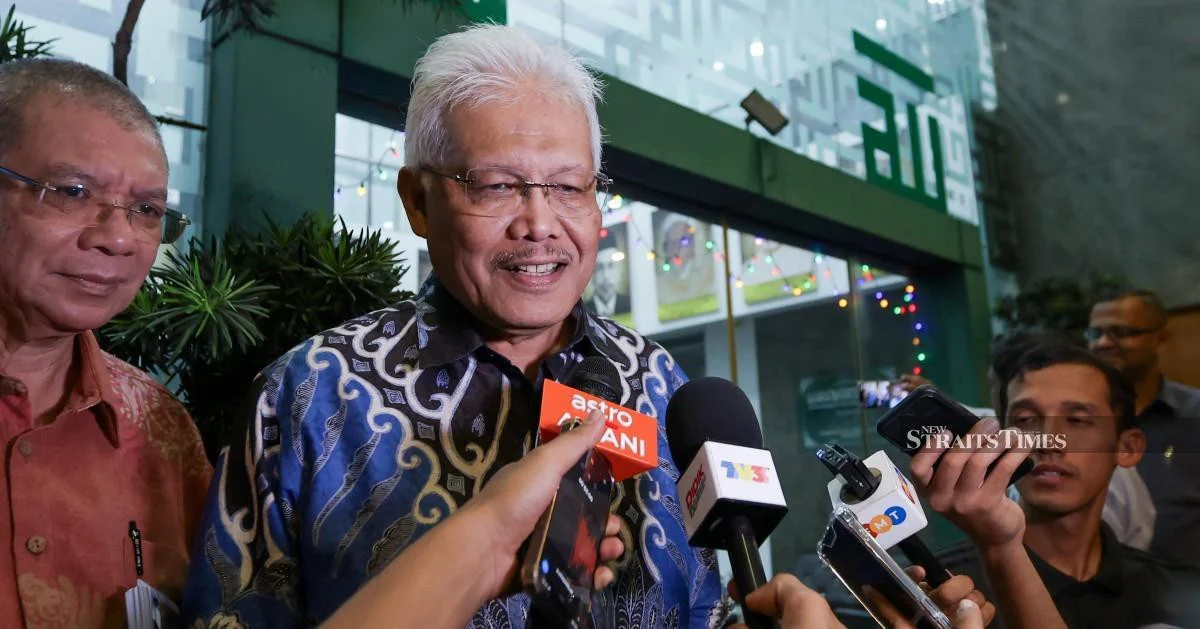
Datuk Seri Hamzah Zainudin is preparing to resume his position as leader of the parliamentary opposition, a development confirmed by the newly released seating arrangements for the Dewan Rakyat. The formal shift, taking effect this coming Monday, will see Hamzah occupy the front-row seat traditionally reserved for the opposition leader while Tan Sri Muhyiddin Yassin, who currently holds the Bersatu presidency, repositions himself further down the opposition bench.
The seating reallocation represents a significant manoeuvre within Malaysia's fractious opposition ranks, where leadership of the out-of-government bloc carries considerable symbolic weight and institutional privilege. The opposition leader's seat provides preferential access to the microphone during parliamentary proceedings, grants prominence in debate scheduling, and signals which figure commands the largest or most cohesive parliamentary faction opposing the government. That Hamzah is poised to occupy this position underscores shifting coalitional dynamics within the opposition.
Hamzah's return to the opposition frontbench follows months of political repositioning within the Pakatan Harapan coalition and wider opposition landscape. As the Member of Parliament for Larut, Hamzah has maintained significant influence over parliamentary strategy and coalition coordination. His formal elevation to the opposition leader's seat codifies what many observers regard as the practical reality of opposition dynamics, reflecting his command over Amanah party MPs and his broader acceptance among non-Barisan Nasional opposition figures.
Muhyiddin's repositioning is equally noteworthy, particularly given Bersatu's complicated relationship with the opposition bloc. The party, which broke away from the former Pakatan Harapan government in 2020 and subsequently provided crucial support to successive Barisan Nasional administrations, has recently reoriented itself toward opposition politics following electoral setbacks. Muhyiddin's relocation several seats down the opposition row may reflect both Bersatu's secondary status within opposition calculations and internal acknowledgment of Hamzah's greater command over opposition parliamentary mechanics.
Parliamentary seating protocols carry deeper implications than mere ceremonial positioning in Malaysia's Westminster-influenced system. The physical arrangement of the chamber influences speaking time allocations, question-period privileges, and the visual narrative of parliamentary proceedings. By formalising Hamzah's front-row placement, parliament's administrative authorities signal recognition of his de facto leadership role and provide institutional scaffolding for his coordination of opposition questioning and legislative strategy.
The timing of this reshuffle arrives amid broader recalibration of opposition strategy as Malaysia approaches the latter phases of the current parliamentary term. Opposition parties have increasingly coordinated their positions on key legislation and parliamentary business, and designating a single frontbench leader helps streamline these negotiations. Hamzah's experience in multiple ministerial portfolios and his reputation as a skilled parliamentary tactician position him favourably to manage the complex negotiations required when the opposition must decide whether to support, abstain from, or contest government initiatives.
For Malaysian political observers, the seating change illustrates the continued fluidity within opposition structures that remain fractionalised across ideological and party lines. Unlike the government coalition, which operates with clearer hierarchies and party discipline mechanisms inherited from decades of Barisan Nasional dominance, opposition blocs must repeatedly negotiate leadership roles and coordinate strategies across parties with divergent interests. Hamzah's elevation to the symbolic leadership position represents an implicit consensus, at least among parliamentary opposition figures, that his leadership role should receive formal institutional recognition.
The reshuffle also carries implications for Bersatu's evolving identity within Malaysian politics. Under Muhyiddin's presidency, the party has oscillated between government alignment and opposition positioning, reflecting its founders' complicated history and continuing internal debates about direction. By accepting a secondary bench position while maintaining Muhyiddin's parliamentary presence, Bersatu signals both continued opposition participation and acknowledgment of other parties' primary roles in shaping opposition strategy.
Regionally, Malaysia's opposition dynamics remain of interest to neighbouring democracies navigating similar challenges of sustaining viable opposition politics. The mechanisms through which opposition parties negotiate collective leadership, coordinate parliamentary strategy, and maintain public visibility despite limited government resources offer instructive examples of opposition resilience and adaptation in competitive authoritarian environments.
The practical implications of Hamzah's return to the opposition leader's seat will become apparent when Parliament resumes sitting this week. Enhanced ability to set opposition questioning priorities, greater formal recognition as the government's principal parliamentary interlocutor, and strengthened capacity to coordinate opposition party positions on crucial votes may all follow from this institutional repositioning. Whether this formalisation of opposition leadership translates into more effective parliamentary scrutiny of government initiatives or merely consolidates pre-existing de facto arrangements remains to be observed in the weeks and months ahead.