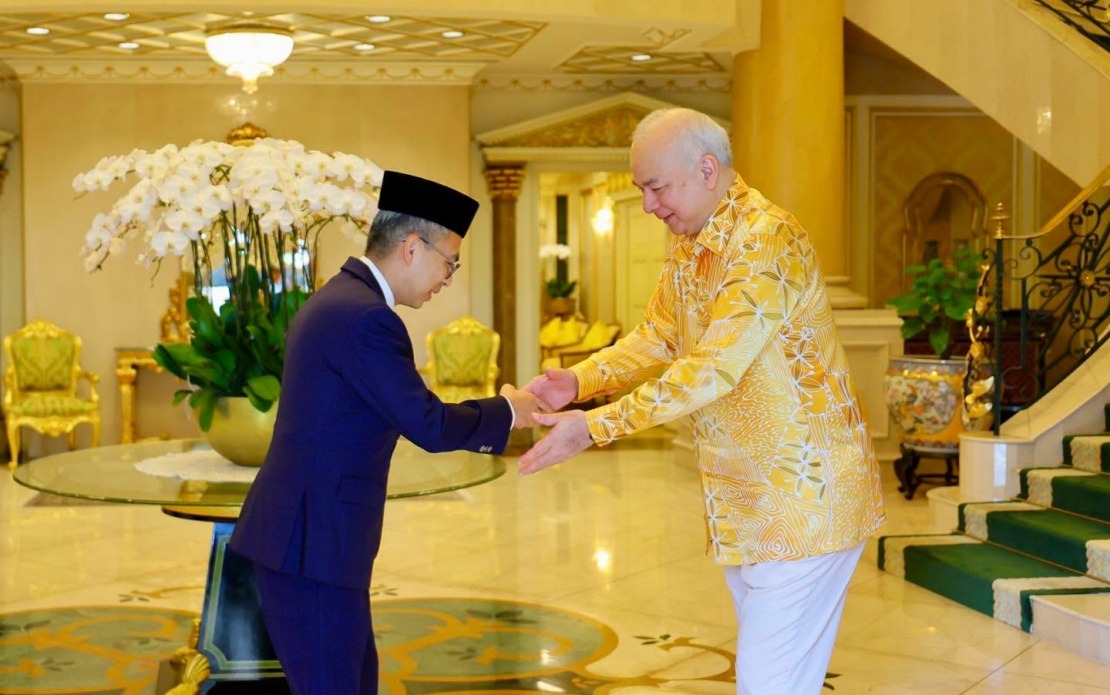
Communications Minister Datuk Fahmi Fadzil has updated Sultan Nazrin Shah on the government's comprehensive agenda to enhance communication infrastructure development and broaden digital service accessibility throughout Perak, signalling renewed attention to the state's technological backbone during a formal audience held recently.
The briefing underscores the federal government's commitment to addressing persistent connectivity challenges in Malaysia's industrial heartland, where rural communities and developing districts have historically faced gaps in broadband reach and telecommunications quality. Perak, as one of the nation's largest states by area, presents particular logistical challenges for infrastructure expansion, making targeted investment planning essential for equitable digital access across diverse geographies.
Beyond the technical aspects of network expansion, the minister highlighted the government's parallel focus on digital safety mechanisms, a dimension that has gained urgency as Malaysians increasingly conduct business, banking, and education online. The inclusion of online safety in the palace discussion reflects broader national concerns about cybersecurity, data protection, and safeguarding citizens from digital fraud and malicious activities that accompany rapid technology adoption.
Fahmi's decision to brief the Perak ruler directly demonstrates the government's recognition of state-level monarchy as a key stakeholder in development initiatives. In Malaysia's constitutional framework, state sultans serve not merely ceremonial roles but act as custodians of their populations' welfare and can significantly influence public reception of federal policies through their institutional platforms and moral authority.
The communication infrastructure agenda aligns with Malaysia's broader digital economy aspirations, where reliable connectivity forms the foundation for emerging sectors including e-commerce, remote work, digital services, and knowledge-based industries. Perak's geographic position, bridging the more developed Klang Valley region and less urbanised northern states, makes its infrastructure status particularly consequential for national economic integration.
Perak's specific infrastructure needs reflect its economic composition, blending traditional sectors like mining and agriculture with growing manufacturing and services. Enhanced connectivity can unlock productivity improvements across these sectors, enable small and medium enterprises to access digital markets, and facilitate rural entrepreneurship that has proven transformative in other Southeast Asian contexts.
The emphasis on service coverage expansion suggests the government recognises existing disparities in digital access between Perak's urban centres and peripheral areas. Addressing this divide requires sustained investment in fibre-optic networks, 5G tower deployment, and supporting technologies, alongside regulatory frameworks that encourage private sector participation in underserved markets.
Online safety considerations carry particular weight for Perak given its demographic profile and economic activities. Agricultural communities, elderly populations, and small traders face elevated vulnerability to digital scams and fraud, necessitating coordinated efforts between telecom providers, law enforcement, and public education initiatives to build digital literacy and protective awareness.
The royal briefing also reflects Malaysia's constitutional arrangement where state rulers retain certain developmental oversight prerogatives, distinguishing the Malaysian system from purely federal governance models. This federative dimension requires regular dialogue between Putrajaya agencies and state institutions, ensuring development initiatives receive both technical competence and cultural legitimacy.
Looking forward, the infrastructure investment trajectory outlined to Sultan Nazrin likely encompasses multi-year timelines and substantial capital requirements, positioning Perak strategically within national digital transformation priorities. Success will depend on coordinated execution between federal communications authorities, state government cooperation, and potentially private sector partnerships through public-private frameworks.
For Malaysian businesses and investors monitoring infrastructure trends, Perak's enhanced communication capabilities could represent emerging opportunities in digital services, e-commerce logistics, and technology-enabled traditional industries. The state's geographic position and developing economic base make it an increasingly relevant consideration for regional expansion strategies.
The royal briefing mechanism itself demonstrates how Malaysia's institutional framework channels policy communications through traditional structures, ensuring that development initiatives gain endorsement and awareness at all governance levels. This approach, while distinctive globally, reflects Malaysia's hybrid institutional environment where monarchy and modern governance intersect substantively.
%22%2F%3E%3C%2Fpattern%3E%3C%2Fdefs%3E%3Crect%20width%3D%22100%25%22%20height%3D%22100%25%22%20fill%3D%22url(%23ph1ugl4g)%22%2F%3E%3Crect%20width%3D%22100%25%22%20height%3D%22100%25%22%20fill%3D%22url(%23ph1ugl4p)%22%2F%3E%3Ctext%20x%3D%2250%25%22%20y%3D%2250%25%22%20text-anchor%3D%22middle%22%20dominant-baseline%3D%22central%22%20fill%3D%22rgba(255%2C255%2C255%2C0.95)%22%20font-family%3D%22Georgia%2C%20'Times%20New%20Roman'%2C%20serif%22%20font-weight%3D%22700%22%20font-size%3D%22226%22%20letter-spacing%3D%22-0.02em%22%3ETengku%3C%2Ftext%3E%3C%2Fsvg%3E)
%22%2F%3E%3C%2Fpattern%3E%3C%2Fdefs%3E%3Crect%20width%3D%22100%25%22%20height%3D%22100%25%22%20fill%3D%22url(%23ph48y62g)%22%2F%3E%3Crect%20width%3D%22100%25%22%20height%3D%22100%25%22%20fill%3D%22url(%23ph48y62p)%22%2F%3E%3Ctext%20x%3D%2250%25%22%20y%3D%2250%25%22%20text-anchor%3D%22middle%22%20dominant-baseline%3D%22central%22%20fill%3D%22rgba(255%2C255%2C255%2C0.95)%22%20font-family%3D%22Georgia%2C%20'Times%20New%20Roman'%2C%20serif%22%20font-weight%3D%22700%22%20font-size%3D%22320%22%20letter-spacing%3D%22-0.02em%22%3EPKR%3C%2Ftext%3E%3C%2Fsvg%3E)