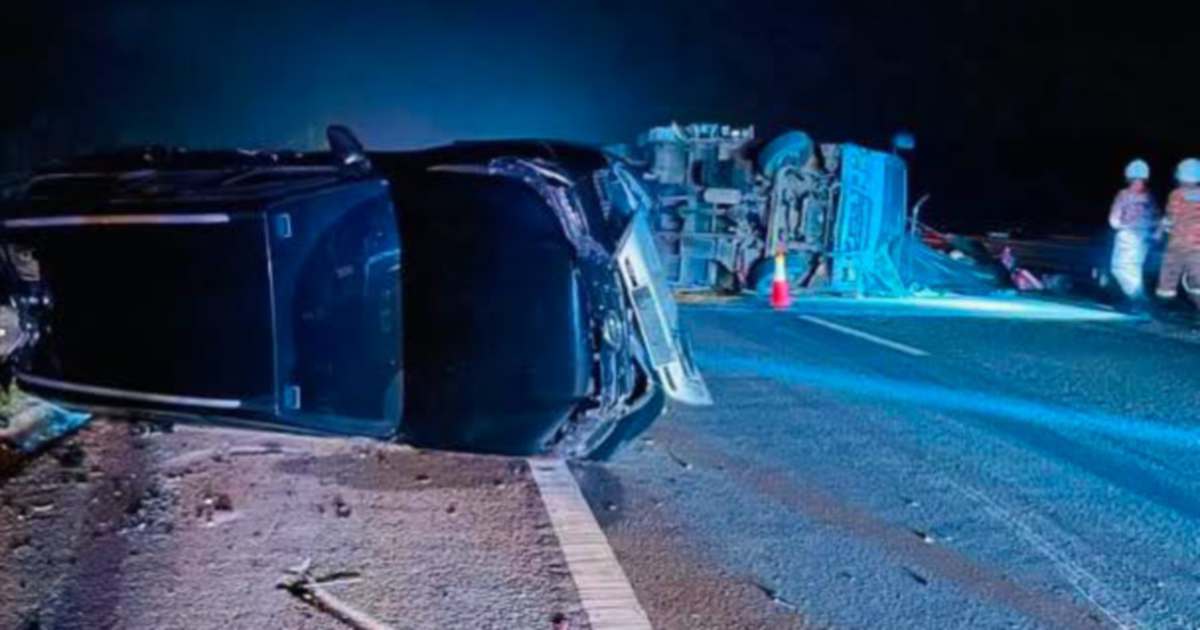
A three-vehicle collision on Malaysia's East Coast Expressway near Maran in the early hours has left seven people injured, including three media officers attached to Deputy Prime Minister Datuk Seri Dr Ahmad Zahid Hamidi. The accident occurred at kilometre 144 of the expressway, a major transport corridor linking Kuala Lumpur to the east coast states. While initial concerns about the safety of the Deputy Prime Minister's press team proved unfounded, the incident underscores the inherent dangers of high-speed highway travel, particularly during early morning hours when visibility and driver fatigue become critical factors.
The three officers working under Zahid's media unit were among those caught in the collision, but fortunately all sustained only minor injuries rather than serious harm. Their quick recovery reflects both the relatively low severity of the impact and the standard safety features in modern vehicles. The incident, while causing considerable alarm given the high-profile nature of those involved, resulted in no casualties that would have triggered wider security or diplomatic concerns. The remaining four injured individuals were occupants of the other vehicles involved in the pile-up.
The East Coast Expressway, which spans approximately 645 kilometres and represents one of the country's most critical highway arteries, regularly experiences heavy traffic volumes, particularly during peak commuting periods and long weekends. The early morning timing of this accident—when traffic would typically be lighter but driver concentration may be compromised—suggests factors beyond congestion were at play. Investigators will likely examine vehicle speed, road conditions, and driver alertness as contributing elements to the collision.
For Malaysian officials and security personnel, incidents involving government vehicles on major expressways present unique operational challenges. The movement of ministerial staff, particularly during media assignments requiring travel between cities, necessarily exposes these individuals to the same road hazards faced by ordinary travellers. While security protocols can mitigate certain risks through vehicle choice and route planning, they cannot eliminate the unpredictability inherent in shared highway environments where multiple drivers make split-second decisions.
The involvement of three separate vehicles in this accident suggests a chain-reaction scenario, common on expressways where closely spaced traffic or sudden braking can cascade into multiple collisions. This pattern of accidents has prompted recurring discussions about enforcement of speed limits, safe following distances, and the adequacy of lane discipline among Malaysian drivers. The expressway's design and safety infrastructure—including barrier systems and emergency response facilities—may have played a role in preventing the accident from escalating to a more serious outcome.
Response protocols for accidents involving government personnel differ from standard road incidents, with immediate medical assessment and documentation taking on additional significance. The fact that all injured parties were treated for minor injuries rather than requiring emergency trauma intervention suggests rapid stabilisation at the scene and appropriate transportation to medical facilities. Such efficiency in emergency response reflects the established procedures Malaysian authorities maintain for managing high-profile road incidents.
The incident carries broader implications for road safety discussions in Malaysia. The country consistently ranks among Southeast Asian nations with elevated traffic fatality rates, a concern that has prompted various government initiatives targeting driver behaviour, vehicle safety standards, and highway infrastructure improvements. Each accident involving public figures—particularly those in government—serves as a reminder of how quickly highway conditions can deteriorate for any traveller, regardless of status or vehicle quality.
For the Deputy Prime Minister's office, the incident necessitates review of travel protocols and risk assessment procedures, though the outcome suggests existing safeguards functioned adequately. The three media officers will likely require medical follow-up to ensure no latent injuries emerge from the collision impact. Their experience represents a cautionary tale for anyone undertaking lengthy highway journeys, reinforcing fundamental road safety principles around attentiveness, appropriate speed, and defensive driving techniques.
The accident's resolution without serious or fatal consequences offers some reassurance about Malaysia's emergency response capabilities and modern vehicle safety features. However, it also underscores the persistent vulnerability of anyone using Malaysian expressways, where driver behaviour and infrastructure quality remain inconsistent across different sections and time periods. As the country continues developing its transportation infrastructure and refining traffic management policies, incidents such as this provide valuable data points for ongoing safety evaluations.
Authorities investigating the collision will document vehicle damage patterns, witness statements, and sensor data to reconstruct the exact sequence of events. Such investigations, conducted with added scrutiny given the government personnel involved, contribute to the broader body of Malaysian traffic safety research. The incident serves as a timely reminder that even short-distance journeys on well-established highways carry inherent risks, and that comprehensive safety consciousness remains essential for all road users in Malaysia.
%22%2F%3E%3C%2Fpattern%3E%3C%2Fdefs%3E%3Crect%20width%3D%22100%25%22%20height%3D%22100%25%22%20fill%3D%22url(%23ph1ugl4g)%22%2F%3E%3Crect%20width%3D%22100%25%22%20height%3D%22100%25%22%20fill%3D%22url(%23ph1ugl4p)%22%2F%3E%3Ctext%20x%3D%2250%25%22%20y%3D%2250%25%22%20text-anchor%3D%22middle%22%20dominant-baseline%3D%22central%22%20fill%3D%22rgba(255%2C255%2C255%2C0.95)%22%20font-family%3D%22Georgia%2C%20'Times%20New%20Roman'%2C%20serif%22%20font-weight%3D%22700%22%20font-size%3D%22226%22%20letter-spacing%3D%22-0.02em%22%3ETengku%3C%2Ftext%3E%3C%2Fsvg%3E)
%22%2F%3E%3C%2Fpattern%3E%3C%2Fdefs%3E%3Crect%20width%3D%22100%25%22%20height%3D%22100%25%22%20fill%3D%22url(%23ph48y62g)%22%2F%3E%3Crect%20width%3D%22100%25%22%20height%3D%22100%25%22%20fill%3D%22url(%23ph48y62p)%22%2F%3E%3Ctext%20x%3D%2250%25%22%20y%3D%2250%25%22%20text-anchor%3D%22middle%22%20dominant-baseline%3D%22central%22%20fill%3D%22rgba(255%2C255%2C255%2C0.95)%22%20font-family%3D%22Georgia%2C%20'Times%20New%20Roman'%2C%20serif%22%20font-weight%3D%22700%22%20font-size%3D%22320%22%20letter-spacing%3D%22-0.02em%22%3EPKR%3C%2Ftext%3E%3C%2Fsvg%3E)