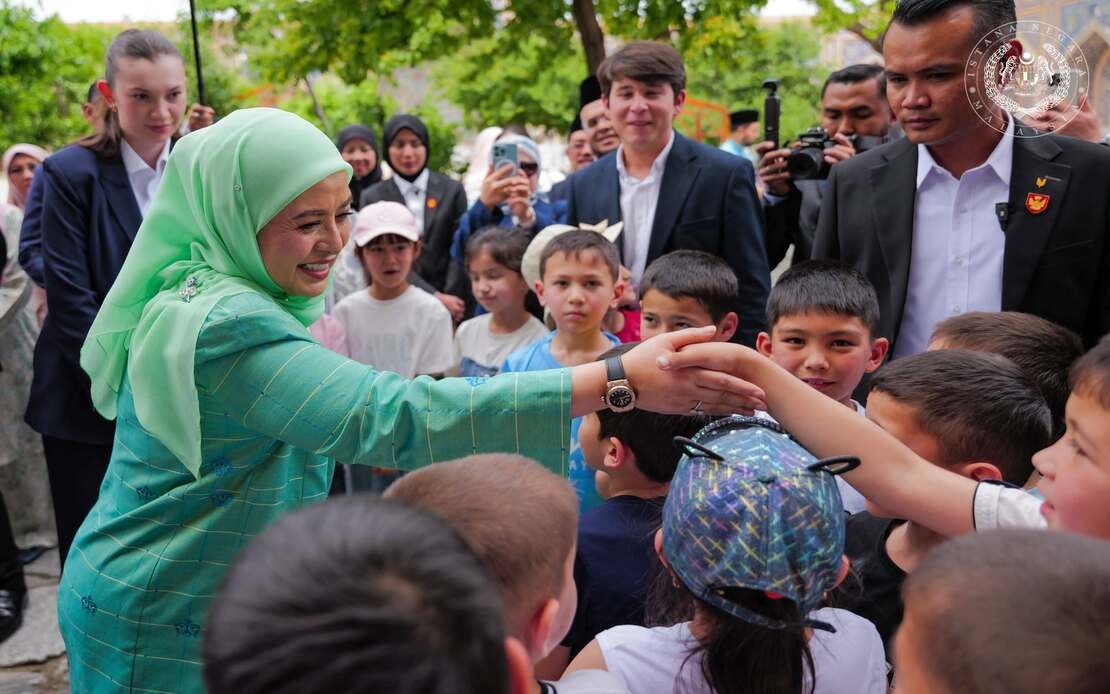
Her Majesty Raja Zarith Sofiah, Queen of Malaysia, has highlighted mutual respect as a fundamental pillar sustaining the nation's long tradition of harmony and cohesion. Speaking through a post shared on the official Facebook page of Sultan Ibrahim Sultan Iskandar, the Queen emphasised that this principle has been integral to Malaysian identity and has consistently contributed to the country's unity and overall well-being across generations.
The Queen's remarks underscored a distinctly Malaysian approach to coexistence, one rooted in everyday courtesy and genuine consideration for others regardless of background. Her Majesty stressed the relevance of fostering such respect both within domestic circles and in interactions with the international community, reflecting recognition that harmony must operate at multiple levels—from household to nation to world stage. This perspective connects personal conduct with national character, suggesting that individual choices about how we treat one another ripple outward to shape Malaysia's international standing.
In amplifying her message, the Queen drew upon Islamic teaching to reinforce the secular ideal of mutual respect. Her Majesty pointed to a hadith narrated by the respected Islamic scholar Al-Bukhari, specifically recounting words attributed to Prophet Muhammad and related through Abu Hurairah. The passage addresses three interconnected duties: avoiding harm to neighbours, honouring guests, and ensuring that one's speech consists either of kindness or silence. By invoking this religious framework, the Queen bridged faith-based ethics with universal principles of neighbourliness and civil discourse.
The hadith emphasises prevention of harm as a moral baseline, then elevates conduct to active hospitality and mindful communication. The guidance about speech—that words should either benefit others or be withheld entirely—resonates powerfully in contemporary Malaysia, where social media amplifies every utterance and easy recourse to harsh language threatens social fabric. The Queen's reference thus carried implicit commentary on the quality of public discourse, suggesting that true harmony requires not merely the absence of conflict but the presence of constructive, considerate communication.
The Queen's message arrived at a moment when Malaysian society navigates competing tensions around identity, religion, and national values. By anchoring respect in both indigenous multicultural tradition and Islamic principle, Her Majesty modelled an inclusive rhetorical approach, acknowledging that different segments of the population may draw moral guidance from different sources while ultimately converging on shared commitments to courtesy and consideration. This dual grounding demonstrates how universal values transcend sectarian or cultural boundaries.
Her Majesty's commitment to these principles manifested concretely in February when she engaged warmly with more than 100 international tourists gathered at the main entrance of Istana Negara. The encounter exemplified the graciousness and openness toward visitors that reflects her personal embodiment of the respect and hospitality she advocates. The interaction served as a practical demonstration that Malaysia's commitment to courtesy extends beyond rhetoric to genuine welcome, whether directed at fellow citizens or guests from abroad.
This episode carries significance for Malaysia's tourism sector and international relations strategy. When the nation's highest-ranking woman demonstrates personal warmth and attentiveness toward foreign visitors, it sends a powerful signal about Malaysian values and character. Tourism boards and diplomatic missions worldwide labour to project precisely this image—a nation that is simultaneously proud of its heritage yet genuinely welcoming to outsiders. The Queen's conduct provided authentic validation of that brand promise, far more persuasive than any marketing campaign.
The Queen's emphasis on mutual respect also speaks to contemporary regional dynamics across Southeast Asia. As nations in the region grapple with questions of identity, religious expression, and pluralism, Malaysia's experience as a successful multiethnic, multireligious democracy offers both model and cautionary tale. The Queen's reminder that respect forms the foundation of this success carries lessons for neighbours facing similar challenges. Her invocation of both Islamic principle and multicultural tradition suggests that modernising nations need not choose between religious fidelity and secular pluralism—rather, the two can reinforce each other when grounded in genuine respect.
At the domestic level, the Queen's message addresses an audience where social fragmentation has become increasingly visible in recent years. Political polarisation, religious tensions, and economic grievances have strained the social contract that once seemed more naturally binding. By returning attention to foundational principles of respect, courtesy, and restraint in speech, the Queen offered a gentle reset—a call to remember that Malaysian identity has always depended less on agreement on every issue than on commitment to treating one another with dignity despite difference.
The timing of Her Majesty's remarks through the Sultan's official channels also merits attention. The Queen's use of this communication platform elevated the message to a formal national statement, signalling that respect is not merely a personal virtue but a matter of state concern. This positioning distinguishes respect from optional idealism and frames it instead as essential infrastructure for national stability and prosperity. When the monarchy speaks on such matters, it carries weight that private individuals or even politicians cannot match.
Further, the Queen's selection of the specific hadith about neighbourly conduct and speech discipline suggests awareness of particular pressures facing Malaysian society. The emphasis on restraint in speech tacitly addresses the coarsening of public discourse evident in many spheres, from parliament to social media. The warning against harming neighbours speaks to rising communal tensions in some areas. By invoking classical Islamic teaching, the Queen invoked an authority that commands respect across the Muslim-majority nation while simultaneously conveying that Islam itself demands courtesy toward others.
Looking forward, the Queen's intervention may serve as a touchstone for those seeking to rebuild social cohesion. Her articulation of respect as foundational rather than optional, and her grounding of this principle in both cultural tradition and religious teaching, provides vocabulary and framework that Malaysians across divides might embrace. In an era when national unity cannot be taken for granted, reminders from respected figures that harmony depends on individual choices about courtesy and restraint carry real power to shape conduct and reinvigorate shared commitment to coexistence.
%22%2F%3E%3C%2Fpattern%3E%3C%2Fdefs%3E%3Crect%20width%3D%22100%25%22%20height%3D%22100%25%22%20fill%3D%22url(%23ph1ugl4g)%22%2F%3E%3Crect%20width%3D%22100%25%22%20height%3D%22100%25%22%20fill%3D%22url(%23ph1ugl4p)%22%2F%3E%3Ctext%20x%3D%2250%25%22%20y%3D%2250%25%22%20text-anchor%3D%22middle%22%20dominant-baseline%3D%22central%22%20fill%3D%22rgba(255%2C255%2C255%2C0.95)%22%20font-family%3D%22Georgia%2C%20'Times%20New%20Roman'%2C%20serif%22%20font-weight%3D%22700%22%20font-size%3D%22226%22%20letter-spacing%3D%22-0.02em%22%3ETengku%3C%2Ftext%3E%3C%2Fsvg%3E)

%22%2F%3E%3C%2Fpattern%3E%3C%2Fdefs%3E%3Crect%20width%3D%22100%25%22%20height%3D%22100%25%22%20fill%3D%22url(%23ph48y62g)%22%2F%3E%3Crect%20width%3D%22100%25%22%20height%3D%22100%25%22%20fill%3D%22url(%23ph48y62p)%22%2F%3E%3Ctext%20x%3D%2250%25%22%20y%3D%2250%25%22%20text-anchor%3D%22middle%22%20dominant-baseline%3D%22central%22%20fill%3D%22rgba(255%2C255%2C255%2C0.95)%22%20font-family%3D%22Georgia%2C%20'Times%20New%20Roman'%2C%20serif%22%20font-weight%3D%22700%22%20font-size%3D%22320%22%20letter-spacing%3D%22-0.02em%22%3EPKR%3C%2Ftext%3E%3C%2Fsvg%3E)