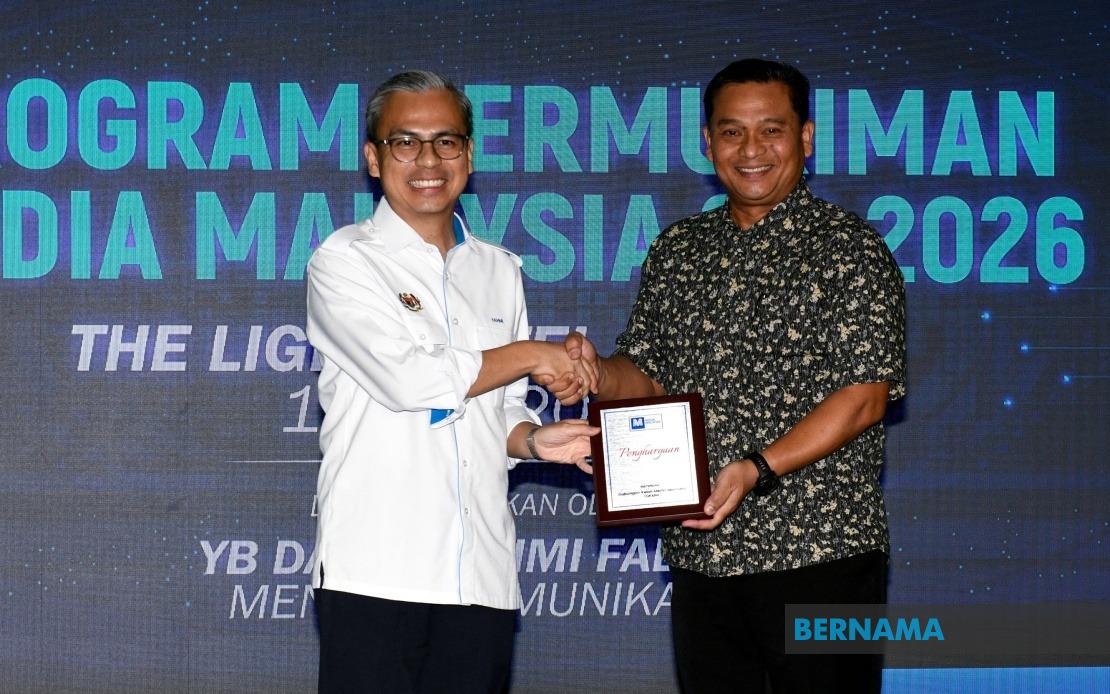
Communications Minister Datuk Fahmi Fadzil has announced a financial assistance package aimed at strengthening Malaysia's media sector, with the Ministry of Communications committing RM10,000 to each state media club affiliated with the Malaysian Media Clubs Association (GKMM), alongside a separate RM30,000 grant to the association itself. The allocation was revealed during the Malaysia Media Retreat Programme 2.0 in Butterworth, where Fahmi emphasised the importance of supporting the journalism profession through targeted welfare initiatives and activity funding.
The minister stressed that the grants should be strategically deployed to maximise benefits for media practitioners across the country. While the individual allocations to state media clubs remain modest, the cumulative effect—distributed across multiple states—represents a meaningful investment in grassroots journalist support. The additional RM30,000 to GKMM itself enables the umbrella organisation to coordinate national-level programmes and address sector-wide concerns that transcend state boundaries. This two-tier funding structure acknowledges both the localised needs of journalists in different regions and the coordinating role that GKMM plays as a central advocacy platform.
Fahmi positioned the financial support within a broader government commitment to preserving journalism as a vital profession. He articulated a clear vision that journalists occupy an irreplaceable role in society as witnesses to events and information gatekeepers, arguing that artificial intelligence cannot substitute for the human judgment, ethical reasoning and sourcing skills that trained journalists bring to newsrooms. This framing responds to growing anxiety within Malaysia's media industry about technological disruption and economic pressures threatening editorial sustainability. By explicitly stating that the government views journalist employment as worth protecting, Fahmi signalled awareness of sector-wide anxieties about newsroom cutbacks and precarious freelance work.
The minister emphasised GKMM's strategic importance as a conduit for raising practitioner concerns and channelling industry perspectives into government policy-making. Although GKMM functions as a professional association rather than a workers' union—a distinction with legal implications in Malaysia's labour framework—Fahmi acknowledged its capacity to articulate welfare issues and communicate journalists' aspirations regarding the future direction of Malaysian journalism. This positioning implicitly recognises that formal union structures may be impractical or restricted in the media context, yet the government still requires institutional mechanisms for meaningful dialogue with the profession.
The Communications Ministry indicated that journalist input will continue to shape regulatory and legislative development affecting the sector. Fahmi cited the drafting of the Malaysian Media Council Act as evidence of this consultative approach, claiming that media industry suggestions and viewpoints substantially influenced the legislation's final form. For Malaysian journalists, this suggests potential opportunities to influence future policy developments, though it also raises questions about the extent to which government ultimately incorporates practitioner feedback when broader political considerations intervene.
The timing of this announcement carries significance within Malaysia's media landscape. The sector has faced considerable economic pressures in recent years, with digital disruption eroding traditional advertising revenue and forcing multiple publications to restructure or cease operations. Newsroom employment has contracted, and many journalists have migrated to public relations, corporate communications, or freelance work. Against this backdrop, government funding for media clubs signals at least rhetorical commitment to supporting the profession, though critics may note that RM30,000 represents a symbolic gesture rather than comprehensive industry stimulus.
From a Southeast Asian perspective, Malaysia's approach to supporting journalism through professional associations merits observation. The region encompasses vastly different media environments and government-press relationships, yet many countries grapple with similar questions about journalism's economic sustainability and the state's appropriate role in supporting news production. Malaysia's model of directing funds through professional bodies rather than directly subsidising news organisations attempts to navigate independence concerns while acknowledging that journalists require institutional support structures.
The allocation also reflects evolving government thinking about media sector engagement. Rather than top-down directives or regulatory pressure, the approach emphasises partnership and recognition of journalism's social value. This contrasts with more confrontational postures toward media in certain regional contexts, though Malaysian journalists would likely note that financial support exists alongside other pressures and constraints affecting editorial freedom and institutional autonomy.
For state-level media practitioners, the RM10,000 grants to individual state media clubs offer flexibility in addressing locally-specific needs. State media clubs might deploy funds toward professional development workshops, mental health support services, equipment access, or social welfare assistance for members facing hardship. The decentralised allocation recognises that journalist needs and priorities vary across Malaysia's diverse state contexts, from major urban centres to more remote areas where media infrastructure may be less developed.
The announcement raises interesting questions about GKMM's evolving role and capacity. As the primary distribution channel for government support, the association faces expectations to demonstrate effective fund utilisation and tangible benefits for member journalists. This could strengthen GKMM's institutional position and justify expanded membership, or alternatively create scrutiny regarding governance and financial management. The association's ability to convert these grants into visible improvements in journalist welfare will likely influence its credibility and influence in future government consultations.
Looking forward, the financial commitment signals potential openness to expanded government support for the media sector, though actual allocations will depend on political priorities, budget constraints, and demonstrated outcomes. Journalists and media leaders will likely use this platform to advocate for additional support mechanisms, including training grants, equipment subsidies, or targeted assistance for struggling publications. The government's receptiveness to such requests will test whether this year's allocation represents a foundation for sustained investment or a one-off gesture.