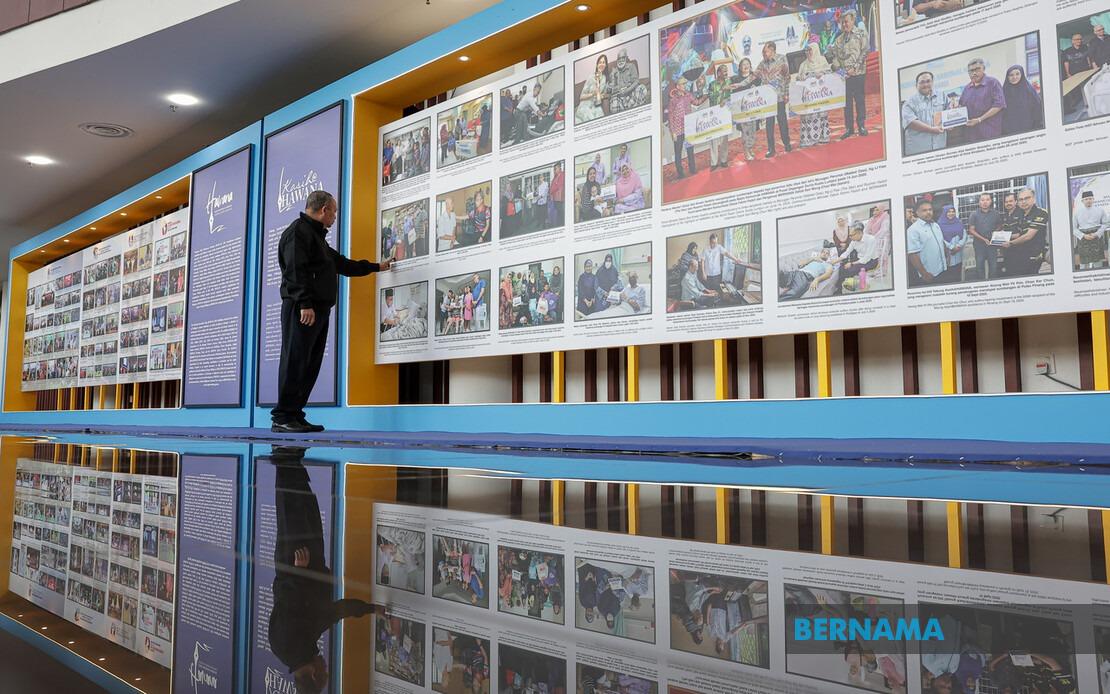
Penang is hosting a significant convergence of Malaysia's media industry this week, with the National Journalists' Day (HAWANA) 2026 serving as a focal point for examining pressing challenges and opportunities facing the profession. The celebration, officially opened by Prime Minister Datuk Seri Anwar Ibrahim at PICCA @ Butterworth Arena, has drawn approximately 1,000 media practitioners from across Malaysia and internationally, establishing a platform to explore how the sector adapts to rapid technological and social change.
The gathering reflects broader concerns within the industry about its evolving landscape. With artificial intelligence, digitalisation, and shifting audience behaviours transforming how news is produced and consumed, Malaysian media organisations recognise the need for coordinated dialogue and strategic planning. The three-day event, themed 'Media Integrity, Foundation of Credibility', positions credibility and professional standards as central to the industry's continued relevance and viability in an era of information abundance and competing narratives.
Beyond the main ceremonial aspects, the event has catalysed numerous substantive programming initiatives. The Malaysian Federation of Media Clubs (GKMM) organised Malaysia Media Retreat 2.0, assembling representatives from 15 media clubs nationwide. This gathering served dual purposes: strengthening professional networks among journalists and providing an opportunity for GKMM to assess its organisational trajectory since its official establishment in October 2022. Federation president Mohamad Fauzi Ishak noted that the retreat extended beyond social connection, functioning as a strategic checkpoint ahead of the federation's third annual general meeting.
The retreat's official endorsement by Communications Minister Datuk Fahmi Fadzil underscores government recognition of organised media clubs' role in maintaining professional standards. The attendance of senior figures including Bernama Chief Executive Officer Datin Paduka Nur-ul Afida Kamaludin and Editor-in-Chief Arul Rajoo Durar Raj demonstrated commitment from the national news agency to supporting industry-wide professional development initiatives.
A particularly significant programme component addressed journalism's future sustainability. The Malaysian Press Institute (MPI) convened a town hall discussion titled '2035: Will Journalists Still Exist?' at Han Chiang University College of Communication, directly confronting existential questions about the profession. This session brought together senior editorial figures including MPI president Datuk Yong Soo Heong, New Straits Times Press deputy group managing editor Farrah Naz Abd Karim, and Media Prima's Azhari Muhidin. Their participation indicated the gravity with which major newsrooms treat technological disruption and its implications for employment structures and journalistic practice.
The Malaysian Media Council (MMC) contributed additional programming through engagement sessions and networking opportunities targeting the northern region's media community. These activities, scheduled alongside the main celebration, reflect recognition that industry cohesion requires sustained interaction beyond annual ceremonial events. The geographic focus on northern Malaysia suggests deliberate effort to include regional media practitioners often concentrated in Kuala Lumpur-centric discussions.
The RIUH @ HAWANA Carnival, occupying the convention space throughout the three-day event, transforms the gathering from purely professional forum into broader cultural celebration of journalism's role. This multi-dimensional approach—combining formal industry dialogue, networking, and public-facing carnival activities—suggests organisers understand that rebuilding public trust in media requires both internal professional strengthening and external engagement with audiences.
For Malaysia's media landscape, the timing of such concentrated attention is significant. The region faces considerable challenges: declining print revenues, advertising fragmentation across digital platforms, and audience migration toward social media and alternative information sources. Regional competitors like Singapore and Thailand have similarly struggled with industry sustainability, making Malaysian initiatives potentially valuable for broader Southeast Asian learning.
The event's emphasis on integrity as the foundation of credibility addresses a critical vulnerability. Survey data across Southeast Asia consistently demonstrates declining trust in institutional media. By positioning integrity prominently, HAWANA 2026 signals that Malaysian media recognises addressing this trust deficit as essential to long-term viability. This framing also implicitly acknowledges that technological adaptation alone—whether embracing AI tools, multimedia storytelling, or digital distribution—cannot substitute for fundamental ethical practice.
The gathering also reflects Malaysian media's increasingly sophisticated approach to industry-wide challenges. Rather than individual organisations addressing AI adoption, digitalisation, and audience engagement separately, coordinated forums enable shared learning and potentially coordinated responses to systemic issues. This collaborative approach contrasts with some regional competitors where media fragmentation and commercial competition sometimes inhibit such dialogue.
Looking forward, the initiatives announced at HAWANA 2026 suggest Malaysian media is preparing for substantial structural transformation. The profession's digital transition remains incomplete in many respects; business model innovation lags behind technology adoption, and newsroom skill gaps persist particularly around data journalism and audience analytics. The professional programmes convened in Penang indicate organisational awareness that addressing these gaps requires sustained commitment beyond individual newsroom initiatives.
The event also positions Malaysia within regional and global media conversations about the profession's future. International attendance alongside domestic media practitioners suggests Malaysian industry awareness that solutions to shared challenges—AI's role in journalism, balancing speed with accuracy, maintaining editorial independence—benefit from international perspective and experience-sharing. This openness to external engagement reflects confidence in Malaysian journalism's capacity to contribute meaningfully to these discussions.
Ultimately, HAWANA 2026's comprehensive programming suggests Malaysian media is neither passively accepting technological disruption nor denying the profession's challenges. Instead, the industry appears committed to navigating transformation deliberately, grounded in professional integrity principles while embracing necessary innovation. Whether these initiatives translate into sustainable business models and career pathways for journalists will emerge over coming years.