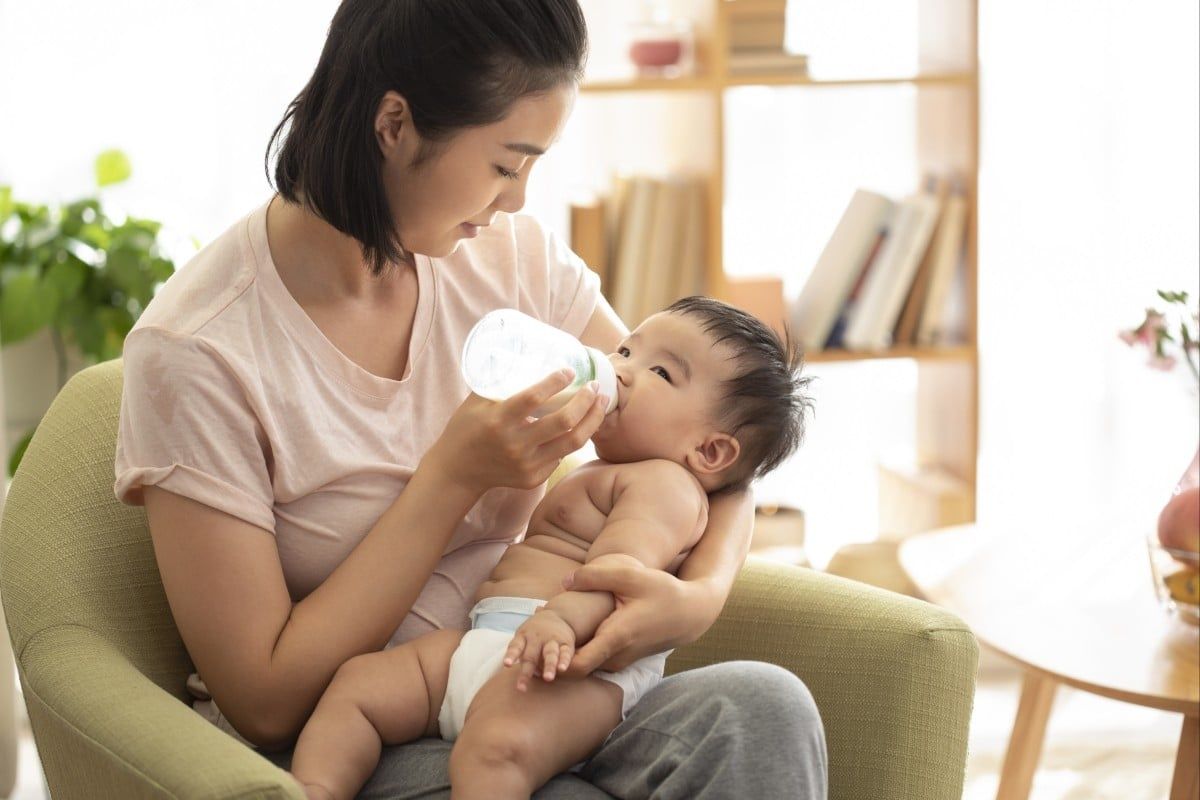
A three-month-old boy in southern China required emergency intensive care treatment after his parents' well-intentioned but misguided attempt to enhance his nutrition nearly cost him his life. The infant was rushed to Zhongshan Women and Children's Hospital in Guangdong province displaying alarming symptoms including a purple complexion, purplish-blue lips, and severe breathing difficulties. Medical staff quickly identified the culprit: nitrite poisoning contracted through contaminated formula milk prepared by his parents using vegetable juice as a substitute for water.
The case exemplifies a troubling pattern of parental decision-making that prioritises perceived nutritional benefits over established medical safety protocols for infant feeding. The child's parents had reasoned that vegetable juice would provide superior nutritional value compared to plain water, an assumption rooted in broader dietary principles that do not apply to the fragile physiological systems of very young infants. This misconception nearly proved fatal, though the baby fortunately recovered after two days of hospital treatment and was discharged in mid-June.
Medical experts at the hospital explained the biochemical mechanism behind the infant's collapse. When vegetables undergo prolonged boiling, the cooking process generates substantial concentrations of nitrites in the resulting liquid. When parents subsequently use this contaminated juice to reconstitute powdered infant formula, they introduce dangerous toxins directly into the baby's digestive system. For a three-month-old child, whose organs are still undergoing critical developmental stages, such exposure proves catastrophic.
The developing digestive system and kidneys in infants possess severely limited capacity to process and eliminate nitrate compounds. Unlike older children and adults with mature metabolic systems capable of handling moderate nitrate exposure, babies lack the necessary biological mechanisms for safe detoxification. Once nitrites enter the bloodstream, they interfere fundamentally with oxygen transport, binding to haemoglobin molecules and preventing normal oxygen circulation throughout the body. This explains the distinctive purple discolouration that appeared across the infant's skin, lips, and nail beds—a visible manifestation of his body's oxygen deprivation.
Paediatrician Cao Qi from Nanning No 1 People's Hospital in Guangxi Zhuang autonomous region has leveraged social media platforms to disseminate critical safety guidance to Chinese parents. His urgent warnings emphasise that time represents a crucial factor in survival outcomes for nitrite-poisoned infants. Delays of even minutes between symptom recognition and hospital admission can transition cases from treatable emergencies to life-threatening crises. Cao's intervention reflects growing professional concern that parental awareness campaigns have not reached sufficient saturation to prevent such incidents.
Hospital physicians have issued explicit feeding protocols designed to eliminate this category of preventable poisoning. Formula powder must be reconstituted exclusively with warm drinking water—no vegetable broths, no rice water solutions, no fruit juices, and no other liquid substitutes. This directive reflects the singular metabolic reality that infants require specially formulated nutrition with precisely controlled chemical composition. Well-meaning nutritional supplements that parents might consider beneficial for older family members transform into toxins when administered to babies whose bodies cannot process them.
Cao's broader commentary addresses a cultural phenomenon in which Chinese social media frequently amplifies stories of unconventional infant feeding practices, generating curiosity and occasionally encouraging replication. He cautions against the fusion of popular trends with parental intuition when making feeding decisions for very young children. Natural or traditional foods do not possess inherent suitability for infant consumption simply because they appear wholesome or nutritious to adult sensibilities. The biological requirements of newborns and infants diverge radically from those of older populations.
This incident resonates within a troubling succession of similar cases demonstrating how earnest parental intentions can backfire catastrophically when disconnected from evidence-based medical guidance. In the previous year, a 52-day-old infant in Henan province required hospitalisation after developing botulism poisoning traced to honey added to his drinking water by his grandmother. That case similarly involved a traditional food—honey—introduced under the assumption that natural products enhance infant health, despite widespread medical consensus that infants below one year old should never consume honey due to botulism risk.
The convergence of these cases suggests that educational gaps persist regarding infant nutrition across multiple generations of Chinese families. Grandparents, parents, and extended family members may retain dietary assumptions grounded in older medical understanding or folk nutritional wisdom that contemporary paediatric science has superseded. Social media's capacity to rapidly disseminate both accurate medical information and potentially harmful misconceptions creates a complex information environment where parents must navigate competing claims about optimal infant feeding.
For Malaysian and Southeast Asian families, the implications extend beyond China's borders. Similar patterns of unconventional infant feeding occur throughout the region as parents and caregivers attempt to provide superior nutrition through home remedies and traditional foods. The case underscores the universal vulnerability of infants to compounds that pose minimal risk to older children but prove toxic to immature physiological systems. Parents across the region should recognise that infant formula has been specifically engineered for their babies' unique developmental needs, and improvised modifications, however well-intentioned, introduce unpredictable chemical exposures.
The Guangdong incident ultimately succeeds in illustrating a fundamental principle that transcends cultural contexts: infant feeding decisions demand deference to established medical science rather than intuitive judgments about nutritional enhancement. The three-month-old's recovery was fortunate rather than inevitable, a reality that should motivate parents and healthcare providers throughout Southeast Asia to reinforce evidence-based feeding practices and address the persistent misconceptions that continue to endanger vulnerable infants.