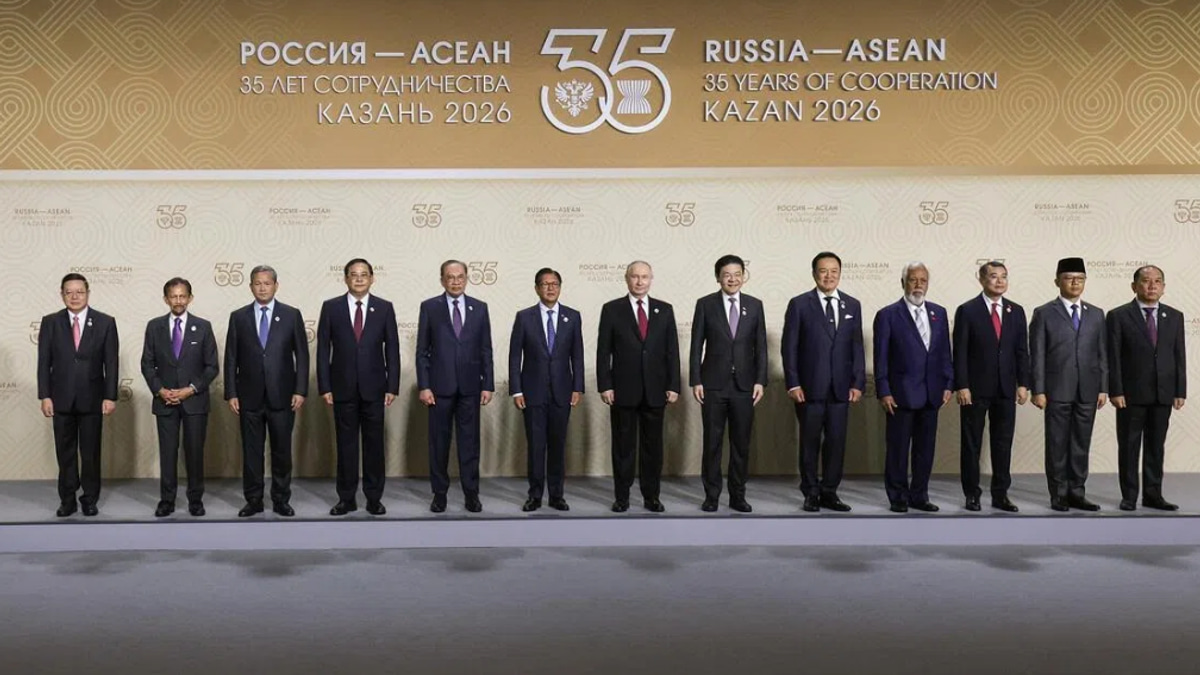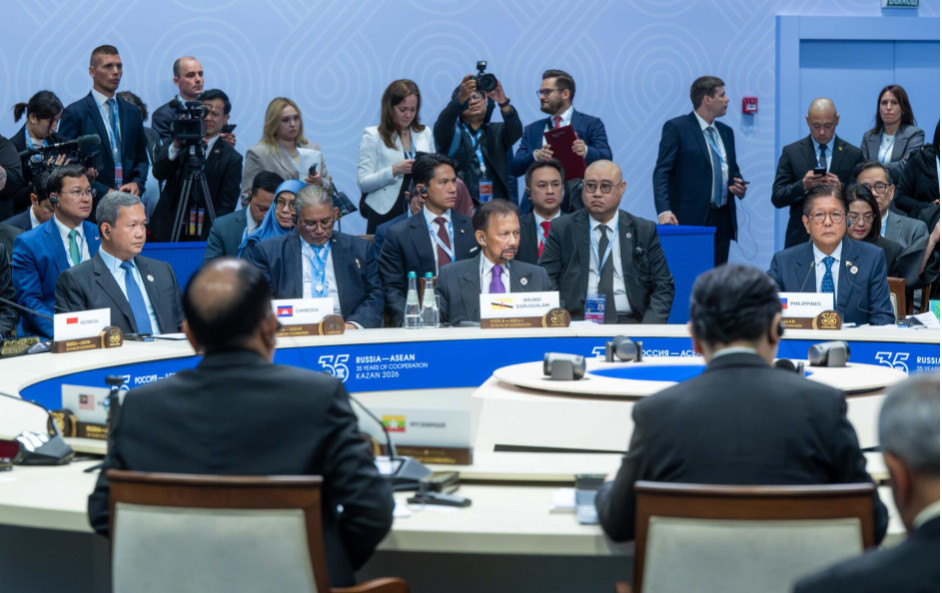
Sultan Hassanal Bolkiah joined fellow Asean leaders in Kazan, Russia on Thursday to mark 35 years of dialogue partnership between the regional bloc and Moscow at a commemorative summit held at the Kazan Expo International Exhibition Centre. The Brunei monarch expressed gratitude to Russian President Vladimir Putin and local authorities for hosting the gathering, while also paying respects to Thai Prime Minister Anutin Charnvirakul following the recent death of Princess Bajrakitiyabha of Thailand. The summit represented a significant diplomatic moment for Southeast Asia, bringing together regional leaders to assess the state of their relationship with Russia and chart a course for deeper engagement.
The three-and-a-half decade relationship between Asean and Russia has weathered considerable international turbulence, yet the Sultan characterised it as remarkably resilient and increasingly relevant. This assessment carries particular weight given the current geopolitical environment, where traditional partnerships face strain and nations seek to diversify their external relationships. The cooperation framework spans all three pillars of the Asean Community framework—political and security, economic, and sociocultural—demonstrating the breadth of engagement between Southeast Asia and Russia. Such comprehensive collaboration extends beyond the bilateral relationships individual Asean members maintain with Moscow, representing a collective institutional commitment.
As Asean pursues its Vision 2045 agenda, the Sultan identified cooperation with Russia as fundamental to navigating emerging global challenges that transcend borders and traditional security concerns. The emphasis on political tensions reflects growing anxieties within the bloc about regional stability and the risk of great power competition spilling into Southeast Asian waters. Economic fragmentation poses particular risks to Asean members, whose prosperity depends substantially on integrated global and regional supply chains. The Sultan's invocation of climate change and technological disruption as partnership priorities reveals how contemporary governance increasingly demands collaborative responses to issues that demand expertise and resources no single nation can adequately command.
Specific domains of cooperation merit particular attention for their implications across Southeast Asia. Energy security concerns all Asean nations, many of which remain dependent on imported fuel and face the dual challenge of meeting growing demand while transitioning toward cleaner sources. Food security similarly preoccupies the region, where rapid urbanisation and population growth strain domestic production capabilities. Russia, as a major global supplier of energy resources and agricultural commodities, holds leverage in these areas. Disaster management collaboration becomes increasingly vital as climate impacts intensify, a matter of urgent relevance to the Philippines, Indonesia, and other vulnerable nations. Non-traditional security challenges—encompassing transnational crime, cyber threats, and pandemic preparedness—demand institutional frameworks that transcend purely military concerns.
The Sultan attributed substantial weight to human capital development, characterising education, professional exchanges and training initiatives as essential infrastructure for future partnership. This perspective recognises that sustainable institutional relationships depend on generations of practitioners, policymakers and thought leaders who understand their counterparts' perspectives and share professional networks. By investing in such exchanges, Asean and Russia build resilience into their partnership, creating multiple channels for communication and cooperation that survive individual governmental transitions or policy shifts. For Malaysian professionals and institutions, such programmes represent tangible opportunities for engagement with Russian counterparts in academic, technical and commercial domains.
Four major outcome documents emerged from the summit's first plenary session, formalising the partners' commitment to sustained cooperation. The Kazan Declaration 2026 serves as the symbolic centrepiece, framing the relationship as unity amid diversity—a rhetorical positioning that acknowledges profound differences in geography, political systems and strategic interests while affirming shared commitment to mutual benefit. The Comprehensive Plan of Action covering 2026 to 2030 translates aspirational language into operational commitments, establishing targets and mechanisms for ongoing engagement. Separate joint statements on energy cooperation and cultural exchange indicate where both sides perceive immediate opportunities for concrete gains and people-to-people connection.
The second plenary session, structured as a working lunch and addressing integration processes in Eurasia, expanded the geographic and institutional scope of discussion beyond the bilateral Asean-Russia relationship. The participation of the Shanghai Cooperation Organisation secretary-general and the Eurasian Economic Commission chairman reflected Russia's broader institutional commitments and suggested Asean's interest in understanding its position within these structures. For Southeast Asian readers, these institutions represent frameworks through which Russia, China and Central Asian nations coordinate economic and security policies. Asean's engagement with them signals the bloc's effort to maintain dialogue across multiple institutional arrangements rather than depending on any single partnership.
The concurrent Asean-Russia Business Forum, held on June 17 as a summit side event, demonstrated that political rhetoric must translate into commercial reality to sustain popular support. Business engagement provides mechanisms through which private sector actors—often more flexible and innovative than government agencies—can identify and exploit mutually beneficial opportunities. Such forums also generate constituency support within each region's business community for maintaining and deepening official relationships, creating stakeholders invested in partnership success beyond purely diplomatic considerations.
For Malaysia specifically, these developments carry implications extending beyond ceremonial recognition of longstanding ties. As Asean pursues greater autonomy and strategic flexibility amid great power competition, strengthened institutional relationships with Russia contribute to the bloc's ability to resist pressure to align exclusively with any single external power. Malaysia's own experience of balancing relationships with major powers informs its stake in Asean maintaining multiple partnership options. The emphasis on addressing shared challenges through multilateral frameworks rather than bilateral dependence aligns with Malaysia's preference for regional solutions to regional problems, a principle central to the Asean Way.
The Sultan's articulation of partnership priorities reflects sophisticated understanding of how contemporary governance increasingly demands collaborative responses. Rather than framing the relationship in zero-sum terms of strategic competition, he emphasised complementary interests in peace, stability and prosperity. This framing suggests Asean's desire to maintain productive engagement with Russia despite international pressures and sanctions, while maintaining its own strategic autonomy and commitment to principles of non-interference and peaceful dispute resolution. Whether these aspirations can translate into substantive outcomes will depend on whether both partners commit resources and political capital to implementing the agreements reached in Kazan.