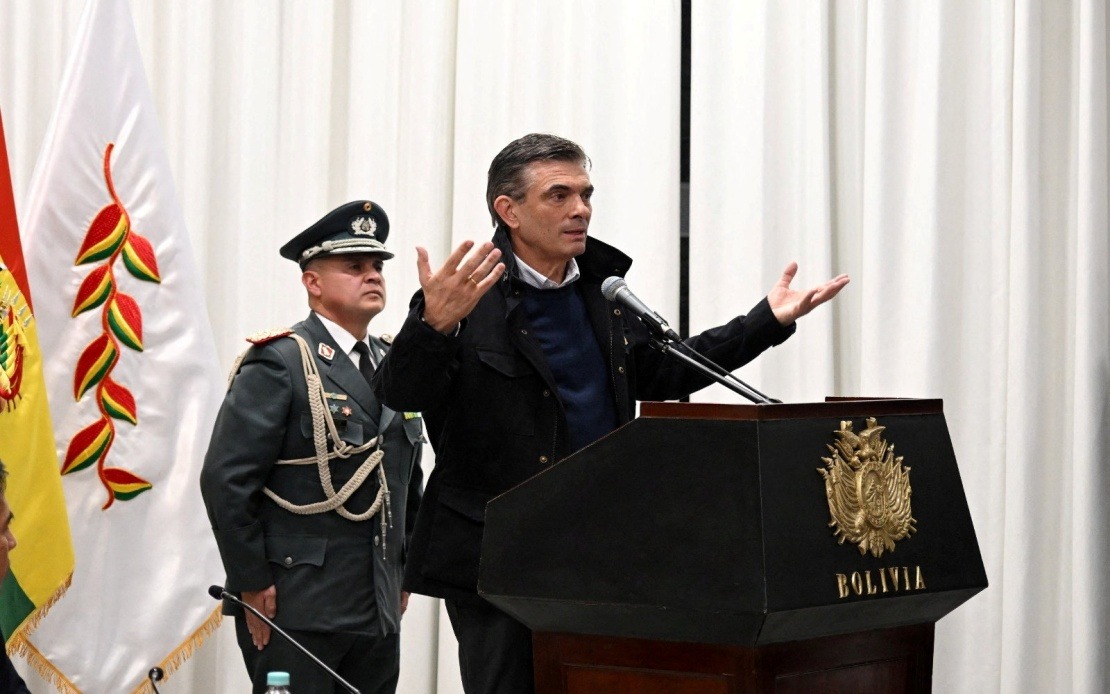
Bolivian President Rodrigo Paz has declared a state of emergency following an extended period of anti-government unrest and coordinated roadblocks that have snowballed into a significant political and economic crisis, according to reports citing Anadolu Ajansi coverage. The declaration, announced via televised address on Saturday, comes after roughly seven weeks of disruption that has left stretches of the country without adequate supplies and brought ordinary economic functioning to a halt.
The underlying tensions stem from mounting grievances over the cost of living and broader economic strain facing ordinary Bolivians. Worker unions and agricultural associations have mobilised their members to stage the blockades, explicitly calling for Paz's departure from office. These protests represent a significant challenge to the government's political standing, drawing support from substantial portions of the labour movement and rural communities who argue that current policies have failed to shield citizens from economic pressure.
The practical consequences of the blockades have become increasingly severe as the weeks have accumulated. Across affected regions, citizens have faced genuine hardship as shortages of essential goods—including food, fuel for transport and heating, and medications—have rippled through the population. The disruption has extended beyond mere inconvenience into territory that threatens public health and economic stability, with medical facilities struggling to obtain supplies and businesses unable to operate effectively or maintain payroll.
Paz's decision to invoke emergency powers reflects the government's assessment that conventional measures have proven insufficient to resolve the crisis. In his public statement, the president articulated the core grievance of ordinary citizens trapped between the blockade's effects and their inability to sustain daily life. His words captured the tension between protest movements demanding political change and the immediate suffering experienced by people unable to work, access healthcare, purchase food, or maintain their livelihoods.
The declaration of a state of exception formally authorises military mobilisation to restore circulation and movement across the country's transportation networks. This represents an escalation in government response, moving from negotiation or police management into territory where armed forces assume primary responsibility for restoring order. Such measures carry significant implications for how authorities manage subsequent interactions with blockade participants and protest organisers.
For Southeast Asian observers, Bolivia's unfolding crisis offers instructive parallels worth monitoring closely. The region has experienced its own cycles of labour unrest and supply-chain disruptions, from port disputes affecting container movement to union actions affecting essential services. The mechanisms that turned localised grievances into sustained national blockades—coordination between previously separate groups, rapid escalation of demands, and the economic vulnerability created when key choke points can be controlled—represent dynamics that could emerge across the developing world.
The economic dimension deserves particular attention from Malaysian policymakers and analysts. Bolivia's experience demonstrates how cost-of-living pressures, when combined with perceived government indifference, can mobilise otherwise disparate constituencies into coordinated action. The fact that both industrial workers and agricultural producers joined the campaign suggests that economic pain was cutting across traditional sectoral boundaries, affecting multiple layers of society simultaneously.
The timing and scale of Bolivia's crisis also reflect structural vulnerabilities in developing economies dependent on commodity exports and vulnerable to global price fluctuations. When external shocks hit purchasing power, governments face compressed options—raising prices further to balance budgets, imposing austerity that deepens social anger, or attempting to maintain subsidies that drain resources. Bolivia's Paz government apparently had little political room to manoeuvre, with the blockades themselves becoming the vehicle through which the most aggrieved segments expressed their discontent.
The international dimension remains partly opaque from current reporting, but historical precedent suggests external observers—both regional and global powers—will monitor how Bolivia's emergency unfolds. Military deployments to disperse civilian blockades invite scrutiny from human rights monitors, international media, and neighbouring governments who may hold concerns about escalation patterns or political legitimacy.
The declaration itself does not resolve the underlying economic conditions that sparked unrest. Rather, it changes the tactical terrain upon which the dispute will unfold. Whether military presence can restore supply chains without provoking further escalation depends partly on how troops interact with blockade participants and partly on whether government can simultaneously address the cost-of-living pressures that motivated the action initially.
For the immediate term, Bolivia faces the challenge of restoring functional supply networks while managing political fallout from its turn toward emergency measures. The broader question concerns whether Paz's government can outlast the blockade through military enforcement or whether the underlying economic grievances will resurface as soon as the state of exception ends. Most political crises triggered by economic distress require solutions addressing root causes rather than symptoms—a reality that military deployment alone cannot alter.