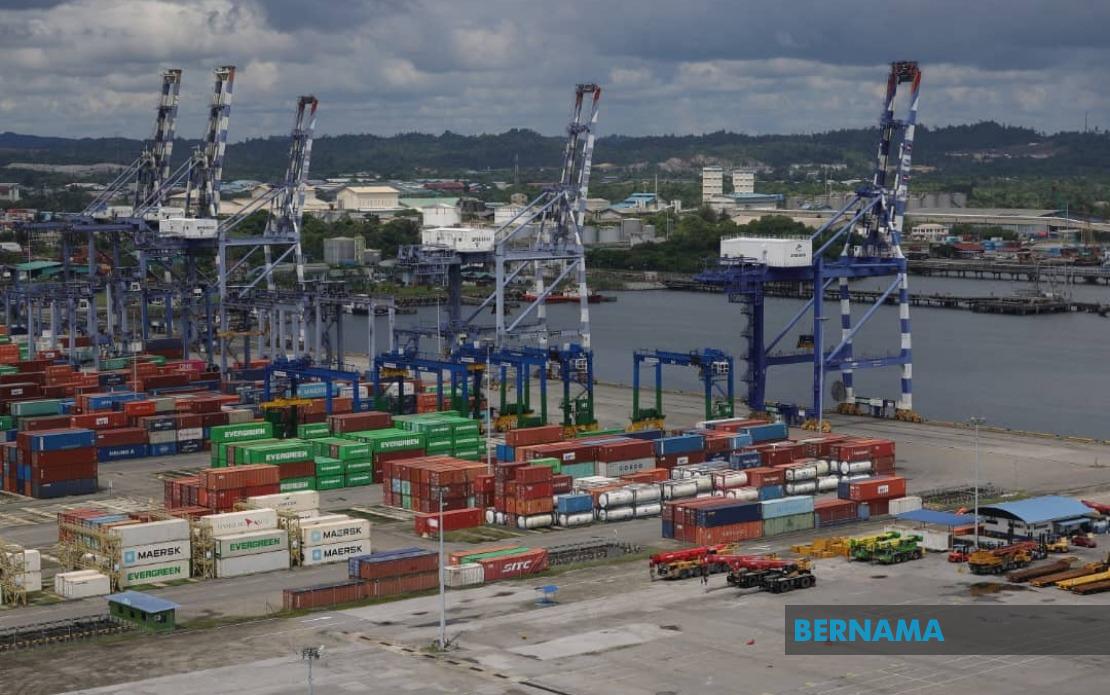
In a significant step towards honouring Malaysia's foundational compact, Sarawak has formally assumed regulatory control of Bintulu Port from federal authorities. The handover ceremony, held in Bintulu and attended by Prime Minister Datuk Seri Anwar Ibrahim and Sarawak Premier Tan Sri Abang Johari Tun Openg, represents one of the most substantial gains for the state under the ongoing implementation of the Malaysia Agreement 1963 (MA63). Minister in the Prime Minister's Department (Sabah and Sarawak) Datuk Mustapha Sakmud framed the development as evidence that the 1963 accord can be operationalised through genuine cooperation, creating mutual benefit for both Sarawak and the federal government.
The transition converts Bintulu Port from a federal facility to a state-controlled asset, a shift that carries both symbolic and practical weight. For decades, major Malaysian ports have remained under federal jurisdiction, making this handover an acknowledgment of Sarawak's status as a founding partner in the federation. The decision reflects growing political momentum to implement aspects of MA63 that have long remained dormant or contested, particularly regarding resource management and economic autonomy in Sabah and Sarawak. The convergence of interest between the current federal administration and the state government has created rare alignment on this constitutional matter, enabling progress that previous governments had resisted.
Bintulu Port's evolution transcends its historical role as Malaysia's premier liquefied natural gas export facility. Under state stewardship, authorities envision the facility developing into a diversified economic engine spanning industrial production, logistics operations, and green energy infrastructure. This expansion strategy positions the port not merely as an energy exporter but as a node in the emerging Asia-Pacific economy, where companies increasingly prioritise carbon-neutral operations and sustainable supply chains. The timing is strategic, coinciding with global shifts toward decarbonisation and Southeast Asia's potential role in meeting regional clean energy demands.
Sarawak possesses distinctive advantages for this transformation. The state commands substantial hydroelectric generation capacity, offering abundant renewable power at competitive rates. Combined with Bintulu's geographical position along major shipping lanes, this advantage creates compelling conditions for energy-intensive industries seeking to reduce their carbon footprint. Petrochemical refiners, semiconductor manufacturers, and data centres—all demanding vast quantities of electricity—represent potential tenants. The state government's ability to leverage these natural and locational assets through direct port management may accelerate industrial relocation into the region.
For investors navigating global supply chain reconfiguration, Sarawak's emergence as a low-carbon industrial hub addresses a critical priority. multinational corporations facing pressure from shareholders, regulators, and consumers to demonstrate environmental responsibility increasingly favour jurisdictions where sustainable operations are embedded in regional strategy. By controlling port operations and energy infrastructure simultaneously, Sarawak can offer integrated propositions unavailable elsewhere in Malaysia. This integrated approach may prove decisive in attracting high-value manufacturing and technology operations that generate greater employment and skill development than traditional commodity export activities.
The MA63 implementation narrative extends beyond Bintulu's commercial potential. Datuk Mustapha emphasised that devolving powers to Sarawak strengthens rather than weakens the Malaysian federation. This framing addresses historical sensitivities about federal-state power dynamics. Sabah and Sarawak have periodically expressed grievances about resource extraction and authority concentration in Kuala Lumpur despite their status as founding members. By treating MA63 implementation as collaborative federation-building rather than zero-sum power redistribution, federal leaders hope to reinforce national cohesion while addressing longstanding equity concerns.
The Bintulu Port transition occurs amid broader political repositioning. Sarawak's ruling coalition maintains distinct policy preferences from federal leadership on numerous issues, yet has managed cooperative relations through the current administration's tenure. This relative harmony contrasts with previous periods of confrontation. The port handover reflects calculus by both levels of government that demonstrable MA63 progress serves mutual interests: the federal government gains legitimacy for constitutional fidelity and federal-state collaboration, while Sarawak gains tangible economic leverage and policy autonomy.
Regional implications warrant attention from other Southeast Asian governments and investors. Malaysia's willingness to devolve significant economic assets to subnational authorities demonstrates federalism's flexibility and capacity for constitutional renewal. Other nations managing centre-periphery tensions may observe Malaysia's approach with interest. Additionally, the decision signals Malaysia's commitment to regional competitiveness through more flexible governance arrangements. In an era when supply chain decisions depend on multifaceted assessments including sustainability credentials and operational autonomy, Malaysian federalism's demonstrated adaptability becomes a competitive advantage.
Implementing MA63 through sectoral projects rather than comprehensive constitutional overhaul reflects pragmatism. Rather than reopening the entire 1963 agreement for renegotiation—a process that could trigger protracted disputes—incremental implementation in specific domains like port management allows progress without destabilising national politics. This approach has enabled closure on Bintulu while presumably leaving other MA63 provisions available for future negotiation, potentially including matters related to taxation, land, and natural resources.
The port's future trajectory will test whether state management actually delivers the promised economic transformation. Sarawak must now demonstrate operational competence comparable to federal port authorities while advancing the diversification agenda. Investment attraction requires not merely policy intent but consistent execution. The state's track record in infrastructure development and business facilitation will directly influence whether multinational companies establish operations. Success would vindicate the devolution argument and potentially create momentum for further MA63 implementation in other sectors.
Looking forward, the Bintulu handover establishes a precedent for future power-sharing arrangements. Should the port transition succeed economically, other federal assets could become candidates for devolution under similar MA63 implementation arguments. Conversely, any operational difficulties could slow federal government receptiveness to further transfers. The stakes thus extend beyond Bintulu's immediate commercial trajectory; the outcome will shape Malaysia's constitutional evolution for years ahead. For Sarawak, the port represents both opportunity and responsibility—a tangible asset with which to prove that greater autonomy can enhance rather than diminish national wellbeing.