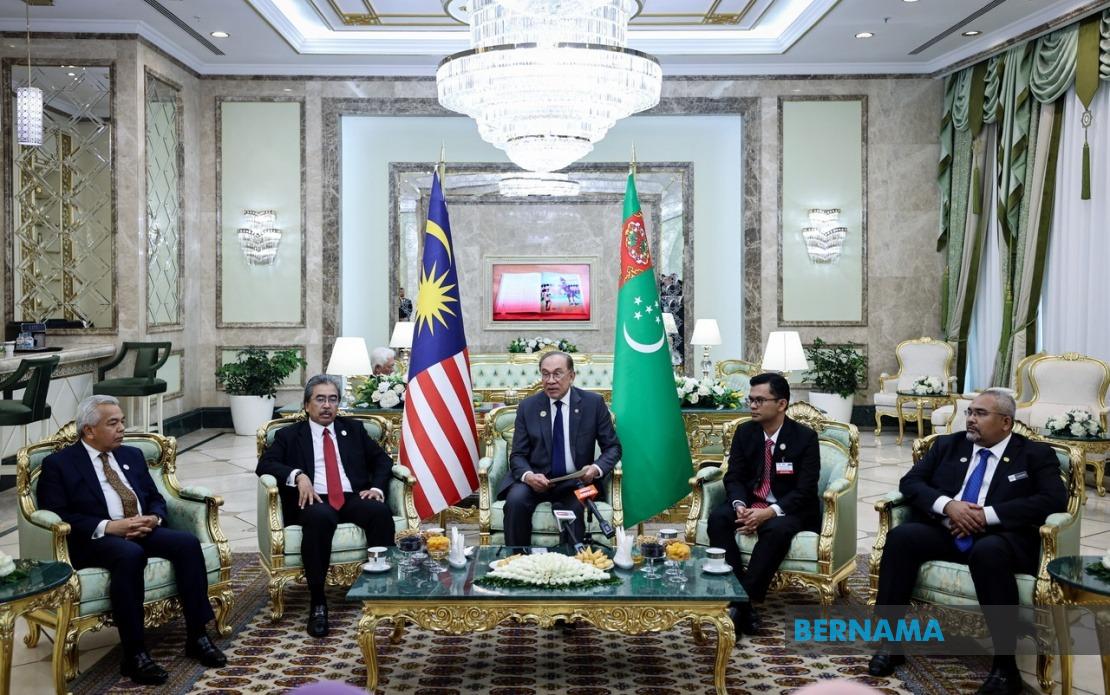
Prime Minister Datuk Seri Anwar Ibrahim has hailed his official working visit to Turkmenistan as a significant diplomatic milestone, marking the successful opening of fresh avenues for Malaysia-Central Asia engagement at both governmental and commercial levels. The visit, which commenced on June 18 and concluded after two days, represents Anwar's inaugural official journey to the energy-rich nation since his appointment as Malaysia's 10th prime minister in November 2022, arriving at the formal invitation of Turkmenistan President Serdar Berdimuhamedov.
Anwar's characterization of the trip as objective-driven underscores the Malaysian government's strategic recalibration towards Central Asia, a region of increasing geopolitical and economic importance. The emphasis on strengthened friendly relations and strategic cooperation signals a deliberate pivot in Malaysia's foreign policy architecture, particularly given the nation's historical focus on Southeast Asian neighbours and traditional allies. Turkmenistan's position as a major energy exporter presents compelling opportunities for Malaysian interests, especially given PETRONAS's global portfolio expansion and Malaysia's persistent energy security considerations. The visit thus represents more than ceremonial diplomacy; it reflects calculated economic strategy aligned with Malaysia's broader energy diversification objectives.
The energy sector emerged as the primary focus of discussions, with Malaysian officials recognizing the substantial untapped potential for bilateral collaboration. Turkmenistan possesses vast natural gas reserves and sophisticated extraction capabilities, while Malaysia brings downstream expertise and established regional market access. This complementarity creates natural synergies for partnership structures ranging from resource acquisition to technological knowledge transfer. For Malaysian policymakers, establishing closer energy relationships with Central Asian producers serves dual purposes: reducing dependence on traditional suppliers while strengthening Malaysia's position as a regional energy hub serving Asian markets. The explicit articulation of energy cooperation as a cornerstone of the bilateral framework reflects pragmatic assessment of each nation's comparative advantages.
The composition of Anwar's delegation speaks to the comprehensive nature of the engagement. The inclusion of Minister of Investment, Trade and Industry Datuk Seri Johari Abdul Ghani and Minister of Economy Akmal Nasrullah Mohd Nasir demonstrates that economic considerations transcended energy discussions alone. Trade facilitation, investment frameworks, and broader commercial partnerships featured prominently in the Malaysian agenda. The presence of officials from the Prime Minister's Office and the Foreign Ministry indicated coordination across multiple governmental departments, ensuring policy coherence and facilitating bureaucratic follow-through on commitments made during negotiations. PETRONAS's participation underscored the private sector's integral role in materializing state-level agreements into operational commercial ventures.
Anwar's expression of gratitude toward President Serdar Berdimuhamedov and the reception extended to the Malaysian delegation reflects diplomatic protocol while also acknowledging genuine cooperation from Turkmen leadership. The warm welcome signalled receptiveness to enhanced Malaysia-Turkmenistan relations from both governmental and institutional perspectives. Such cordiality establishes positive interpersonal foundations and political goodwill that often prove essential when navigating complex commercial negotiations or resolving inevitable disagreements. The acknowledgment of the Malaysian Embassy in Ashgabat highlights the critical role of diplomatic infrastructure in facilitating sustained engagement beyond individual high-level visits.
The framing of this visit as opening a new chapter in bilateral cooperation carries significance for regional dynamics. Turkmenistan, while geographically Central Asian, exists at the intersection of multiple regional spheres of influence including Persian Gulf energy politics and Asian commercial networks. Malaysia's elevated engagement with Turkmenistan potentially positions the nation as a bridge between Central Asian producers and Southeast Asian consumers, reinforcing Malaysia's credentials as a trusted intermediary in regional supply chains. This diplomatic positioning could yield diplomatic capital beyond immediate bilateral transactions.
For Malaysian businesses beyond PETRONAS, the visit potentially catalyzes broader commercial partnerships. Turkmenistan's development requirements encompass infrastructure, technology transfer, and service sector capabilities where Malaysian firms possess competitive advantages. The governmental endorsement of enhanced bilateral relations creates institutional pathways for Malaysian enterprises seeking market access in Central Asia. Conversely, Turkmen companies gain entry points to Southeast Asian markets through Malaysia's established networks and trade relationships, fostering mutually beneficial commercial ecosystems.
The security personnel and media involvement noted by Anwar underscores the domestic political dimensions of the visit. High-level international engagements serve multiple constituencies simultaneously: they project national prestige, demonstrate governmental effectiveness in advancing national interests, and generate positive media narratives supporting governmental legitimacy. The successful orchestration of complex diplomatic logistics reflects institutional competence and planning capability.
Looking forward, the substantive outcomes of this visit will determine its historical significance. Initial diplomatic cordiality and expressed intentions require translation into concrete mechanisms including formal agreements on energy supply arrangements, investment guarantees, and regulatory harmonization. The success of subsequent commercial ventures will validate the diplomatic groundwork laid during Anwar's visit. Malaysian stakeholders will monitor whether the promised expansion of bilateral cooperation materializes in increased energy imports, PETRONAS operational opportunities, or enhanced trade volumes.
The timing of this Central Asian outreach reflects Malaysia's broader strategic recalibration as regional geopolitics evolve. Diversifying energy sources and commercial partnerships reduces vulnerability to concentration risk while enhancing negotiating leverage with traditional suppliers. For Southeast Asian observers, Malaysia's proactive engagement with Central Asia demonstrates that regional nations need not remain passive players in their own economic futures; strategic diplomacy can unlock new opportunities through previously underdeveloped partnerships.