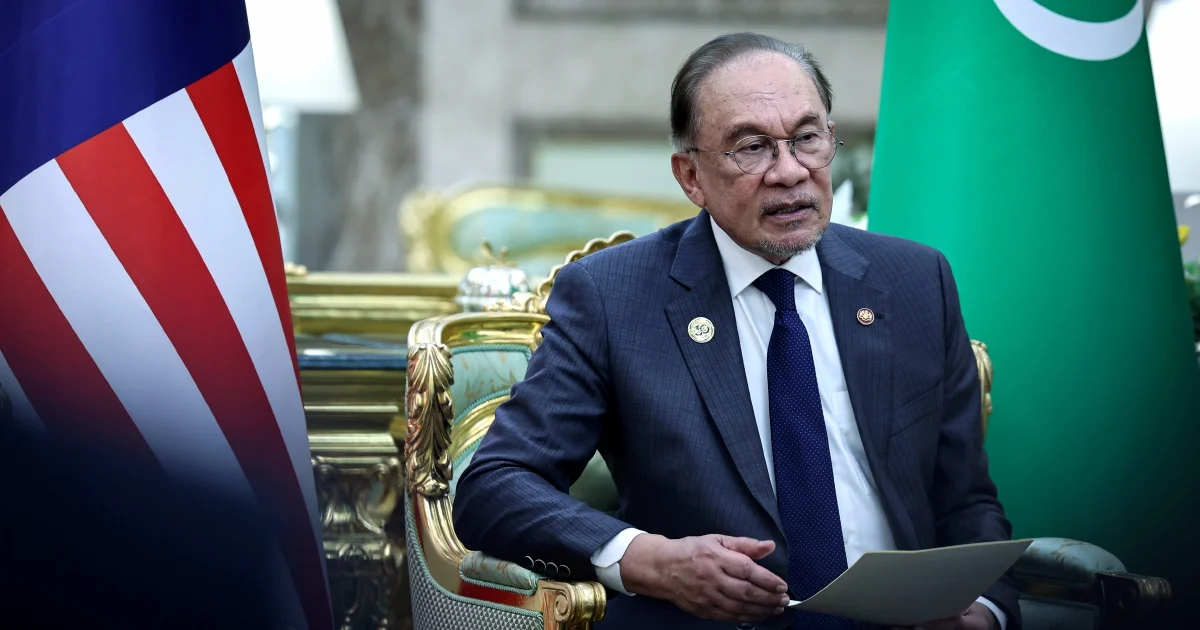
Prime Minister Datuk Seri Anwar Ibrahim has thrown his weight behind initial indications of a breakthrough in relations between the United States and Iran, signalling Malaysia's support for diplomatic efforts that seek to reduce tensions in one of the world's most volatile geopolitical flashpoints. Speaking at Batu Kawan, the prime minister characterised the preliminary accord as welcome developments that could have far-reaching implications not only for the two nations directly involved but for international peace and stability more broadly.
Any meaningful rapprochement between Washington and Tehran carries substantial consequences for the Indo-Pacific region and Southeast Asia specifically. For Malaysia, a nation that has historically pursued a non-aligned foreign policy and maintains diplomatic relations with both the United States and Iran, such developments resonate strongly with the country's long-standing commitment to multilateral dialogue and conflict resolution through negotiation rather than confrontation. The Malaysian government's appreciation for diplomatic solutions reflects a broader regional interest in de-escalation, particularly given the interconnected nature of global trade routes and energy security that affect ASEAN economies.
Anwar's remarks underscore Malaysia's positioning as a voice for pragmatism in international affairs. The prime minister's willingness to publicly endorse moves towards reconciliation demonstrates the government's view that sustainable peace emerges from dialogue rather than antagonism. This stance aligns with Malaysia's participation in various international forums where the nation consistently advocates for peaceful resolution of disputes and respect for international law, principles that have guided Malaysian foreign policy under successive administrations.
The potential stabilisation of US-Iran relations holds particular relevance for maritime security in the Persian Gulf and beyond. Global energy markets, which remain sensitive to Middle Eastern tensions, could benefit from reduced uncertainty. For Malaysia, whose own economic interests extend across multiple regions and whose shipping lanes are vital conduits for international commerce, any moderation in US-Iran hostilities offers indirect benefits through improved predictability in energy pricing and reduced risk to regional trade.
Anwar's cautious optimism about achieving lasting peace rather than merely temporary truces reflects sophisticated understanding of why previous agreements have proven fragile. The prime minister's emphasis on durability suggests Malaysia recognises that superficial agreements unaccompanied by structural changes in underlying interests often unravel. This perspective aligns with Malaysia's own experience in regional disputes and efforts to construct durable solutions to maritime and territorial questions through consistent engagement.
The timing of the prime minister's statement carries significance within the context of Malaysia's own diplomatic calendar and regional relationships. By publicly supporting US-Iran talks, Anwar positions Malaysia as a responsible global actor committed to international peace while maintaining equidistance between powerful stakeholders. This balancing act has become increasingly important as geopolitical competition intensifies across Asia, requiring nations like Malaysia to navigate carefully between major powers.
From a Malaysian domestic perspective, the government's engagement with international peace efforts reinforces its narrative of responsible stewardship of foreign policy. Voters and observers in Malaysia increasingly expect their leaders to speak authoritatively on global matters affecting national interests, and Anwar's comments demonstrate active involvement in shaping Malaysia's international standing rather than passive reception of global events.
The broader context of Middle Eastern stability affects Malaysian interests beyond energy security. Regional conflicts generate humanitarian crises, refugee flows, and security challenges that eventually reach Southeast Asia. By supporting diplomatic breakthroughs, Malaysia signals its preference for addressing root causes of conflict rather than managing symptoms through military buildups or alliance polarisation. This approach resonates with Malaysia's historical identity as a bridge-builder between different civilisations and political systems.
Anwar's framing of the US-Iran development as positive news for the world deliberately positions Malaysia within a constructive middle ground. Rather than celebrating from an ideological perspective favourable to either Washington or Tehran, the prime minister emphasises universally beneficial outcomes: reduced military tensions, more predictable international affairs, and greater focus on development and economic cooperation. This universalist language serves Malaysia's interests by reinforcing its credentials as a non-partisan voice in global affairs.
Looking forward, Malaysia's continued support for US-Iran de-escalation will likely manifest through quiet diplomatic channels and multilateral forums rather than public pronouncements. The government's role will focus on encouraging sustained dialogue and, if opportunities arise, contributing Malaysian expertise in conflict mediation developed through regional experience. Malaysia's participation in various international organisations positions it to support confidence-building measures and verify compliance with any agreements emerging from US-Iran negotiations.
The statement also reflects Malaysia's recognition that global instability anywhere eventually creates ripples affecting Malaysia's security and prosperity. Investment flows, technology partnerships, and skilled migration patterns all respond to perceptions of regional stability. By endorsing diplomatic solutions to major international conflicts, Anwar signals to Malaysian stakeholders—businesses, investors, and citizens—that the government actively works to create conditions conducive to economic growth and peaceful advancement.
Ultimately, Anwar's welcome for the US-Iran breakthrough represents more than simple commentary on distant events. It articulates Malaysia's stake in a more peaceful and predictable international order, acknowledges the nation's capacity to influence perceptions and encourage constructive outcomes, and reaffirms commitments to dialogue-based diplomacy that have characterised Malaysian foreign policy across different political administrations and eras.