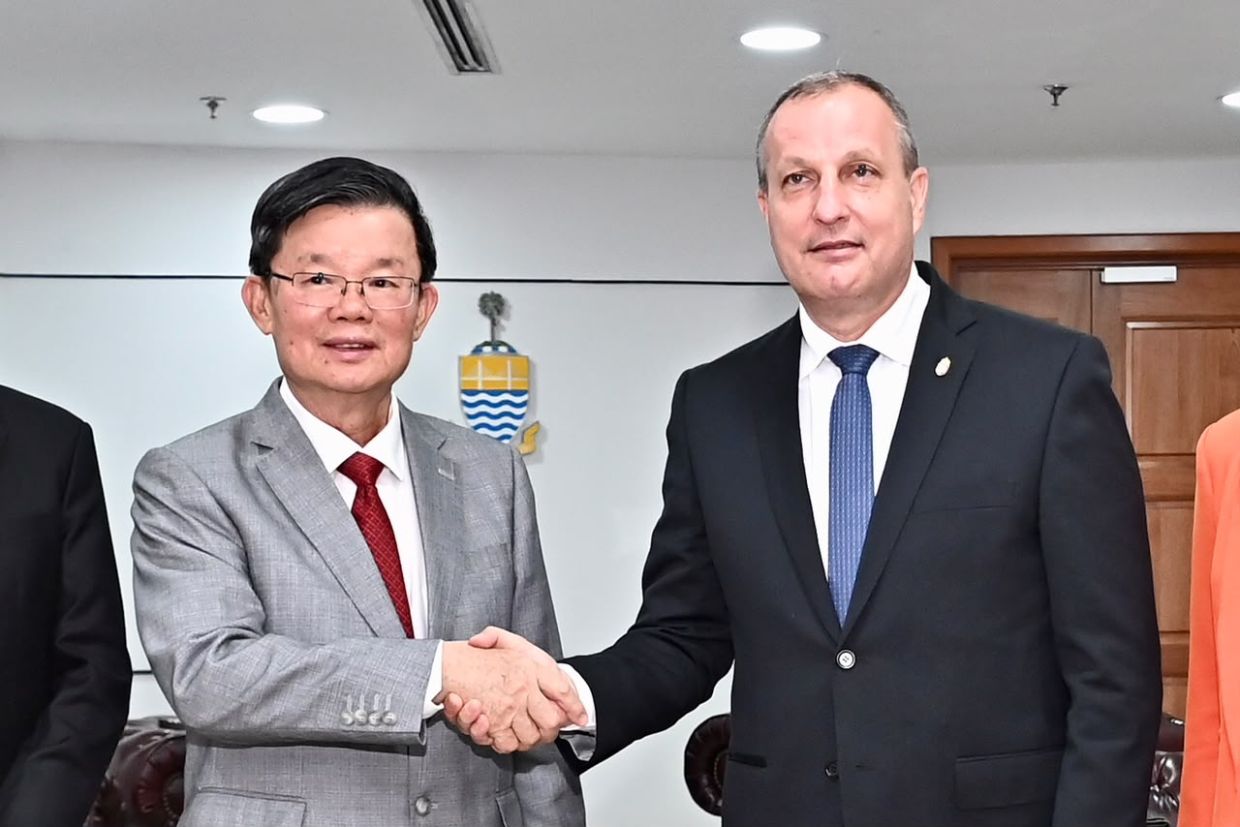
Penang has signalled its intention to broaden cooperation with Hungary across multiple sectors including higher education, technological development, water security and renewable energy, stemming from substantive talks between state officials and representatives from the Central European nation. Chief Minister Chow Kon Yeow met with Hungarian Ambassador to Malaysia Dr Sándor Sipos and accompanying delegation members, exploring frameworks for deeper bilateral engagement that could yield tangible benefits for both territories. The discussions underscored mutual interest in pursuing economic and social development pathways that do not compromise environmental stewardship or cultural preservation.
The Penang administration views Hungary as a valuable partner capable of transferring expertise across domains where the state aspires to strengthen capabilities. Chow characterised Hungary as a significant player within the European context, holding accumulated knowledge and proven methodologies particularly relevant to Southeast Asia's development challenges. This perspective reflects Penang's broader strategic orientation toward learning from international best practices while maintaining its distinct identity as a manufacturing and innovation hub within Malaysia. The state's leadership appears keen to position Penang as an open economy receptive to collaborative arrangements that enhance competitiveness without dependency on any single partnership.
Among the concrete areas identified for cooperation, water management emerged as particularly significant. As a densely populated state facing periodic water supply challenges, Penang could benefit substantially from Hungarian technology and operational approaches to water treatment, distribution and conservation. Hungary has developed sophisticated systems for managing water resources across its Danube Basin territories, knowledge that could be adapted for Malaysian conditions. This dimension of partnership carries immediate practical implications for Penang's residents and industrial operations, both of which depend on reliable water supply infrastructure.
Green technology and renewable energy generation featured prominently in discussions, aligning with Malaysia's broader net-zero ambitions and Penang's own sustainability commitments. Hungary has invested significantly in renewable energy infrastructure and circular economy practices applicable to manufacturing sectors that dominate Penang's economy. By establishing research and development collaborations in these domains, Penang could accelerate its transition toward cleaner industrial processes while potentially creating new business opportunities in green technology sectors. Such partnerships often generate intellectual property and technological capabilities that benefit participating states for decades.
Higher education cooperation represents another pillar of the envisioned partnership. Chow welcomed Hungary's existing scholarship programme, which annually provides 40 fully funded places for Malaysian students pursuing university degrees and research qualifications. The ambassador indicated openness to expanding access, particularly encouraging applications from Penang-based students. Educational exchanges create long-term networks between nations, as graduates return home with international perspectives and potentially establish professional connections that facilitate future trade and innovation partnerships. For Penang, whose economy increasingly depends on knowledge workers, access to quality tertiary education abroad strengthens the talent pipeline.
Heritage conservation emerged as an unexpected but meaningful area of convergence between the two jurisdictions. Both Penang and Hungary possess significant historical sites requiring sophisticated preservation techniques and funding mechanisms. The state's Georgetown UNESCO World Heritage Site faces ongoing conservation challenges, while Hungary similarly maintains extensive architectural and cultural assets demanding expert stewardship. Knowledge sharing on heritage management, restoration methodologies and sustainable tourism development around historical sites could benefit both communities while creating opportunities for cultural tourism and academic collaboration.
State executive councillors Goh Choon Aik and Gooi Zi Sen participated in separate sessions with the Hungarian delegation, broadening the engagement beyond the Chief Minister's office. These discussions ventured into trade and investment frameworks, youth development initiatives and sports cooperation. Gooi signalled serious interest in sports collaboration, committing to commission studies through the Penang State Sports Council examining which athletic disciplines might form productive bilateral exchange programmes with Hungary. This represents more than symbolic gesture—Hungary boasts Olympic traditions and competitive sports infrastructure that could genuinely develop local talent pools in specific disciplines.
The breadth of identified cooperation areas suggests both delegations approached discussions comprehensively rather than limiting engagement to traditional commercial channels. Community engagement featured in discussions, implying potential people-to-people exchanges beyond formal governmental or academic frameworks. Such grassroots connections often prove more durable than top-level arrangements, creating constituencies within both societies supporting continued partnership regardless of political transitions. Penang's multicultural composition and Hungary's immigrant communities create natural constituencies interested in strengthening bilateral ties.
From a geopolitical perspective, Penang's outreach to Hungary reflects Malaysia's effort to diversify international partnerships beyond traditional regional alignments. Hungary, positioned at the intersection of European and Asian interests, offers perspectives and technical capabilities distinct from Penang's established partners in China, Japan or the United States. This diversification strategy reduces economic vulnerability while exposing state institutions to varied problem-solving approaches and innovation models. For a manufacturing-dependent state like Penang, such exposure carries practical value for remaining competitive amid global economic shifts.
Chow's emphasis on translating discussions into concrete projects indicates the state government intends to move beyond ceremonial diplomacy toward actionable collaboration frameworks. This requires identifying specific projects, securing funding mechanisms and establishing institutional arrangements for ongoing coordination. Success will depend on follow-through mechanisms ensuring discussions generate tangible outcomes—research partnerships materialising, students actually enrolling in Hungarian universities, and technology transfers occurring. Pending such implementation, the Hungarian visit represents positioning rather than accomplished partnership.
The timing of Hungary's diplomatic outreach toward Penang likely reflects broader Central European interest in strengthening Asian connections amid geopolitical realignments. For Penang, the initiative arrives when the state government actively seeks international partnerships supporting economic diversification beyond traditional electronics manufacturing. As global supply chains reconfigure and new technologies emerge, partnership arrangements with technically advanced economies including Hungary could prove valuable for maintaining Penang's status as an attractive investment location and talent destination within Malaysia's regional context.

%22%2F%3E%3C%2Fpattern%3E%3C%2Fdefs%3E%3Crect%20width%3D%22100%25%22%20height%3D%22100%25%22%20fill%3D%22url(%23ph2dkjhg)%22%2F%3E%3Crect%20width%3D%22100%25%22%20height%3D%22100%25%22%20fill%3D%22url(%23ph2dkjhp)%22%2F%3E%3Ctext%20x%3D%2250%25%22%20y%3D%2250%25%22%20text-anchor%3D%22middle%22%20dominant-baseline%3D%22central%22%20fill%3D%22rgba(255%2C255%2C255%2C0.95)%22%20font-family%3D%22Georgia%2C%20'Times%20New%20Roman'%2C%20serif%22%20font-weight%3D%22700%22%20font-size%3D%22272%22%20letter-spacing%3D%22-0.02em%22%3EAnwar%3C%2Ftext%3E%3C%2Fsvg%3E)