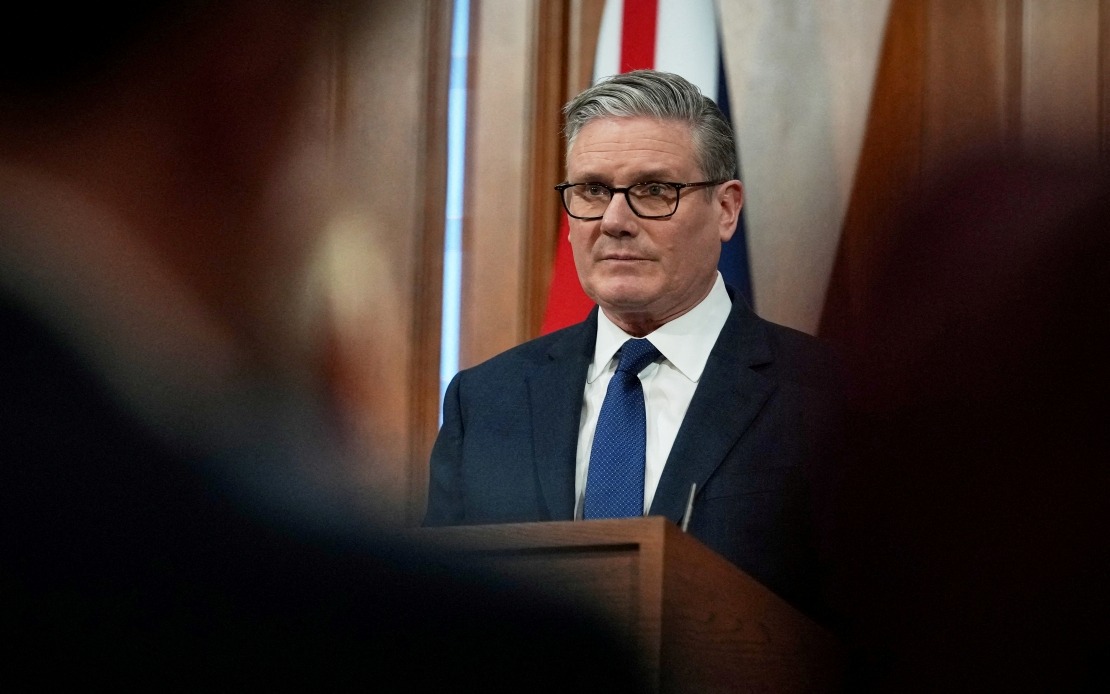
US President Donald Trump has declared that United Kingdom Prime Minister Keir Starmer will step down from his position, attributing the anticipated departure to mismanagement of critical policy areas. The American leader made the assertion on his Truth Social platform on Sunday while in Istanbul, publicly forecasting the British premier's exit from office without offering specific timelines or additional substantiation for his prediction.
Trump's statement focused particularly on two policy domains he believes have undermined Starmer's tenure: immigration management and energy strategy. The US President specifically referenced the North Sea oil sector, suggesting that Britain's approach to unlocking offshore energy resources represents a strategic error. His message, while ostensibly sympathetic in tone—wishing Starmer well—amounted to a direct challenge to the legitimacy of the British government's direction under the Labour leader's stewardship.
The timing of Trump's pronouncement coincides with intensifying domestic pressure on Starmer within Westminster. The BBC reported separately on Sunday that multiple government insiders have begun anticipating the prime minister's resignation announcement could arrive imminently, potentially as early as Monday. This convergence of external commentary and internal governmental speculation underscores the precarious position Britain's government finds itself in scarcely months into its term.
For Malaysian observers monitoring international political developments, Trump's intervention in British politics carries broader significance regarding the assertiveness of American commentary on allied nations' governance. The move reflects a pattern whereby the American president openly critiques foreign leaders' policy choices, a practice that challenges traditional diplomatic restraint and raises questions about interference in sovereign decision-making processes.
The immigration dimension of Trump's criticism resonates particularly across Southeast Asia, where regional governments also grapple with complex migration challenges and border management. Britain's struggles in this arena—whether genuine or perceived—demonstrate that even wealthy developed nations face substantial difficulties in implementing coherent immigration frameworks. Malaysia's own experience with irregular migration, refugee resettlement, and regional labour movement offers comparative context for understanding the political toxicity of immigration failures in democratic systems.
The energy policy aspect likewise merits attention from a regional perspective. Trump's advocacy for expanded North Sea oil extraction aligns with the American administration's fossil fuel promotion agenda, a stance increasingly diverging from global momentum toward renewable energy transition. This positioning places Britain in an awkward diplomatic position, caught between pressure from the United States to exploit hydrocarbon reserves and growing domestic and international commitments to climate action—a tension acute for all nations positioned between energy security imperatives and environmental obligations.
Starmer's Labour government assumed office in July 2024 with significant electoral backing, positioning itself as a transformative administration ready to address years of Conservative governance. The prospect of early resignation would represent a dramatic reversal of fortune, reflecting the extraordinary challenges confronting contemporary governance in advanced democracies. Such instability carries implications for British influence in international affairs and the bilateral relationships nations including Malaysia maintain with London.
The reported internal discussions within British government circles suggest that Starmer's colleagues increasingly perceive his position as untenable, regardless of external pressure. This internal erosion—potentially more consequential than Trump's public commentary—indicates systemic governance difficulties beyond any individual leader's capacity to navigate successfully. When senior government figures begin anticipating resignation timelines, institutional confidence has typically deteriorated beyond recovery.
For Southeast Asian governments observing these developments, the British experience offers cautionary perspective on the interconnected challenges of policy delivery, political sustainability, and public confidence. Leaders across the region managing inflation, migration pressures, energy transitions, and electoral expectations confront comparable difficulties, though often with different institutional resources and political cultures. The vulnerability of even established democracies to rapid leadership transitions underscores the universal challenges of contemporary governance.
The spectacle of international leaders publicly predicting each other's downfall also reflects evolving norms in global politics, where traditional courtesy and discretion increasingly yield to direct confrontation and public pressure tactics. This shift reshapes the environment within which regional powers operate, potentially encouraging greater assertiveness in bilateral relationships and international forums. Malaysian policymakers monitoring these trends must consider how such evolving international conduct affects multilateral cooperation and regional stability.
Should Starmer announce a resignation timeline in coming days, the political transition could reshape British governance approaches on multiple fronts relevant to Asia-Pacific interests, including trade relationships, defence partnerships, and international financial coordination. The uncertainty surrounding British leadership during this period may complicate ongoing negotiations and strategic planning affecting countries throughout Southeast Asia dependent on stable relations with London.

%22%2F%3E%3C%2Fpattern%3E%3C%2Fdefs%3E%3Crect%20width%3D%22100%25%22%20height%3D%22100%25%22%20fill%3D%22url(%23ph3rzqsg)%22%2F%3E%3Crect%20width%3D%22100%25%22%20height%3D%22100%25%22%20fill%3D%22url(%23ph3rzqsp)%22%2F%3E%3Ctext%20x%3D%2250%25%22%20y%3D%2250%25%22%20text-anchor%3D%22middle%22%20dominant-baseline%3D%22central%22%20fill%3D%22rgba(255%2C255%2C255%2C0.95)%22%20font-family%3D%22Georgia%2C%20'Times%20New%20Roman'%2C%20serif%22%20font-weight%3D%22700%22%20font-size%3D%22170%22%20letter-spacing%3D%22-0.02em%22%3ETambirat%3C%2Ftext%3E%3C%2Fsvg%3E)