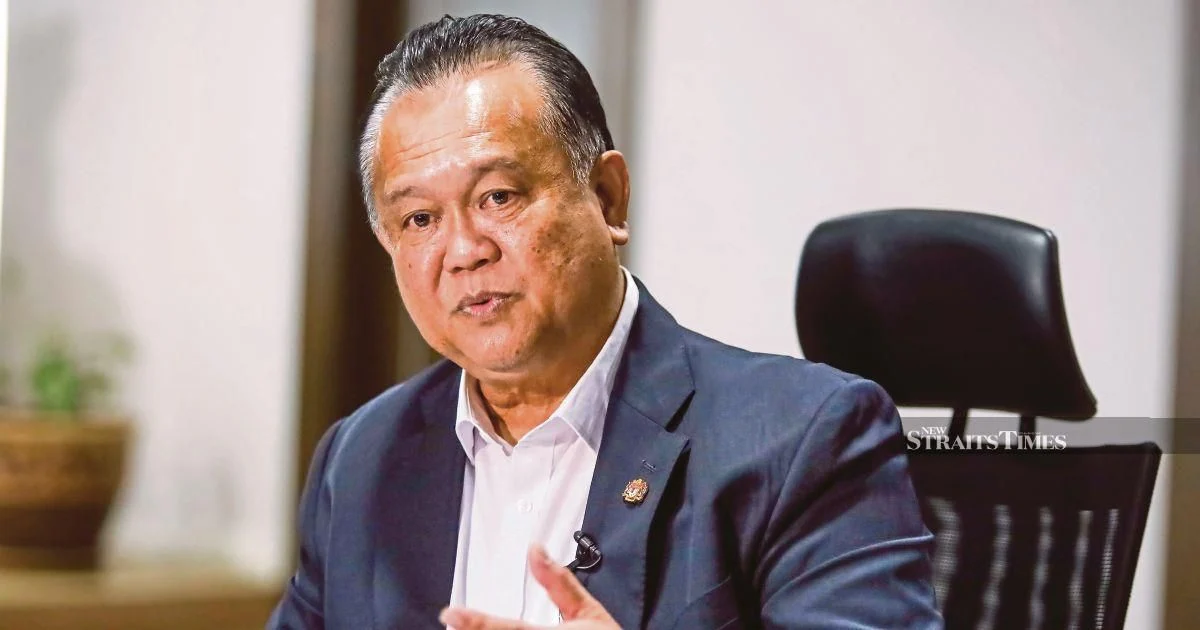
The era of unlimited highway expansion in Malaysia is winding down, according to Works Minister Datuk Seri Alexander Nanta Linggi, who has outlined a starkly different blueprint for the nation's transport future. Rather than pursuing aggressive road-building programmes, his ministry is pivoting towards a strategy where existing infrastructure becomes the foundation for intelligent, interconnected mobility networks that prioritise seamless connections between motorways and mass transit systems.
During a recent address in Kuala Lumpur, Nanta Linggi made clear that highways will remain a critical component of Malaysia's transport architecture. However, the days of treating road construction as a standalone solution to congestion and mobility challenges are effectively over. The emphasis has shifted decisively toward optimising what already exists while building smarter systems that can adapt to evolving travel patterns and demographic changes across the country.
This philosophical reorientation reflects growing recognition among policymakers that traditional approaches to infrastructure development have reached their limits. Highway networks, when expanded indiscriminately, often generate their own demand, perpetuating cycle patterns of congestion and environmental degradation. The new framework acknowledges that sustainable transport solutions require fundamentally different thinking about how roads relate to rail systems, bus networks, and emerging mobility options that characterise modern urban environments.
The minister's vision centres on three interconnected elements: first, adopting intelligent technology to maximise the capacity and efficiency of existing road networks; second, restructuring those networks to function as integral parts of broader transport ecosystems rather than isolated infrastructure; and third, prioritising investments that strengthen physical and digital linkages between highways and public transportation platforms. This integrated approach represents a sharp departure from historically compartmentalised transport planning in Malaysia.
For commuters and businesses across the region, this shift carries significant implications. Cities and towns will gradually experience transport systems where choosing between private vehicles and public options becomes genuinely competitive rather than a choice dictated by inadequate alternatives. Smart highways equipped with real-time traffic management, dynamic pricing, and journey information systems can work synergistically with rail and bus networks to guide users toward the most efficient route options, whether that involves driving, transit, or combinations thereof.
The integration imperative extends beyond mere technology deployment. Physical connectivity matters equally—ensuring that major transit hubs, parking facilities, and interchange points function as seamless gateways between transport modes rather than isolated destinations. This requires careful urban planning coordination between federal, state, and local authorities, a governance challenge that has historically complicated transport development in Malaysia's fragmented administrative landscape.
Nanta Linggi's repositioning also reflects practical budgetary realities facing transport ministries globally. While highway construction generates visible political returns and immediate economic activity through construction contracts, the long-term maintenance burden and diminishing congestion-relief benefits make such projects increasingly difficult to justify economically. Strategic integration with public transport networks offers better returns on taxpayer investment and more durable solutions to mobility challenges.
For the region, Malaysia's policy shift signals emerging consensus among Southeast Asian transport planners that the post-war paradigm of car-dependent infrastructure development has run its course. Neighbouring countries grappling with similar congestion crises—Bangkok, Jakarta, Manila—increasingly recognise that sustainable urban mobility requires deliberate coordination between road and rail systems rather than competition for development resources. Malaysia's explicit articulation of this principle could influence regional transport planning frameworks.
The implementation challenge remains substantial. Legacy infrastructure inherited from decades of car-centric planning must gradually be reconfigured through incremental upgrades rather than wholesale replacement. Institutional cultures within transport agencies, often siloed into highway and public transport divisions with separate budgets and mandates, must evolve toward collaborative frameworks. Private sector cooperation becomes essential, particularly for technology deployment and operational efficiency improvements that generate value without requiring massive capital injections.
Stakeholders in the logistics and commercial sectors will need to adapt operations to accommodate shifting transport dynamics. While highways will continue serving freight movement efficiently, integrated networks may impose pricing or access constraints during peak periods to prioritise passenger flows, requiring supply chain planners to adjust scheduling and routing strategies accordingly.
The broader economic implications favour diversified transport investment portfolios. Rather than concentrating development resources into single megaprojects, the integrated approach distributes investment across multiple smaller interventions—smart traffic systems, transit hubs, connectivity improvements, and technology integration—that collectively generate more robust outcomes than tradition-bound approaches.
Nanta Linggi's articulation of this strategic direction provides clarity to state governments, local authorities, and private stakeholders currently developing transport plans and infrastructure projects. By signalling definitively that the highway-expansion era is concluding, the minister creates policy certainty that should guide investment decisions toward genuinely sustainable solutions rather than perpetuating outdated assumptions about transport development.
%22%2F%3E%3C%2Fpattern%3E%3C%2Fdefs%3E%3Crect%20width%3D%22100%25%22%20height%3D%22100%25%22%20fill%3D%22url(%23ph1keyng)%22%2F%3E%3Crect%20width%3D%22100%25%22%20height%3D%22100%25%22%20fill%3D%22url(%23ph1keynp)%22%2F%3E%3Ctext%20x%3D%2250%25%22%20y%3D%2250%25%22%20text-anchor%3D%22middle%22%20dominant-baseline%3D%22central%22%20fill%3D%22rgba(255%2C255%2C255%2C0.95)%22%20font-family%3D%22Georgia%2C%20'Times%20New%20Roman'%2C%20serif%22%20font-weight%3D%22700%22%20font-size%3D%22136%22%20letter-spacing%3D%22-0.02em%22%3EParliament%3C%2Ftext%3E%3C%2Fsvg%3E)