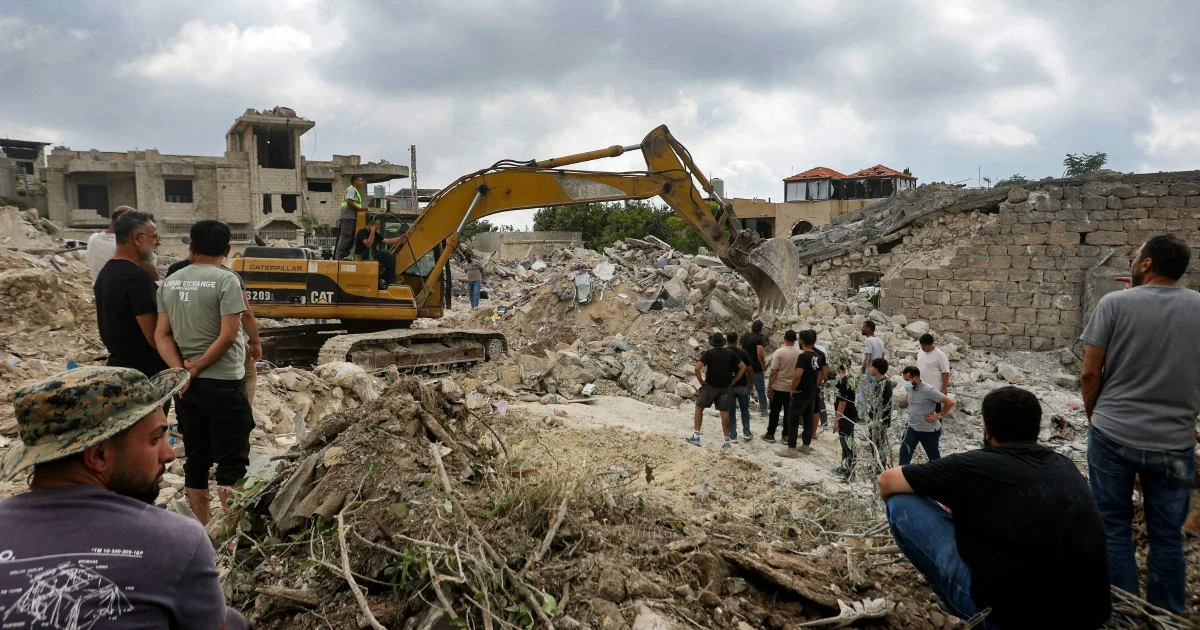
The standoff between Hizbollah and Israel over Lebanon's southern territory has escalated into a direct confrontation over the terms of any potential conflict resolution. Hizbollah chief Naim Qassem delivered a strong rejection on Sunday of any proposed Israeli security zone operating within Lebanese borders, a stance that directly challenges Israeli Prime Minister Benjamin Netanyahu's recent declaration that his country's military forces would remain in southern Lebanon for as long as strategically necessary.
This latest exchange underscores the fundamental disagreement between the two parties over what constitutes an acceptable ceasefire or resolution framework. While Netanyahu framed the indefinite military deployment as a security necessity, Qassem's rejection suggests that Hizbollah views any extended Israeli presence—regardless of stated purposes—as an unacceptable infringement on Lebanese sovereignty. The terminology itself matters deeply here: Israeli officials use "security zone" to describe a controlled territory, whereas Hizbollah and Lebanese nationalists interpret such language as code for continued occupation and territorial control.
The context for this dispute traces back decades. Israel has maintained a history of military operations and occupation in southern Lebanon, including a long-term presence that lasted until 2000. The memory of that occupation remains fresh in Lebanese collective consciousness and serves as a powerful rallying point for domestic political movements including Hizbollah. Any proposal that resembles a repeat of previous arrangements triggers intense nationalist sentiment that transcends factional lines within Lebanon.
Netanyahu's statement regarding troop presence represents a hardening of Israel's negotiating position. By explicitly tying the duration of military occupation to Israel's subjective assessment of security needs rather than establishing fixed timelines or clear withdrawal conditions, the Israeli leadership has essentially signalled that negotiations would not constrain Israeli decision-making on this matter. This approach inevitably conflicts with any Lebanese negotiating position that prioritizes national sovereignty and territorial integrity.
Hizbollah's response reflects broader Lebanese concerns about the country's sovereignty and independence. The organisation functions not merely as a militant group but as a significant political force with parliamentary representation and a substantial social base. When Qassem speaks on behalf of Hizbollah, he articulates positions that resonate beyond the organisation's core supporters to encompass wider segments of Lebanese society that remain intensely nationalistic about territorial matters.
The implications for regional stability are substantial. Any ceasefire or truce arrangement in the Israel-Lebanon theatre must eventually address the question of Israeli troop presence and withdrawal. If fundamental positions remain irreconcilable—with Israel demanding extended security guarantees through military presence and Lebanon demanding immediate withdrawal—then the prospects for durable peace arrangements diminish considerably. Both sides appear to be hardening their positions rather than seeking middle ground.
International mediators, including potential involvement from the United States or other regional powers, would face significant challenges in bridging this divide. Past international frameworks for Lebanese-Israeli relations, such as United Nations Security Council resolutions governing the border and military arrangements, have proven difficult to enforce. Without stronger enforcement mechanisms or guarantees that satisfy both parties' security concerns, similar arrangements might prove equally fragile.
For Malaysia and other Southeast Asian observers, this dispute carries implications for broader principles of international law and state sovereignty. The question of whether military forces from one country may establish security zones within another nation's territory touches on fundamental principles of non-interference and territorial integrity that underpin international relations. If powerful nations can unilaterally establish security zones in weaker neighbours' territories, it creates precedents that could affect states throughout the region.
The economic and humanitarian dimensions also deserve consideration. Southern Lebanon has experienced decades of development deficit due to insecurity and military operations. Any scenario involving extended Israeli military presence would perpetuate this region's marginalisation and suffering. Lebanese civilians living near the border region remain caught between competing security narratives, with their welfare often subordinated to strategic calculations by both Hizbollah and Israeli leadership.
Moving forward, both sides face strategic calculations about escalation risks. Hizbollah's rejection of security zones, if accompanied by military action, could provoke Israeli responses that further destabilise the region. Conversely, Israeli insistence on security arrangements that Lebanon finds unacceptable could provide justification for continued cross-border operations. Without significant shifts in either side's core demands, the cycle of confrontation seems likely to persist.
The statements from both Qassem and Netanyahu suggest that any path toward resolution must involve compromise on security arrangements that neither side currently appears willing to contemplate. Whether quiet diplomacy might eventually produce creative solutions—such as international monitors, phased withdrawals, or security guarantees from third parties—remains uncertain given the current rhetorical positions. The fundamental tension between Israeli security demands and Lebanese sovereignty claims will likely define the trajectory of this dispute for the foreseeable future.
%22%2F%3E%3C%2Fpattern%3E%3C%2Fdefs%3E%3Crect%20width%3D%22100%25%22%20height%3D%22100%25%22%20fill%3D%22url(%23ph5vraig)%22%2F%3E%3Crect%20width%3D%22100%25%22%20height%3D%22100%25%22%20fill%3D%22url(%23ph5vraip)%22%2F%3E%3Ctext%20x%3D%2250%25%22%20y%3D%2250%25%22%20text-anchor%3D%22middle%22%20dominant-baseline%3D%22central%22%20fill%3D%22rgba(255%2C255%2C255%2C0.95)%22%20font-family%3D%22Georgia%2C%20'Times%20New%20Roman'%2C%20serif%22%20font-weight%3D%22700%22%20font-size%3D%22226%22%20letter-spacing%3D%22-0.02em%22%3EHannah%3C%2Ftext%3E%3C%2Fsvg%3E)
%22%2F%3E%3C%2Fpattern%3E%3C%2Fdefs%3E%3Crect%20width%3D%22100%25%22%20height%3D%22100%25%22%20fill%3D%22url(%23phr5xug)%22%2F%3E%3Crect%20width%3D%22100%25%22%20height%3D%22100%25%22%20fill%3D%22url(%23phr5xup)%22%2F%3E%3Ctext%20x%3D%2250%25%22%20y%3D%2250%25%22%20text-anchor%3D%22middle%22%20dominant-baseline%3D%22central%22%20fill%3D%22rgba(255%2C255%2C255%2C0.95)%22%20font-family%3D%22Georgia%2C%20'Times%20New%20Roman'%2C%20serif%22%20font-weight%3D%22700%22%20font-size%3D%22320%22%20letter-spacing%3D%22-0.02em%22%3EPM%3C%2Ftext%3E%3C%2Fsvg%3E)