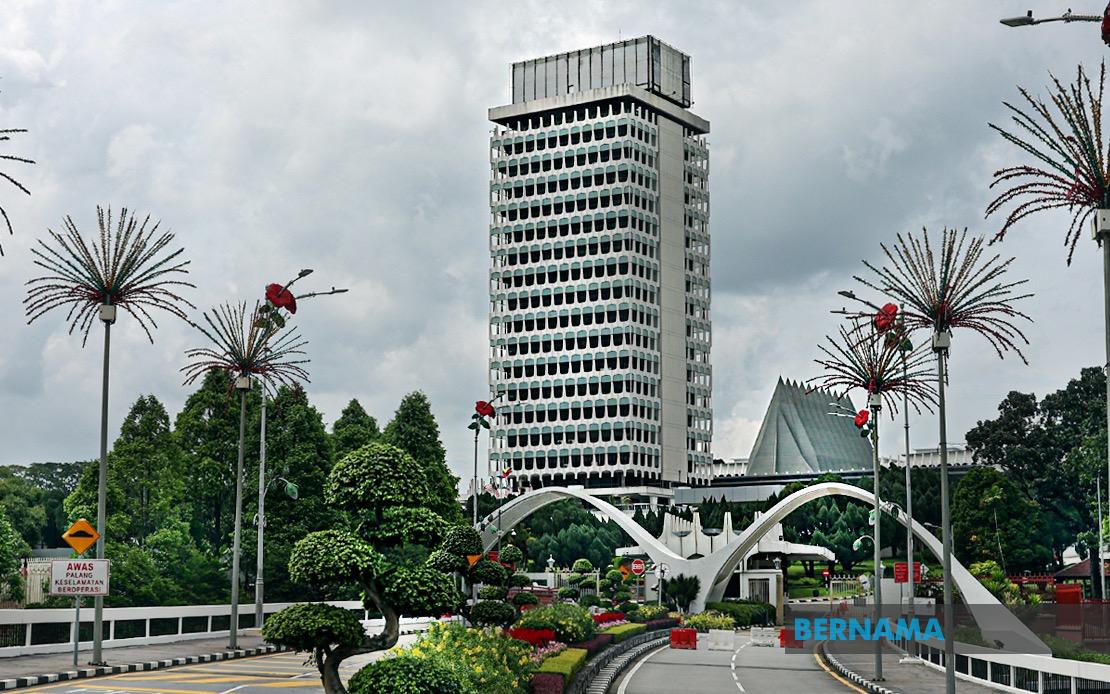
Malaysia's Parliament convened today to tackle pressing economic and governance challenges, with lawmakers zeroing in on vulnerabilities created by geopolitical tensions in one of the world's most critical shipping lanes. The opening day of the Second Meeting of the Fifth Session of the 15th Parliament has brought into sharp focus the fragility of Malaysia's trade-dependent economy in an increasingly unstable global environment, particularly as disruptions in the Strait of Hormuz threaten to ripple through local supply chains and inflation dynamics.
The Strait of Hormuz, through which roughly one-third of the world's seaborne oil trade flows, has become a flashpoint for economic anxiety among Malaysian policymakers. Datuk Dr Richard Rapu @ Aman anak Begri, the member for Betong under GPS, has raised critical questions about how disruptions in this vital waterway are already affecting Malaysian industries. His parliamentary inquiry will push the Economy Ministry to articulate the latest empirical assessment of rising operating costs across the manufacturing and logistics sectors, and to clarify the inflationary pressure being transmitted into the domestic economy in the second quarter of 2026. Beyond immediate cost impacts, he has also sought assurances that contingency mechanisms embedded within the 13th Malaysia Plan remain robust enough to shield gross domestic product growth targets even if the global economy enters a prolonged recession.
This line of questioning reflects a broader recognition among Malaysian lawmakers that the country's prosperity cannot be insulated from Middle Eastern volatility. Malaysia's reliance on free-flowing maritime commerce and stable energy costs makes it acutely exposed to any prolonged closure or restriction of the Strait of Hormuz. The parliamentary focus on protective strategies signals that the government must move beyond reactive damage control and establish forward-looking economic buffers, whether through diversified supply chain sourcing, strategic reserves, or demand-side adjustments that reduce import dependency.
Another significant parliamentary concern centres on the haj pilgrimage system, an issue that touches both spiritual and practical governance. Onn Abu Bakar, representing Batu Pahat for the Pakatan Harapan coalition, has tabled questions on comprehensive reforms to Malaysia's haj management architecture heading into 2027. His inquiry specifically targets three pain points: the financial burden on pilgrims, the lengthy waiting periods that can stretch years, and the health and welfare safeguards during the pilgrimage itself. The haj represents a deeply meaningful obligation for Malaysian Muslims, yet the current system has become a source of frustration, with costs escalating beyond the reach of many aspirants and waiting lists creating uncertainty about when they might fulfill this religious obligation. Parliamentary scrutiny of these issues suggests the government is under pressure to reimagine haj administration to make the journey more accessible and secure.
Artificial intelligence governance has emerged as another urgent legislative frontier. Wong Shu Qi, the Kluang member for Pakatan Harapan, has posed a pointed query to the Digital Minister about the forthcoming Artificial Intelligence Governance Bill. Her concern focuses on whether the legislation will contain explicit and enforceable provisions against AI misuse in its most pernicious forms: the creation of synthetic child sexual exploitation material, identity spoofing that can devastate individuals and organisations, and the non-consensual distribution of intimate content. This line of questioning reveals growing parliamentary anxiety about the pace at which AI technology is being weaponised for exploitation and harm, particularly against vulnerable populations. The framing of her question suggests that lawmakers fear generic principles in an AI bill may prove insufficient without laser-focused prohibitions against these specific harms.
For Malaysia, which has invested substantially in digital economy ambitions, threading the needle between fostering AI innovation and protecting citizens from AI-enabled abuse has become a defining policy challenge. The parliamentary pressure on this issue indicates that without clear legislative guardrails, public trust in AI deployment could erode before the technology has fully matured in the Malaysian context. A robust AI governance framework that names and criminalises specific misuse patterns would send a signal to both industry and citizens that innovation and protection are not mutually exclusive.
Food security concerns tied to Middle Eastern instability have also lodged themselves in parliamentary questioning. Datuk Dr Radzi Jidin, representing Putrajaya for the Perikatan Nasional bloc, has asked the Agriculture and Food Security Minister to detail the government's multi-layered response to how the Middle East conflict affects Malaysia's food supply chains. His questions span short-term emergency measures, medium-term adaptations, and long-term structural reforms. This reflects awareness that Malaysia's agricultural sector and food import dependencies have become entangled with geopolitical risk, and that policymakers must prepare contingency responses at multiple time horizons. The parliamentary attention to this issue underscores that food security is no longer a purely agricultural matter but an integrated concern spanning trade, diplomacy, and strategic reserves.
Two significant pieces of legislation are also scheduled for tabling during this parliamentary sitting. The Cybercrime Bill 2026 represents the government's effort to modernise criminal law in response to evolving digital threats, while the Road Transport Act Amendment continues incremental reform of transportation regulation. These bills, though less dramatic than the questioning agenda, form part of a broader legislative effort to update Malaysia's legal framework for contemporary risks and opportunities.
The parliamentary calendar extends through July 16, providing a 16-day window for deliberation and debate on these interconnected challenges. The breadth of issues being raised—from geopolitical trade vulnerabilities to AI governance, from haj administration to food security—paints a portrait of a Malaysian polity grappling with the complex interdependencies of modern economic life. Each question and each bill reflects specific constituencies and concerns, yet collectively they demonstrate that Malaysia's policymakers recognise that economic resilience in the 21st century demands vigilance across multiple fronts: supply chain diversification, technological governance, social welfare systems, and food sovereignty. How effectively Parliament and the executive branch respond to these parliamentary probes will significantly shape Malaysia's capacity to navigate the turbulent decade ahead.
%22%2F%3E%3C%2Fpattern%3E%3C%2Fdefs%3E%3Crect%20width%3D%22100%25%22%20height%3D%22100%25%22%20fill%3D%22url(%23ph5vraig)%22%2F%3E%3Crect%20width%3D%22100%25%22%20height%3D%22100%25%22%20fill%3D%22url(%23ph5vraip)%22%2F%3E%3Ctext%20x%3D%2250%25%22%20y%3D%2250%25%22%20text-anchor%3D%22middle%22%20dominant-baseline%3D%22central%22%20fill%3D%22rgba(255%2C255%2C255%2C0.95)%22%20font-family%3D%22Georgia%2C%20'Times%20New%20Roman'%2C%20serif%22%20font-weight%3D%22700%22%20font-size%3D%22226%22%20letter-spacing%3D%22-0.02em%22%3EHannah%3C%2Ftext%3E%3C%2Fsvg%3E)

%22%2F%3E%3C%2Fpattern%3E%3C%2Fdefs%3E%3Crect%20width%3D%22100%25%22%20height%3D%22100%25%22%20fill%3D%22url(%23phr5xug)%22%2F%3E%3Crect%20width%3D%22100%25%22%20height%3D%22100%25%22%20fill%3D%22url(%23phr5xup)%22%2F%3E%3Ctext%20x%3D%2250%25%22%20y%3D%2250%25%22%20text-anchor%3D%22middle%22%20dominant-baseline%3D%22central%22%20fill%3D%22rgba(255%2C255%2C255%2C0.95)%22%20font-family%3D%22Georgia%2C%20'Times%20New%20Roman'%2C%20serif%22%20font-weight%3D%22700%22%20font-size%3D%22320%22%20letter-spacing%3D%22-0.02em%22%3EPM%3C%2Ftext%3E%3C%2Fsvg%3E)