Thailand's approach to cannabis regulation has reached a critical turning point, with the House Public Health Committee convening on June 18 to debate whether the country should reverse its 2022 liberalisation and reclassify cannabis as a controlled narcotic. The meeting, chaired by Sakoltee Phattiyakul, exposed fundamental disagreements between public health officials, medical professionals and cannabis operators over how best to manage the plant's legal status and commercial availability across the kingdom.
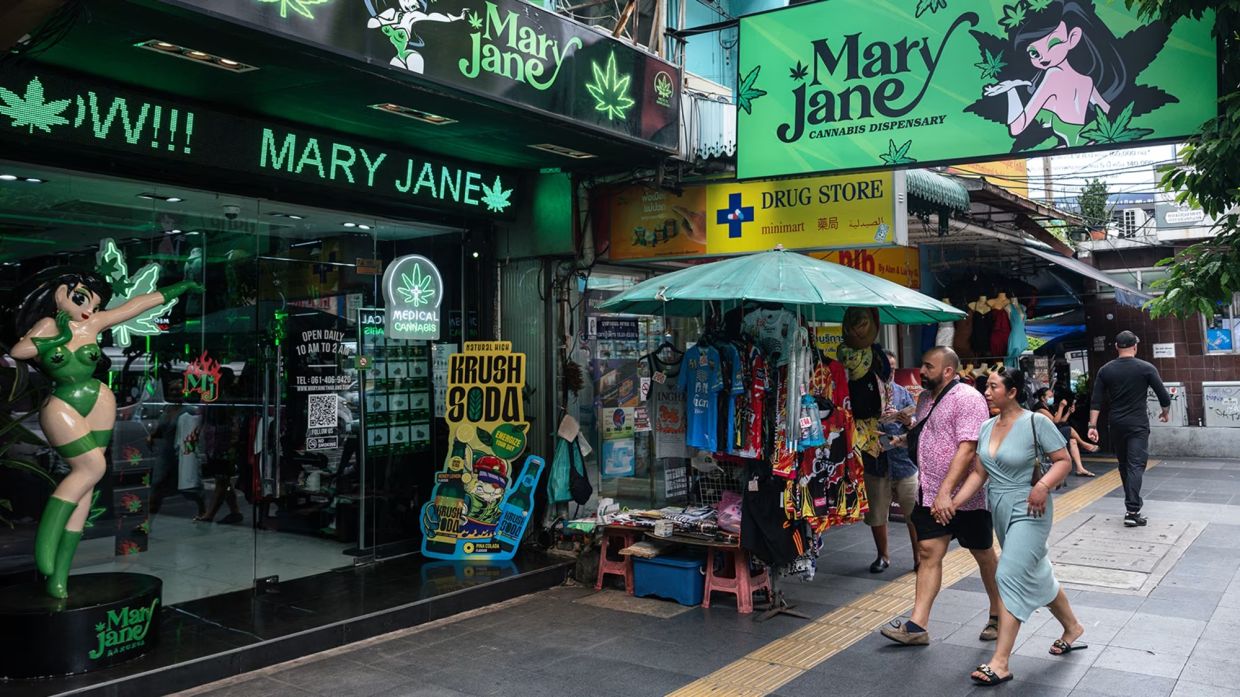
The debate has intensified because of mounting evidence that cannabis has become far easier to access than policymakers intended when the country first decriminalised its use three years ago. Unregistered cultivation operations have proliferated, informal sales channels have flourished outside legal oversight, and loopholes in the existing regulatory framework have created opportunities for grey-market operators to exploit ambiguities in the law. These developments have alarmed health authorities and prompted calls from medical networks and civic groups to impose temporary restrictions while legislators draft a comprehensive cannabis law.
Dr Tewan Thaneerat, deputy director-general of the Department of Thai Traditional and Alternative Medicine, outlined the current regulatory landscape, explaining that cannabis is managed as a controlled herb under the Protection and Promotion of Thai Traditional Medicine Wisdom Act 1999. Since the June 2022 liberalisation, the department has faced persistent concerns about inadequate oversight. The Public Health Ministry attempted to address these gaps by issuing three regulations in June 2025 governing research, sales, processing and exports in accordance with international standards, but these interim measures appear insufficient to close the loopholes operators are exploiting.
The department is collaborating with the Food and Drug Administration, the Department of Health Service Support and the Office of the Permanent Secretary for Public Health to develop a comprehensive cannabis and hemp law. A draft was submitted to the Cabinet under the previous government but never reached Parliament before dissolution. The current Public Health Minister remains committed to advancing the legislation, which is undergoing public consultations scheduled to conclude by late July, with resubmission to Cabinet expected thereafter. However, the timeline remains uncertain, and stakeholders recognise that without expedited passage, the regulatory vacuum will persist.
Ekkapop Sittiwantana, deputy chairman of the House Public Health Committee representing the People's Party, made a forceful case for temporary reclassification as narcotics, arguing this interim step would prevent further regulatory deterioration while permanent legislation is finalised. He highlighted the explosion of unregistered cultivation and direct sales to consumers, practices that create precisely the kind of uncontrolled distribution environment that public health authorities fear. Ekkapop advocated for mandatory registration of all cannabis plants to eliminate the plausible deniability that currently allows informal operators to evade accountability. His position reflects growing frustration among legislators that voluntary compliance has failed to materialise.
Associate Professor Dr Smith Srisont, speaking on behalf of a coalition of medical professionals, academics and civil society organisations focused on drug harm reduction, echoed calls for immediate reclassification. While acknowledging that cannabis extracts exceeding 0.2 percent THC remain classified as narcotics under current law, he argued that real-world evidence demonstrates serious public health consequences regardless of technical classifications. His advocacy for a two-stage approach—first returning cannabis to narcotics control, then enacting dedicated legislation—reflects a belief that the current hybrid regulatory system has created dangerous inconsistencies. He particularly criticised the absence of controls on non-flower cannabis plant parts, which can be cultivated without triggering criminal penalties despite their potential to produce psychoactive compounds.
The Food and Drug Administration defended its licensing and inspection framework, describing a three-tier system covering production facilities, imports and retail sales through certified channels. Officials reported that most inspected cannabis products met labelling standards and contained accurately described active ingredients. However, they acknowledged that the most significant challenge lies beyond the FDA's jurisdiction: the proliferation of sales channels operating entirely outside the formal licensing system. This candid admission underscores a fundamental problem that regulatory tightening alone cannot solve—enforcement capacity and political will to prosecute illegal operators remain inadequate.
Cannabis industry representatives and pro-business civil networks presented a counterargument rooted in economic and cultural perspectives. The Thai Cannabis Future Network contended that legal operators licensed under existing rules cannot compete with black-market suppliers and illegally imported products, making legitimate business models economically unviable. The network raised serious allegations regarding selective enforcement and unofficial demands for payments or favours linked to licence approvals, suggesting that administrative corruption has undermined the legitimacy of the current system. They also highlighted the practical difficulties farmers face in obtaining physician certifications required to supply cannabis for medical purposes, a regulatory requirement that some operators allegedly circumvent through unofficial channels.
The industry's broader argument emphasises cannabis's traditional role in Thai medicine and agriculture, contending that restrictive regulation designed primarily for mainstream pharmaceutical applications would eliminate culturally significant uses and eliminate economic opportunities for small-scale cultivators. This perspective reflects genuine tension between regulatory caution and rural livelihoods, a consideration particularly relevant for Southeast Asian policymakers balancing public health imperatives against agricultural development. The network explicitly requested that any future legislation be shaped through inclusive public participation rather than technocratic top-down imposition, a demand that addresses not just policy outcomes but the legitimacy of the policymaking process itself.
Sakoltee concluded the meeting by ordering officials to compile comprehensive registries of licensed cannabis retailers in Bangkok and FDA-certified products for detailed review. He mandated a broader epidemiological survey to quantify cannabis-related harms and identify affected populations. Critically, he emphasised that future regulatory frameworks must include distance restrictions between cannabis sales outlets and educational institutions, reflecting particular concern about youth access. These directives suggest the committee intends to develop evidence-based policy rather than proceeding from assumption, though the timeline for such research remains unclear.
The committee's determination to review both the Public Health Ministry's legislation and alternative proposals from civil society indicates recognition that Thailand's cannabis future depends on balancing competing interests: public health protection, economic viability for licensed operators, agricultural livelihoods, and youth safeguarding. For Malaysia and other Southeast Asian nations monitoring Thailand's approach, this debate illustrates the complexity of cannabis regulation in a region where medical systems, agricultural economies and social values differ markedly from Western contexts where most regulatory models originate. Thailand's willingness to revisit its liberalisation decisions after three years suggests that initial assumptions about managing cannabis without tighter controls proved overly optimistic—a cautionary lesson for neighbouring countries considering similar policy changes.
The next parliamentary cycle will test whether Thailand can construct legislation satisfying these competing demands or whether the current political fragmentation will prevent consensus. Meanwhile, uncontrolled cannabis access, particularly among young people, continues amid the regulatory limbo. The outcome will significantly influence how other Southeast Asian governments approach cannabis policy, particularly given the region's interconnected illicit drug markets and shared public health challenges.