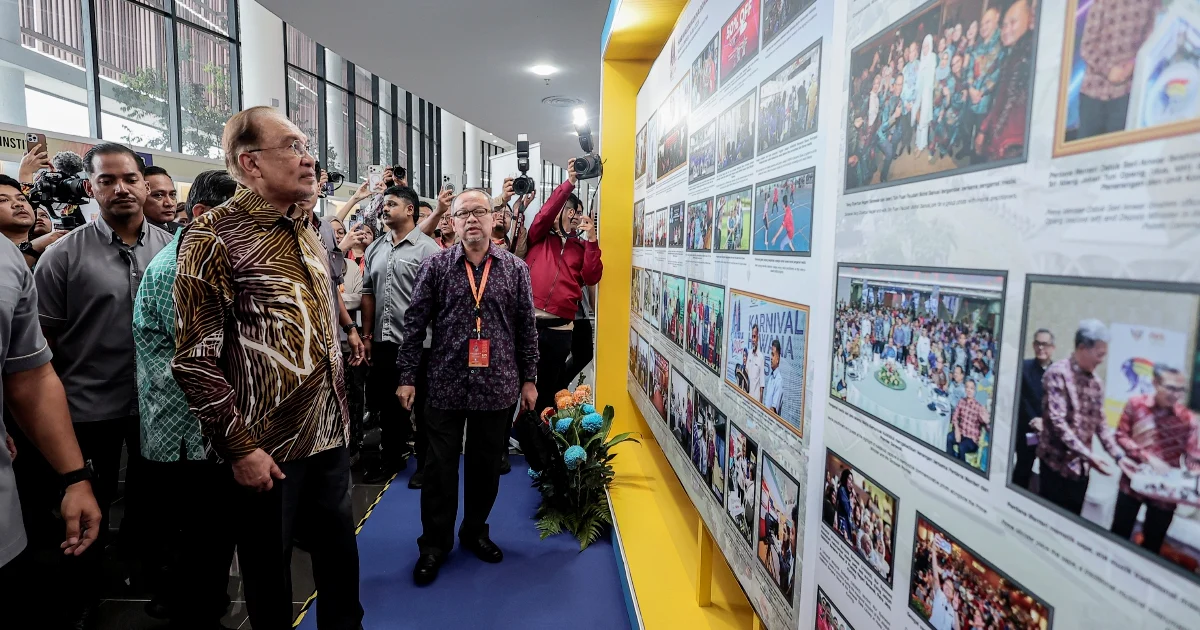
Prime Minister Datuk Seri Anwar Ibrahim has announced a RM1 million government allocation directed toward Tabung Kasih@Hawana 2026, a welfare initiative designed specifically to support journalists across Malaysia. The announcement, made during an event in Permatang Pauh, underscores the administration's ongoing effort to improve working conditions and financial security for media professionals at a time when the industry faces substantial economic pressures and shifting technological landscapes.
The establishment of dedicated welfare funds for journalists reflects a broader recognition among policymakers that the media workforce requires targeted institutional support. Beyond the immediate financial provision, the government's commitment to Tabung Kasih@Hawana 2026 signals an awareness that sustainable journalism depends not only on editorial independence and training but also on the tangible wellbeing of practitioners. This acknowledgement proves particularly significant in Southeast Asia's context, where media outlets frequently operate with constrained budgets and journalists often lack comprehensive social protection mechanisms.
Anwar's announcement comes as Malaysia's media landscape undergoes rapid transformation driven by digital disruption, audience fragmentation, and the rise of alternative news platforms. Traditional newsrooms have contracted substantially over the past decade, creating job insecurity and wage stagnation across the industry. The welfare fund initiative represents a government intervention aimed at mitigating these structural challenges, providing a safety net for journalists navigating professional uncertainty. Such support mechanisms can prove crucial during periods of career transition, unexpected illness, or other personal hardships that disproportionately affect freelance and contract-based media workers.
The timing of this announcement reflects the government's broader commitment to what it frames as media industry transformation. Rather than viewing journalism primarily through a regulatory lens, this approach emphasises capacity building, professional development, and welfare protection as complementary instruments for strengthening the sector. This represents a departure from purely restrictive models and instead positions government support as facilitating conditions for a more robust and resilient media environment capable of meeting contemporary information demands.
Welfare funds for journalists serve multiple functions within the broader media ecosystem. They provide direct assistance to individual practitioners facing financial difficulties while simultaneously demonstrating institutional value for a profession often underappreciated in public discourse. Such programmes can improve retention of experienced journalists, reduce poverty-related vulnerabilities that might compromise editorial judgment, and enhance the overall stability of newsrooms struggling with resource constraints. In Malaysia's context, where media diversity remains a strategic concern, supporting journalists' material security indirectly supports the sustainability of diverse news outlets.
The Tabung Kasih@Hawana 2026 initiative also represents an opportunity for government, industry stakeholders, and professional organisations to collaborate on defining support mechanisms that address journalists' actual needs. Effective welfare programmes require input from practitioners themselves regarding priority areas—whether focusing on healthcare coverage, professional retraining, emergency assistance, or retirement planning. The RM1 million allocation provides a foundation, though questions remain regarding the fund's operational structure, eligibility criteria, and potential for expansion based on demonstrated demand.
For Malaysia's media industry, particularly smaller publications and independent outlets, government-supported welfare schemes can influence broader employment practices and professional standards. When institutional support exists at the sectoral level, individual employers face reduced pressure to provide comprehensive benefits, potentially enabling smaller operations to compete for talent despite limited resources. Conversely, such programmes must avoid creating dependencies that could compromise media independence or editorial autonomy. Clear governance frameworks and transparent fund administration prove essential for maintaining the integrity of journalism while delivering practical welfare support.
The announcement also merits consideration within Malaysia's regional context. Other Southeast Asian nations have explored various approaches to supporting media professionals, ranging from industry associations' mutual aid schemes to government-backed initiatives. Malaysia's explicit investment in journalist welfare positions the country as recognising media sustainability as a public good worthy of direct government engagement. This positioning may influence how regional media policy discussions evolve, particularly regarding the balance between state support and editorial independence.
Looking forward, the success of Tabung Kasih@Hawana 2026 will depend substantially on implementation details and stakeholder engagement. Journalists themselves must understand the fund's accessibility and benefits, while oversight mechanisms should ensure efficient resource allocation and prevent programme drift toward objectives unrelated to practitioner welfare. The RM1 million allocation provides meaningful initial support, though long-term sustainability requires establishing mechanisms for fund replenishment and expansion as demonstrated needs evolve. Regular evaluation and adjustment based on actual usage patterns and emerging welfare requirements will prove essential for maximising the programme's impact on the media profession.
%22%2F%3E%3C%2Fpattern%3E%3C%2Fdefs%3E%3Crect%20width%3D%22100%25%22%20height%3D%22100%25%22%20fill%3D%22url(%23ph8ac1g)%22%2F%3E%3Crect%20width%3D%22100%25%22%20height%3D%22100%25%22%20fill%3D%22url(%23ph8ac1p)%22%2F%3E%3Ctext%20x%3D%2250%25%22%20y%3D%2250%25%22%20text-anchor%3D%22middle%22%20dominant-baseline%3D%22central%22%20fill%3D%22rgba(255%2C255%2C255%2C0.95)%22%20font-family%3D%22Georgia%2C%20'Times%20New%20Roman'%2C%20serif%22%20font-weight%3D%22700%22%20font-size%3D%22320%22%20letter-spacing%3D%22-0.02em%22%3ETV3%3C%2Ftext%3E%3C%2Fsvg%3E)
%22%2F%3E%3C%2Fpattern%3E%3C%2Fdefs%3E%3Crect%20width%3D%22100%25%22%20height%3D%22100%25%22%20fill%3D%22url(%23ph4p6tog)%22%2F%3E%3Crect%20width%3D%22100%25%22%20height%3D%22100%25%22%20fill%3D%22url(%23ph4p6top)%22%2F%3E%3Ctext%20x%3D%2250%25%22%20y%3D%2250%25%22%20text-anchor%3D%22middle%22%20dominant-baseline%3D%22central%22%20fill%3D%22rgba(255%2C255%2C255%2C0.95)%22%20font-family%3D%22Georgia%2C%20'Times%20New%20Roman'%2C%20serif%22%20font-weight%3D%22700%22%20font-size%3D%22170%22%20letter-spacing%3D%22-0.02em%22%3EMalaysia%3C%2Ftext%3E%3C%2Fsvg%3E)