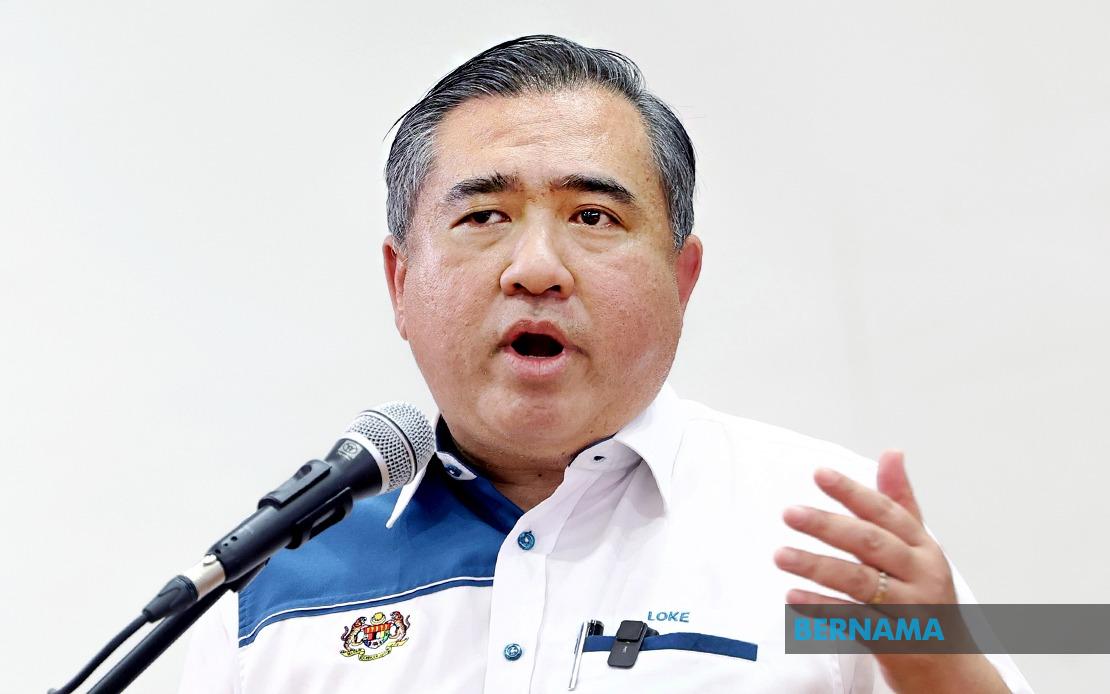
The Southern Shuttle rail service operating across Johor is relying on diesel-powered trains as an interim measure to serve commuters without further delays while the Ministry of Transport awaits delivery of new Electric Multiple Unit (EMU) rolling stock, according to Transport Minister Anthony Loke. The decision reflects a pragmatic trade-off between immediate service availability and long-term infrastructure modernisation, with the government prioritising accessibility over waiting several more years for advanced electric trains to enter service.
Loke outlined the rationale for this temporary arrangement in a statement released on June 20, emphasising that the ministry faces a binary choice: either maintain the status quo and require Johor residents to wait two to three years for ten new EMU train sets to be manufactured and delivered, or proceed with existing diesel-powered rolling stock that is ready for deployment now. The calculus appears weighted toward immediate public benefit, with the minister arguing that deploying available assets serves the broader objective of encouraging greater adoption of rail-based public transportation across the southern region.
To facilitate expanded rail service and improve accessibility, the Ministry of Transport has committed an annual subsidy ranging from RM11 million to RM15 million. This financial support is intended to broaden the user base for rail-based public transport and make fares more competitive relative to alternative modes. The subsidy represents a significant ongoing commitment and signals government determination to develop sustainable transport infrastructure in Johor, which has historically lagged behind the Klang Valley in terms of integrated public transit connectivity.
The Southern Shuttle network currently connects three major population centres: Kulai, JB Sentral (Johor Bahru's central station), and Pasir Gudang, offering journey times that are competitive with road transport for commuters willing to adopt rail. The Kulai to JB Sentral leg takes approximately 40 minutes, while the Kempas Baru to Pasir Gudang segment requires 40 to 45 minutes. These travel times position the service as a viable alternative for regular commuters on the corridor, potentially reducing congestion on increasingly crowded road networks in the state.
A significant operational milestone is the opening of the Kempas Baru to Pasir Gudang route for passenger services, a corridor previously dedicated exclusively to freight operations. This expansion represents better utilisation of existing rail infrastructure and provides transport options for residents in the Pasir Gudang industrial area and surrounding communities. The transition of this line from freight-only to mixed freight and passenger service demonstrates the government's intent to maximise the utility of rail assets and serve broader transportation needs beyond cargo movement.
The longer-term vision for the Southern Shuttle involves full electrification of the Gemas to Johor Bahru corridor through the planned electrified double-tracking project. Upon completion of this infrastructure upgrade, Electric Train Service (ETS) trains will replace the current diesel-powered fleet, eliminating reliance on fossil fuels and delivering operational benefits including reduced energy costs, lower emissions, and potentially improved ride quality. The timeline for this electrification project remains subject to further ministerial updates, but represents the end state toward which current interim arrangements are transitioning.
The decision to employ diesel trains has attracted criticism from quarters who view the arrangement as suboptimal and question the cost structure applied to fares. Critics have pointed out that Southern Shuttle fares are approximately three times higher than comparable rail services in Kuala Lumpur and Seremban, raising concerns about affordability and accessibility for lower-income commuters in Johor. This disparity raises questions about subsidy distribution mechanisms and whether the RM11-15 million annual commitment is sufficiently large relative to operational costs and service ambitions.
The fare differential reflects several underlying factors, including the operational costs of diesel train services, which tend to be higher than electric alternatives; the relatively smaller ridership base across Johor compared to the heavily-trafficked Klang Valley; and potentially lower economies of scale given the newer nature of the Southern Shuttle network. However, the comparison with Kuala Lumpur and Seremban services suggests that fare structures may warrant review, particularly if the government's subsidisation objective is to meaningfully expand ridership among price-sensitive commuters who might otherwise choose private vehicles or express bus services.
For Malaysian readers tracking transport policy developments, the Southern Shuttle situation encapsulates broader challenges facing regional rail expansion: the tension between immediate service delivery using available assets and longer-term modernisation objectives. The Southeast Asian region has witnessed similar trade-offs in other countries' transport systems, where interim solutions sometimes outlast their intended duration, creating maintenance challenges and missed opportunities for modal shift. The success of this interim arrangement will depend heavily on service reliability, frequency of trains, and whether the anticipated two to three year waiting period for new EMU trains materialises as forecast.
The implications extend beyond Johor's transport ecosystem. Should the Southern Shuttle successfully attract commuters and demonstrate demand for electric rail services in the southern region, it may provide political impetus for additional rail investment and electrification projects. Conversely, if the service struggles with reliability issues or continues to suffer fare competitiveness problems, it could undermine public confidence in rail-based transport and reinforce preference for private vehicles across Johor. The coming years will reveal whether diesel-powered interim measures successfully serve their intended bridging function or become entrenched as unintended permanent solutions.
Looking forward, transport planners should monitor passenger uptake on the Southern Shuttle carefully, using actual ridership data to inform decisions about the pace of electrification, frequency adjustments, and fare recalibration. The availability of reliable patronage information will be essential for determining whether the current subsidy level is appropriate and whether the service is achieving its core objective of shifting commuters from private vehicles to rail. As Malaysia continues developing its public transport networks regionally, experiences like the Southern Shuttle provide valuable lessons about implementing sustainable transport infrastructure in an environment where capital constraints often necessitate pragmatic interim solutions.