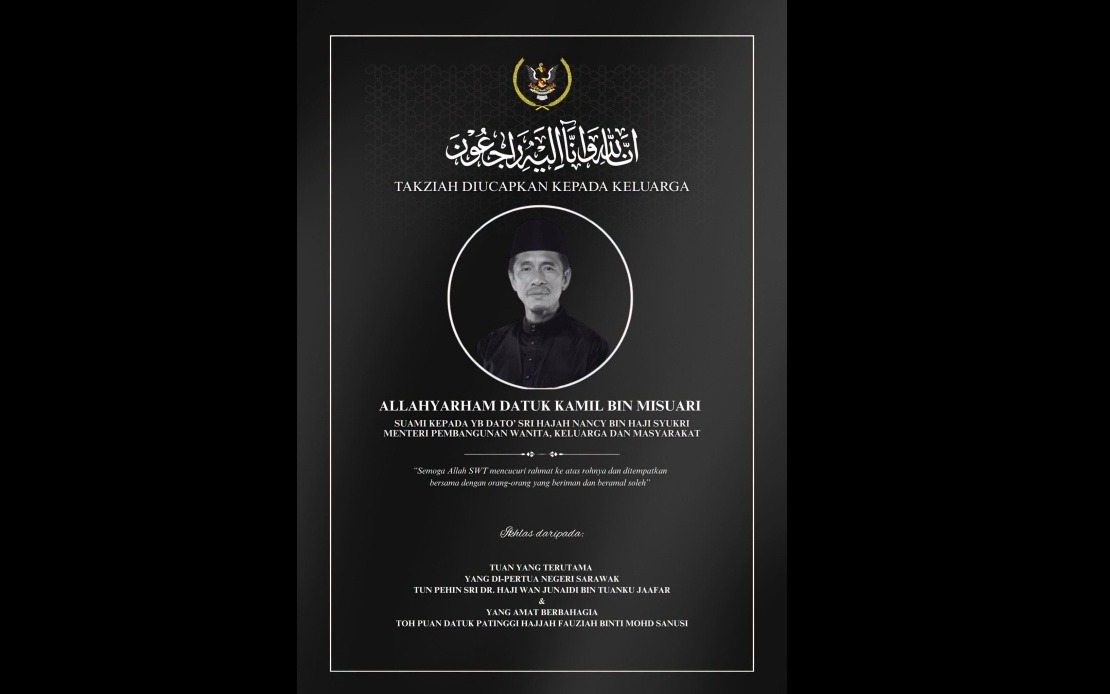
Tun Dr Wan Junaidi Tuanku Jaafar, the Yang Dipertua Negeri Sarawak, has offered his sympathies to Women, Family and Community Development Minister Datuk Seri Nancy Shukri following the death of her husband, Datuk Kamil Misuari. The 65-year-old passed away at a hospital in Kuala Lumpur on June 18, marking the end of a marriage that spanned nearly four decades and produced three children.
In a formal statement released through Astana Sarawak, the ceremonial head of state articulated his condolences on behalf of both himself and his wife, Toh Puan Fauziah Mohd Sanusi. The statement reflected the customary practice of senior state officials acknowledging the loss of immediate family members belonging to members of the federal cabinet. Such gestures underscore the interconnected nature of Malaysia's political establishment, where personal tragedy affecting ministers invariably draws formal expressions of sympathy from state and national leaders across party lines.
The statement conveyed a spiritual dimension to the condolences, invoking Islamic prayer for the deceased. Specifically, Wan Junaidi and his wife entreated that Allah SWT would bestow blessings upon Kamil's soul, accept his righteous deeds in life, and grant him a place among the virtuous in the hereafter. Such religious invocations form an integral part of the Malaysian political vernacular, particularly when addressing bereavement within the Muslim-majority population, reflecting the centrality of Islam to the nation's cultural and institutional fabric.
Beyond spiritual considerations, the statement emphasised prayers for the bereaved family's resilience during this difficult period. Wan Junaidi and his wife specifically requested divine strength, steadfastness and patience for Nancy Shukri and her extended family as they navigate the immediate aftermath of loss. This focus on fortitude and emotional endurance acknowledges the profound challenges faced by close relatives, particularly a spouse of many years suddenly bereft of a lifelong partner.
The announcement of Kamil's death came formally through the Office of the Minister of Women, Family and Community Development, providing official confirmation of the passing. This procedural approach ensured that the news reached the public through appropriate governmental channels, lending institutional weight to the announcement and signalling the significance of the event within ministerial circles. The timing of the announcement, released in the evening following the death at a major Kuala Lumpur medical facility, allowed for rapid dissemination while permitting the family immediate privacy during the initial moments of grief.
The logistics of farewell arrangements reflected Nancy Shukri's dual connections to both the federal government seat in Kuala Lumpur and her home state of Sarawak. Kamil's remains were scheduled to be transported by air to Kuching the following day, underscoring the importance placed on ensuring a timely return to his native state for final rites. This movement of remains across the country required coordination between federal authorities and Sarawak state officials, illustrating the administrative machinery that mobilises around significant state events.
The interment location at Samariang Muslim Cemetery in Kuching provided a final resting place in his home state, affirming Kamil's deep roots in Sarawak despite his career taking him to the federal capital. The choice of cemetery reflects both religious observance and geographical identity, allowing the family to maintain proximity to his grave for ongoing observances and remembrance. For those in Sarawak's political and business circles who knew Kamil over the decades, the cemetery location ensured accessibility for formal visits and private remembrance.
The marriage between Nancy and Kamil, which commenced in 1985, represented a significant union that had endured for nearly four decades. Their three children represented the next generation of a family with considerable standing in both Sarawak society and Malaysian federal administration. The longevity of their union and the offspring they produced together underscore the personal and familial dimensions of Nancy's current position, adding poignancy to her loss at a time when she carries substantial ministerial responsibilities.
As Women, Family and Community Development Minister, Nancy Shukri occupies a portfolio addressing issues of gender equality, family welfare and social cohesion across the nation. The timing of her personal loss, while managing a demanding ministerial brief, raises considerations about the balance between public duty and private grief for high-ranking government officials. Many observers will watch how she manages the immediate period of mourning whilst continuing to discharge her governmental functions, a challenge that has confronted numerous Malaysian political figures who have experienced personal tragedy whilst holding office.
The expression of condolences from Sarawak's Yang Dipertua Negeri reflects broader institutional acknowledgment that the loss extends beyond the immediate family to touch the state's leadership structures and the federal government itself. Such gestures, while formulaic in nature, serve important social functions in affirming community bonds and acknowledging the human dimension of political life, which often recedes behind debates over policy and governance.