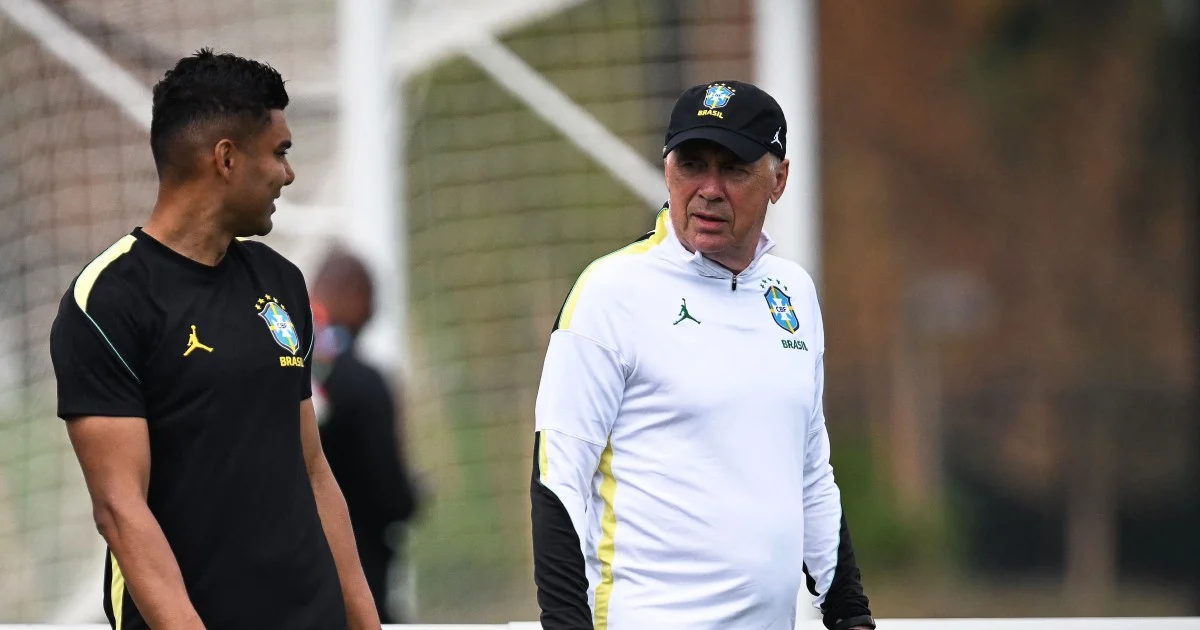
Brazil's World Cup campaign has begun on an unexpectedly uneven note, but coach Carlo Ancelotti is maintaining his composure as the tournament enters its second phase of group matches. The five-time world champions' opening fixture against Morocco ended in a 1-1 stalemate in Group C, a result that has prompted scrutiny of their approach despite the draw being far from a disaster. Rather than allowing the setback to precipitate a crisis in confidence, Ancelotti has reframed the subsequent encounter with Haiti as a crucial opportunity to recalibrate and demonstrate the attacking prowess the Seleção have long been renowned for.
The draw with Morocco, while not a defeat, nevertheless exposed several operational deficiencies in how Brazil executed their game plan. The North African side presented a disciplined defensive structure that Brazil struggled to unlock with their customary fluidity and creative invention. Morocco's compact shape forced Brazil into predictable patterns of play, and their midfield proved less dominant than expected against a well-organised opponent. These vulnerabilities, though not insurmountable, suggested that Ancelotti's tactical setup required adjustment and refinement before subsequent group matches. Rather than treating the result as a harbinger of deeper problems, Ancelotti has characterised it as a learning moment that provides concrete direction for improvement.
Ancelotti's measured response reflects a coaching philosophy grounded in perspective and experience. His calm demeanour contrasts sharply with the anxiety that sometimes grips supporters and media commentators following unexpectedly modest performances from tournament favourites. The Italian tactician, who has navigated countless high-pressure situations across multiple elite clubs and international assignments, recognises that World Cup group stages routinely produce surprising results and unconventional patterns. A single draw, particularly against a team as tactically sophisticated as Morocco, does not alter the fundamental competitive capacity of a squad featuring world-class talent across multiple positions.
The impending clash against Haiti presents a markedly different challenge from the Morocco encounter. Haiti, while not lacking competitive spirit and organisational discipline, generally operates at a different tactical level compared to African nations with deeper football infrastructure and resources. This disparity creates an expectation that Brazil will dominate possession, create numerous clear-cut opportunities, and convert at a higher rate than they managed against Morocco. For Ancelotti, the Haiti fixture offers an ideal testing ground to implement refinements identified during the Morocco analysis without the same defensive pressure that frustrated his attacking players previously.
Brazil's squad composition gives them the offensive firepower to inflict heavy defeats on lesser opponents, yet translating superior quality into goal-scoring efficiency has proven inconsistent in recent tournaments. The forward line, comprising players accustomed to producing decisive moments in Europe's top leagues, must transform territorial dominance into meaningful returns on the scoreboard. Against Haiti, Brazil should encounter fewer defensive complications, allowing attacking movements to develop with greater continuity and rhythm. This environment enables Ancelotti to refine combinations between midfielders and forwards while also providing confidence-building outcomes that stabilise morale within the camp.
The broader context of Brazil's World Cup trajectory extends beyond the Haiti fixture itself. Qualification from Group C remains well within reach despite the Morocco draw, but subsequent knockout-stage opponents will invariably prove more formidable. The group stage, theoretically the least demanding phase, demands Brazil establish commanding positions before facing progressively tougher competition. Haiti represents the opportunity to do precisely that—compile a dominant victory that rectifies the opening-match concerns while generating positive momentum and empirical evidence that the team's fundamental qualities remain intact beneath the surface-level disappointment.
Ancelotti's steadiness offers reassurance to a fanbase accustomed to expecting world-class performances from their national team. The pressure surrounding Brazil at World Cups remains uniquely intense, shaped by the nation's illustrious tournament history and cultural significance attached to football. Yet panic and reactionary overhauls rarely produce optimal results. By maintaining equilibrium and emphasising the correctable nature of first-match shortcomings, Ancelotti establishes an environment where players can execute tactical adjustments without the destabilising influence of institutional crisis narratives.
The Haiti match also provides a measuring stick regarding Brazil's ability to control games against diverse defensive approaches. Morocco's tactical setup represented one methodological extreme; Haiti's approach will likely occupy another. Testing combinations and movement patterns against varying defensive philosophies strengthens overall flexibility and adaptation, essential qualities for any World Cup contender navigating the tournament's unpredictable progression. Ancelotti's opportunity to implement multiple iterations of tactical organisation before high-stakes knockout football begins represents standard legitimate tournament preparation rather than evidence of fundamental instability.
For Southeast Asian observers, Brazil's group-stage challenges offer instructive lessons about global football's competitive levelling. Nations like Morocco, increasingly capable of producing technically proficient and tactically sophisticated teams, demonstrate that established hierarchies no longer guarantee automatic supremacy. This shifting landscape creates opportunities for footballing development across Asia, where growing investment in player development and coaching expertise has begun producing respectable international performances. Brazil's struggles underscore that consistency and adaptability, not merely inherited reputation, determine sustained tournament success.
As Brazil prepare for the Haiti encounter in Philadelphia, Ancelotti's composed leadership has already established the mental framework necessary for navigating the remainder of the group stage. Rather than attempting wholesale tactical overhauls or psychological interventions, he has projected confidence that identified issues are manageable and the Haiti fixture represents the appropriate venue for demonstrating corrections. This pragmatic, experience-informed approach reflects why established coaches at tournament football's pinnacle rarely succumb to panic, instead employing intermediate matches as structural platforms for problem-solving and performance recalibration.

%22%2F%3E%3C%2Fpattern%3E%3C%2Fdefs%3E%3Crect%20width%3D%22100%25%22%20height%3D%22100%25%22%20fill%3D%22url(%23ph4g0jrg)%22%2F%3E%3Crect%20width%3D%22100%25%22%20height%3D%22100%25%22%20fill%3D%22url(%23ph4g0jrp)%22%2F%3E%3Ctext%20x%3D%2250%25%22%20y%3D%2250%25%22%20text-anchor%3D%22middle%22%20dominant-baseline%3D%22central%22%20fill%3D%22rgba(255%2C255%2C255%2C0.95)%22%20font-family%3D%22Georgia%2C%20'Times%20New%20Roman'%2C%20serif%22%20font-weight%3D%22700%22%20font-size%3D%22136%22%20letter-spacing%3D%22-0.02em%22%3EDeveloping%3C%2Ftext%3E%3C%2Fsvg%3E)