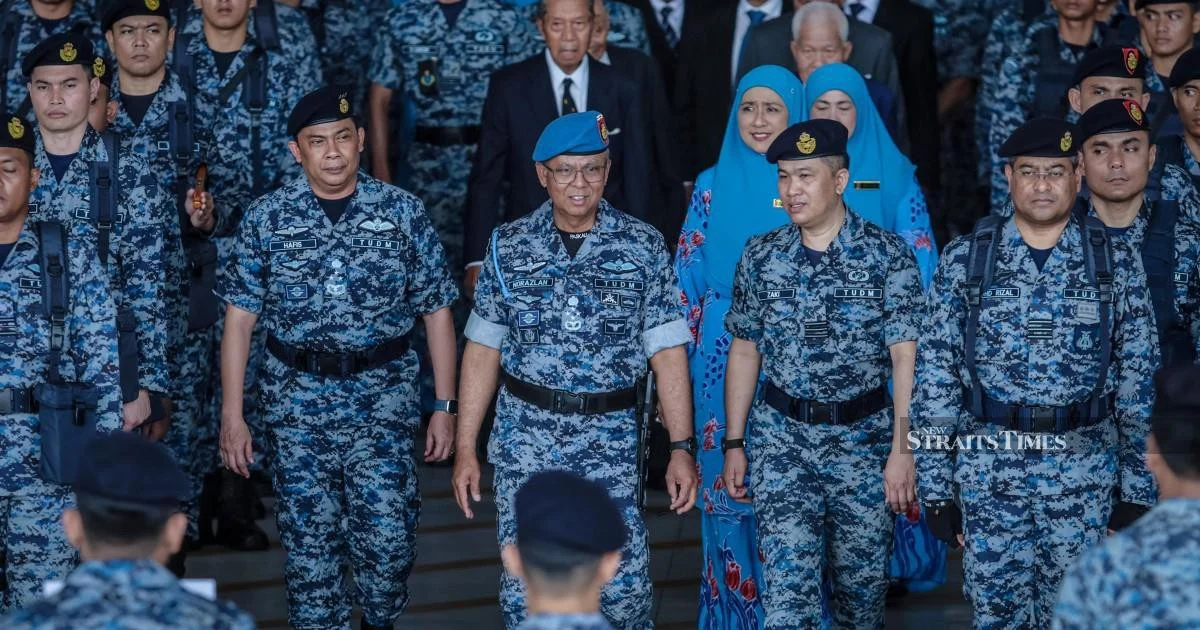
The Royal Malaysian Air Force leadership has articulated a compelling case for strengthening the nation's aerial defence architecture as a cornerstone of maritime security strategy. Speaking at Subang, RMAF chief General Tan Sri Muhamad Norazlan Aris underscored the mounting importance of air power in protecting Malaysia's shipping lanes and maritime interests, particularly as the geopolitical landscape across Southeast Asia undergoes significant transformation.
Malaysia's position as one of Asia's busiest maritime crossroads places it at the forefront of regional security considerations. The nation's coastline spans both the Straits of Malacca and the South China Sea, two of the world's most strategically significant waterways through which trillions of dollars in global trade flow annually. The Straits of Malacca alone facilitates approximately one-quarter of international maritime commerce, making Malaysia's ability to maintain order and security in these waters a matter of profound regional and global consequence.
The chief's remarks reflect a broader recognition within Malaysia's defence establishment that traditional maritime patrol capabilities, while essential, require supplementation by robust aerial surveillance and intervention systems. Modern threats to shipping security extend beyond conventional piracy to encompass sophisticated coordination challenges, transnational smuggling networks, and the need for rapid response to incidents occurring across vast oceanic expanses. Air power provides both the speed and reach necessary to address these multifaceted challenges effectively.
Regional dynamics have shifted markedly in recent years, creating a more complex security environment for Malaysian maritime interests. Competing territorial claims in the South China Sea, increased naval activity by extraregional powers, and emerging non-traditional security threats have all contributed to elevated scrutiny of maritime chokepoints and shipping corridors. These developments underscore why Malaysia cannot rely solely on conventional surface-based maritime patrol mechanisms but must integrate comprehensive aerial capabilities into its security framework.
The technological dimension of modern air power has evolved substantially, enabling surveillance systems to monitor vast ocean areas continuously and process intelligence in real time. Advanced radar capabilities, maritime patrol aircraft equipped with sophisticated sensors, and coordinated drone operations can provide situational awareness across expanses that would overwhelm traditional patrol vessels. This technological capability translates directly into enhanced security and faster response times to emergencies or security incidents.
For Malaysia, the implications extend beyond immediate security concerns to encompass economic prosperity and regional stability. Approximately 90 per cent of Malaysia's trade by volume moves through maritime channels, making the security of these routes absolutely fundamental to the nation's economic wellbeing. Disruptions to shipping, whether caused by security incidents or accidents, generate immediate costs through delayed deliveries, insurance complications, and supply chain disruptions that ripple through Southeast Asian economies.
The RMAF's emphasis on air power also reflects recognition that regional maritime challenges require sophisticated coordination mechanisms. Malaysia shares maritime spaces with multiple neighbours and must navigate complex relationships with various stakeholders. Air-based surveillance and rapid response capabilities provide a means of maintaining security presence without necessarily escalating tensions, offering alternatives to more confrontational enforcement approaches.
Investment in air power for maritime protection demands sustained fiscal commitment and technological modernisation. This includes maintaining and upgrading existing maritime patrol aircraft, developing advanced sensor capabilities, and training personnel to operate increasingly sophisticated systems. For a developing economy navigating multiple defence priorities, such investments represent significant resource allocation decisions requiring careful justification and long-term strategic commitment.
Regional partners have recognised similar imperatives, with several Southeast Asian nations undertaking comparable investments in aerial maritime capabilities. Singapore, Vietnam, and Indonesia have all prioritised maritime patrol aircraft and drone systems as core components of their naval defence strategies. This regional trend reflects shared understanding that effective maritime security in the 21st century demands integration of air and surface capabilities rather than reliance on either domain exclusively.
The geopolitical environment continues evolving in ways that validate the RMAF chief's assessment. Climate change-driven resource pressures, potential competition over undersea resources, and the proliferation of autonomous maritime systems all suggest that future maritime security challenges will demand increasingly sophisticated technological responses. Air power, properly equipped and strategically deployed, provides Malaysia with scalable capability to address these emerging demands.
Beyond immediate security applications, robust air capabilities strengthen Malaysia's diplomatic positioning within regional forums and international maritime governance structures. Nations demonstrating credible capacity to maintain maritime order command greater respect in multilateral negotiations and possess enhanced leverage in discussions regarding shipping lane management and maritime rule-setting. This diplomatic dimension, though less immediately visible than operational security functions, contributes significantly to Malaysia's strategic interests.
Moving forward, Malaysian policymakers face ongoing decisions regarding allocation of defence resources among competing priorities. The RMAF chief's intervention in maritime security discussions signals that senior military leadership views air power investment not as a luxury but as fundamental infrastructure for national prosperity and regional stability. Whether political leadership translates this assessment into sustained budgetary commitment will substantially determine Malaysia's capacity to effectively protect its maritime interests through the coming years.